Dune Bashing in Wahiba Sands: What to Expect
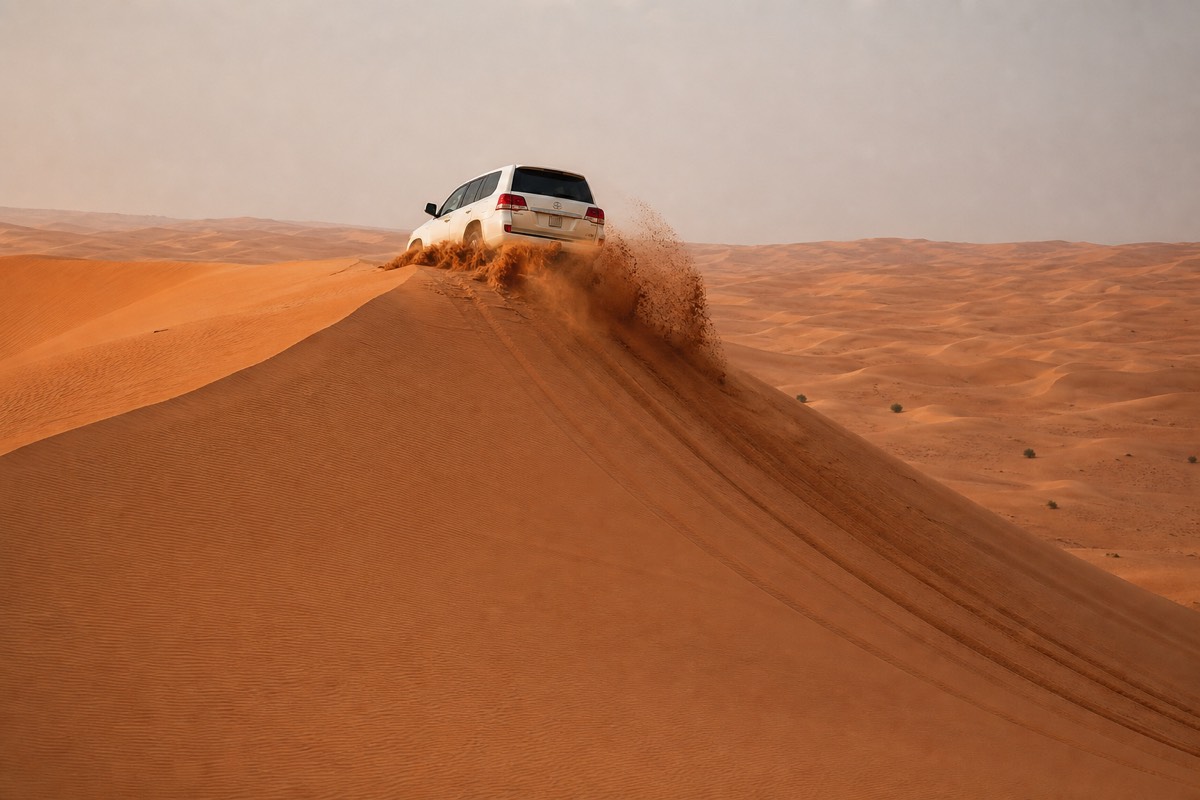
The 4x4 tips onto a ridge, the sand falls away, and for a second the horizon vanishes. That is dune bashing, and here is what a session in the sands is honestly like.
Dune-bashing intensity levels
Intensity is adjustable on request; most first-timers settle at the Classic level. The steep levels are the ones to skip for back, neck, heart, pregnancy or post-surgery reasons.
What actually happens on a dune-bashing drive?
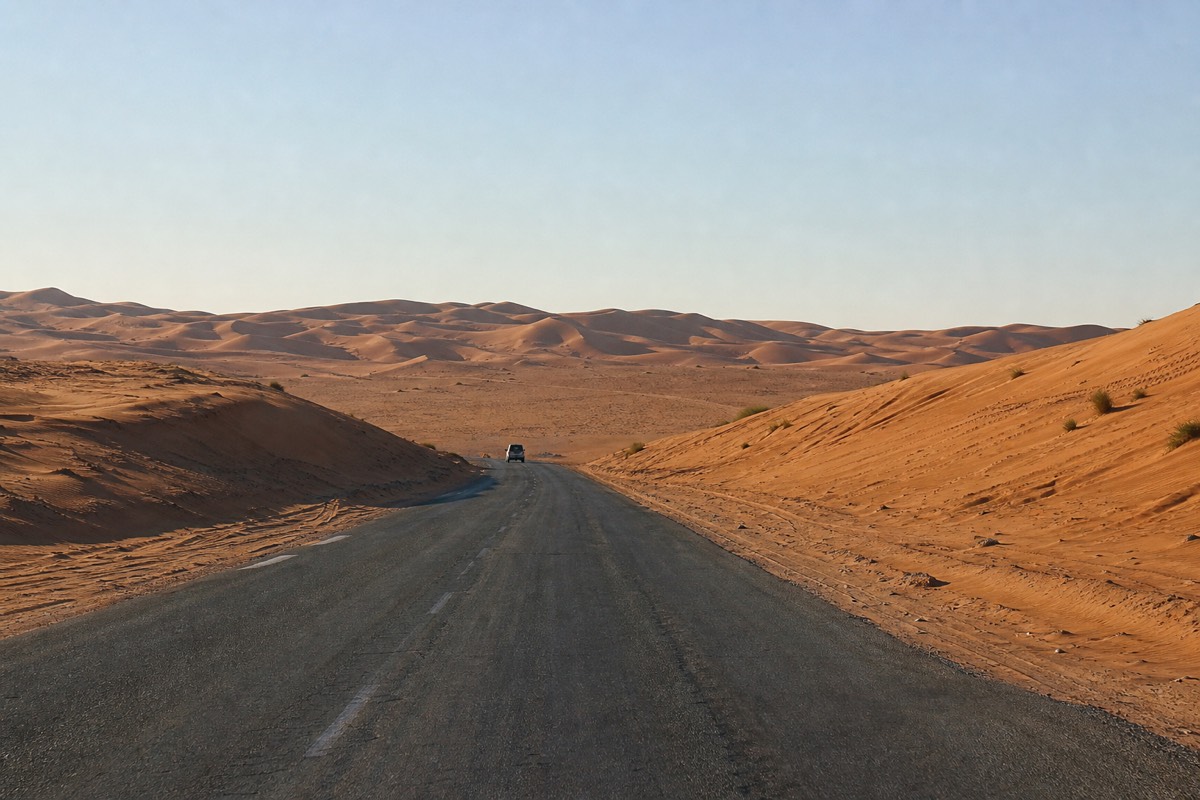
Dune bashing is a guided 4x4 run across soft sand, climbing and dropping down steep dunes while the driver reads the slope. In Wahiba Sands a session usually lasts 30 to 60 minutes, often timed for sunset, and the driver lets air out of the tyres first so the vehicle floats over the sand instead of digging in.
Match the departure point, trip length and included activities to the plan above.
At A Glance: Private guided dune drive, sunset, sandboarding, Bedouin house visit and dinner at a desert camp.
Explore The Bidiyah Sunset TripThe moment the tarmac ends near Al Wasil or Bidiyah, the driver pulls onto the shoulder, kneels at each wheel, and lets a long hiss of air escape. Then the ground changes character completely. A dune drive is not a straight sprint. A skilled driver works the windward face of each dune in long diagonal arcs, feels for the firmer sand, and tips the nose over the crest onto a slope that looks near-vertical from the passenger seat. Your stomach registers the drop a half-second before your eyes do.
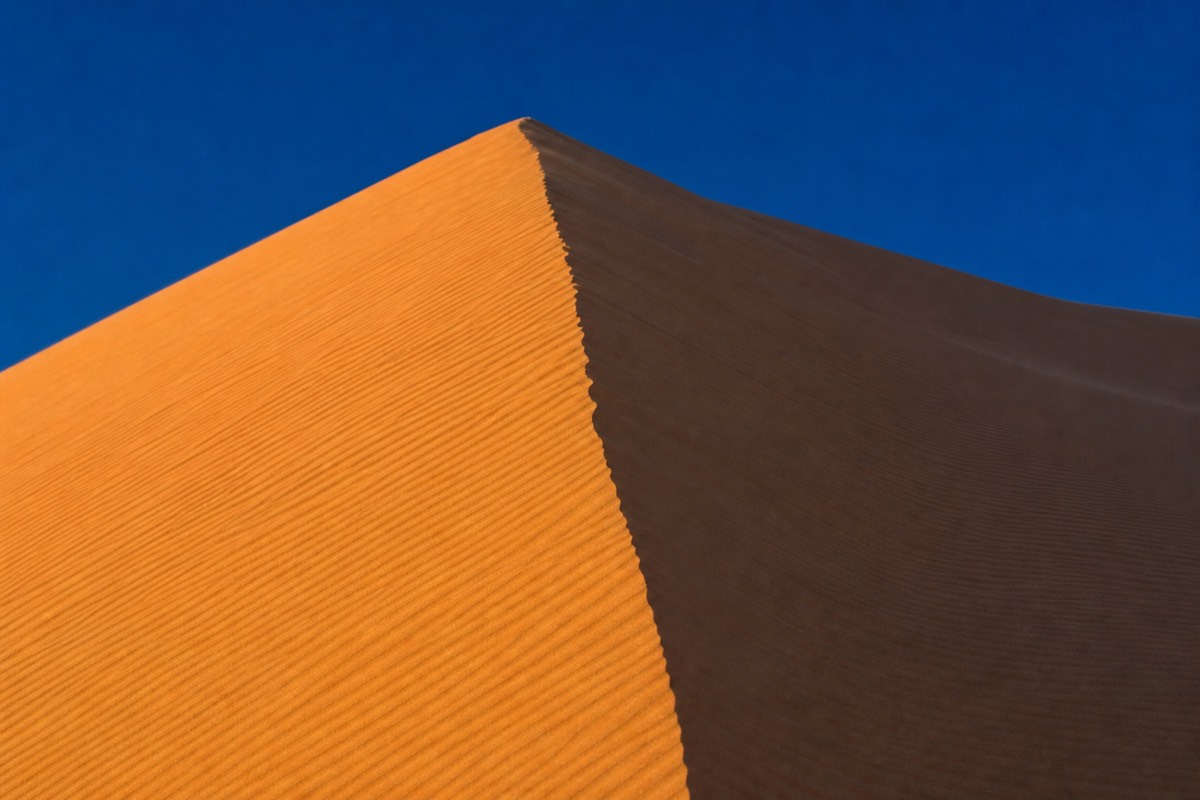
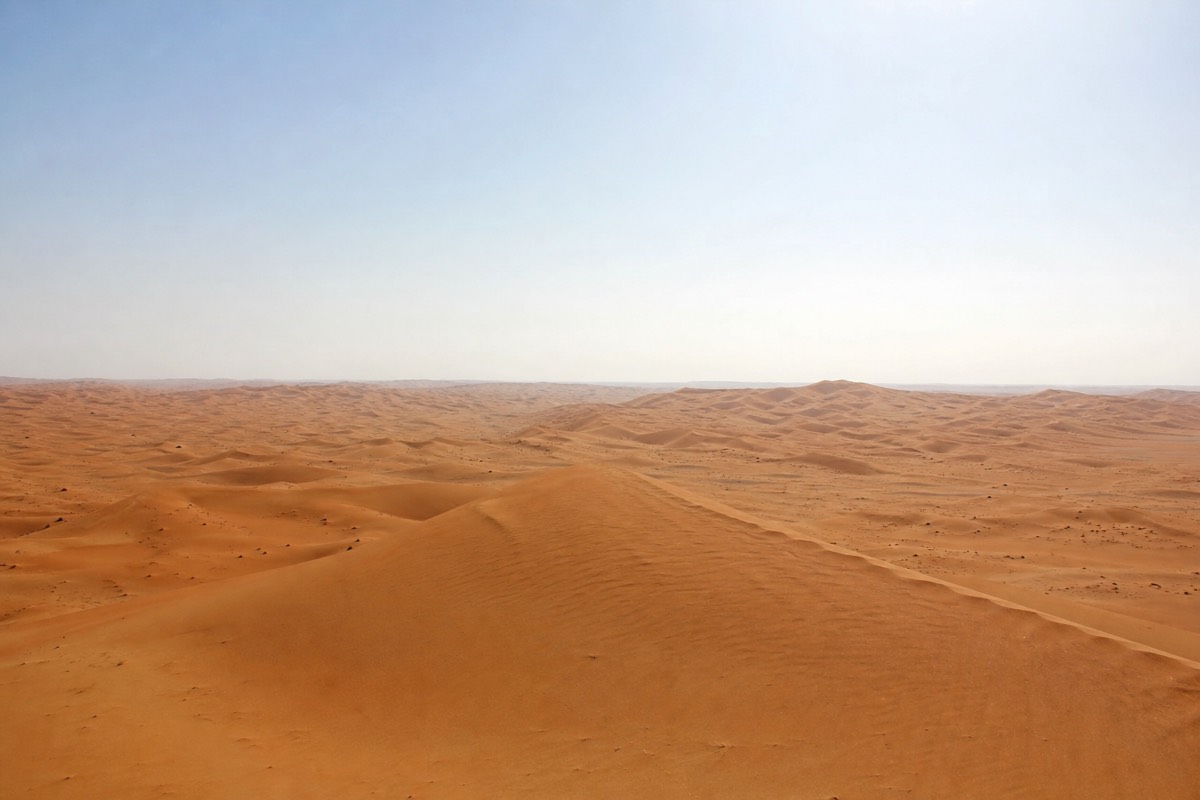
These are proper dunes, not roadside mounds. The Sharqiya Sands run roughly 180 kilometres north to south and rise to about 100 metres at their tallest, so there is real vertical scale to play with. A typical outing threads between the smaller bowls near the edge and a few of the bigger ridges deeper in, with the driver pausing on a high crest so everyone can climb out, sink to their ankles in warm sand, and watch the light turn the whole sea of dunes copper.
| Stage | Roughly how long | What happens |
|---|---|---|
| Tyre deflation | 5 minutes | Driver drops pressure at the edge of the sand; a good sign the operator knows the terrain |
| Warm-up run | 5 to 10 minutes | Gentle bowls and low ridges so passengers settle in |
| Main drive | 15 to 30 minutes | Steeper crests, longer descents, the parts people remember |
| Photo crest | 10 to 15 minutes | Stop on a high dune for the view, footprints and sunset shots |
| Re-inflation | 5 minutes | Tyres pumped back up before the return to sealed road |
Most people are surprised by two things. First, how quiet it is between runs, with only the engine ticking and wind moving over the sand. Second, how much the driver is working. Reading a dune, choosing a line, and keeping momentum without burying the vehicle is a real skill, and it is the single biggest difference between a great outing and a nervous one.
Curious about discovering the local dune-driving evening? Discover a Bidiyah 4x4 sunset trip with sandboarding and dinner.
Scheduled departures from Viator. Availability and final price are confirmed on Viator.
4 hours · Bidiyah meeting point, return to start
Camel riding costs extra. No overnight accommodation. Not recommended during pregnancy. Agree the meeting point before arranging transport.
Is dune bashing here safe, and what makes a good driver?
An experienced desert driver handles the route, but dune bashing still has vehicle and terrain risks. The risk is not the dunes themselves but a poor driver or a vehicle that gets stuck far from help. That is exactly why desert safety here rests on going with a driver who runs these sands daily, in a convoy or with recovery gear, rather than pushing into soft sand alone.
Ask about desert safety and any honest operator will tell you the same thing: the sand does not hurt people, situations do. A driver who knows the terrain keeps speed sensible on the descents, avoids blind crests where another vehicle might sit below, and never lets the wheels stall on an uphill face where the car could slide. The vehicles used are body-on-frame 4x4s built for this, and reputable drivers carry a tow rope, a shovel and plenty of water as a matter of routine.
This is one area where booking beats improvising. The operators we work with have drivers who read these dunes by season and time of day, because morning sand behaves differently from the softer, sun-warmed sand of late afternoon. If you are weighing a rented four-wheel drive against a guided trip, the same logic that governs whether you truly need a 4x4 out here also answers the safety question: solo sand driving is where trouble starts. General guidance from the Ministry of Heritage and Tourism echoes the basics, carry water, tell someone your route, and do not travel deep into the sands without support.
A quick tell of a good operator: they brief you before the first descent. They explain the seatbelt, where to hold, and that they will stop the instant anyone wants a break. Pushy silence is a red flag. Calm competence is what you are paying for.
An experienced driver does not eliminate vehicle or terrain risks. Confirm the operator's restrictions and briefing rather than interpreting a booking as a safety guarantee.
Who should skip dune bashing?
Skip the hard version if you are pregnant, have a back, neck, or heart condition, recent surgery, or severe motion sickness. The sharp drops and jolts are not suitable for those cases. A gentler-sounding route does not override an operator’s restrictions. Confirm suitability before booking.
Be honest with your driver before the keys turn. Dune bashing involves quick changes in pitch and the odd firm landing, and that combination is wrong for some bodies. The table below is the plain-spoken version our operators use when someone asks whether they should go for it or take the calmer option.
| Situation | Full dune bashing? | Better option |
|---|---|---|
| Pregnancy | No | No verified alternative for this requirement |
| Back, neck or spine issues | No | Confirm medical advice and operator restrictions first |
| Heart condition | Caution, check with a doctor | Sunset from a fixed viewpoint, no steep descents |
| Recent surgery | No | Wait, or keep to flat desert tracks |
| Strong motion sickness | Caution | Front seat, eyes on the horizon, shorter session |
| Young children | Gentle only | Low dunes at slow speed, secured in the seat |
| Fit adults, no issues | Yes | Ask for the full experience |
Motion sickness can occur on dune drives. Discuss it before booking and follow the operator’s restrictions. Ask a pharmacist or clinician about medication suitable for you rather than relying on a fixed timing instruction for every product. Related reading: Wahiba Sands Tours with kids.
The shortlist does not establish a suitable alternative for pregnancy, back, heart or recent-surgery concerns. Do not substitute a camel ride or a gentler-sounding drive for a restriction.
How intense does it get, and can you choose your level?
Yes, intensity is adjustable, and you set it. A drive can range from a gentle glide over low ridges to steep, stomach-in-your-throat descents down 30-metre faces. Tell the driver the level you want before you start. Most first-timers are happiest in the middle: exciting drops, but nothing that feels out of control.
People imagine one fixed thrill ride. In practice, dune bashing sits on a sliding scale, and a good driver will meet you where you are. The ladder below is how our operators describe the levels, from a calm outing suitable for almost anyone to the full send that experienced thrill-seekers ask for by name.
| Level | What it feels like | Best for |
|---|---|---|
| 1. Scenic glide | Slow, low ridges, no real drops | Nervous riders, older travellers, kids |
| 2. Light | Small crests, gentle descents, easy laughs | First-timers testing the water |
| 3. Classic | Steeper faces, a few proper stomach-drops | Most visitors, the sweet spot |
| 4. Spirited | Big descents, quick direction changes, sand flying | Confident riders who want a rush |
| 5. Full send | The steepest crests the driver deems safe | Adrenaline seekers, no medical issues |
Request a quote for the same travelers and dates before comparing shared and private trips. Include transport, meals and any paid activities in both totals. A private vehicle buys exclusivity for the journey; changes to the route still need the operator’s agreement.
Plan for pricing a private day around your chosen activities: check your date before arranging the rest of your trip. This option includes a Muscat vehicle and guide, with dune bashing and other activities charged separately.
Check Dates For The Private Activity DayWhat should you hold onto, and what should you wear?
Hold the grab handle above the door or the seat frame, keep your seatbelt on, and brace your feet on the floor. Wear closed shoes, sunglasses, and loose, breathable clothing. Leave loose items in a bag, tie back long hair, and bring a scarf. What to wear here is less about style than about not being flung around or sunburnt.
The single most useful thing to know is where to put your hands. Every dune vehicle has a grab handle, often called the "oh handle", above the door or on the dash. Use it. Keep your other hand on the seat or your lap, not braced against the roof or the window, where a sudden drop can jar a wrist. Feet flat on the floor, seatbelt snug, and let your body move with the vehicle rather than fighting it.
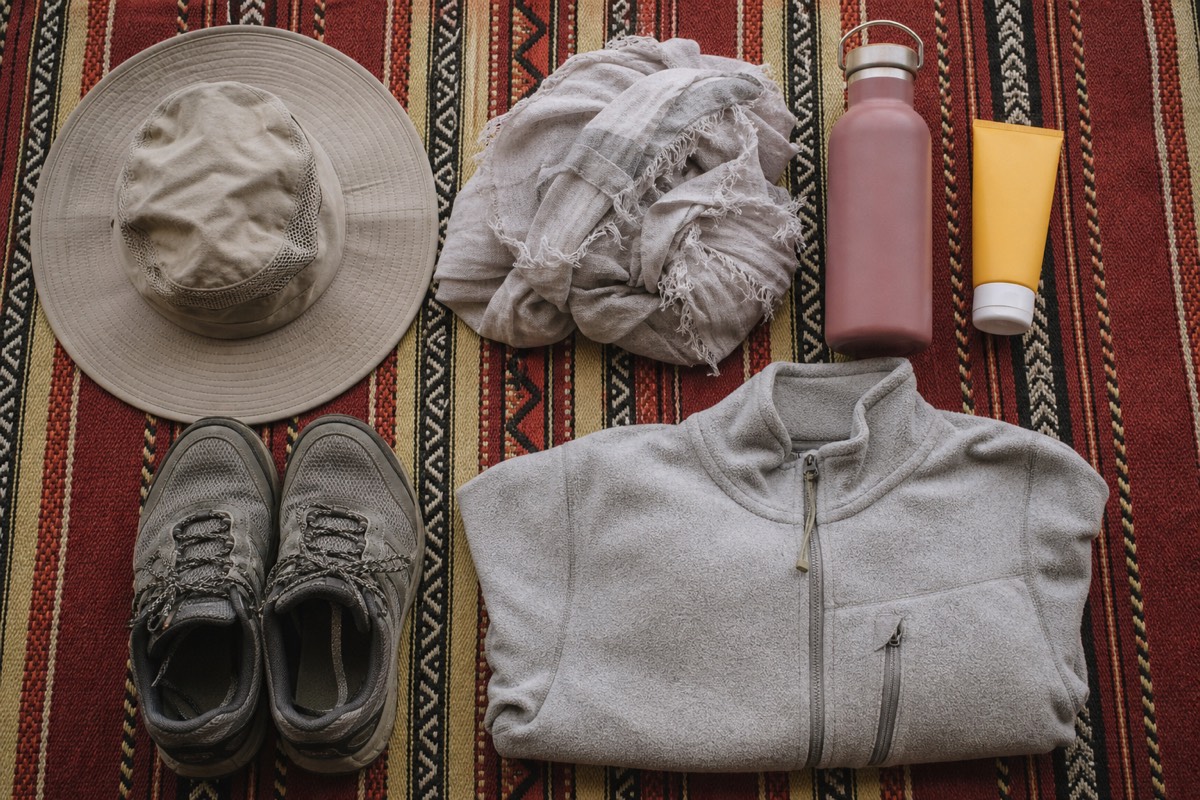
Clothing matters more than people expect, and it overlaps with the wider question of what to pack for the desert. Sand gets everywhere, sun is strong even in winter, and the light in late afternoon is glorious but blinding on a west-facing crest.
| Item | Why it matters |
|---|---|
| Grab handle, both hands ready | Keeps you steady through drops and turns |
| Seatbelt on the whole time | Non-negotiable, even at low speed |
| Closed shoes or trainers | Hot sand and grip when you climb out |
| Sunglasses | Glare off pale sand is intense |
| Light scarf | Sun, blown sand, and photos |
| Loose, breathable layers | Warm days, cool once the sun drops |
| Small zipped bag | So phones and keys do not launch on a descent |
| Water | Dry air pulls moisture out of you fast |
Phones are the classic casualty. On a steep descent an unsecured phone becomes a projectile, so either wedge it deep in a zipped pocket or hand it to the driver during the wild sections. If you want photos on the move, a wrist strap is your friend. And a small point that saves grief later: sand and camera lenses do not mix, so keep gear covered until the vehicle stops on a crest.
Curious about seeing which stops your driving kit is for? Discover a local 4x4 outing with sandboarding, sunset and dinner.
Discover The Bidiyah Sunset TripWhy does the driver let the air out of the tyres?
Deflating the tyres is the whole trick to driving on soft sand. Lower pressure spreads the tyre's contact patch wider, so the vehicle floats over the surface instead of ploughing in. Drivers typically drop to around 18 to 20 PSI for the dunes, then pump back up to 30 to 35 PSI before returning to sealed roads.
It looks like a small ritual, but it is the difference between a smooth drive and a buried vehicle. A hard tyre cuts down into soft sand like a knife; a softened tyre flattens out, floats, and grips. This is basic desert driving physics, and it is why self-drivers who skip the step so often get stuck within minutes. The numbers below are the working range our operators use, adjusted for how soft the sand is on the day.
| Surface | Typical pressure | Effect |
|---|---|---|
| Soft dunes | About 18 to 20 PSI | Wide contact patch, vehicle floats over sand |
| Firm desert track | About 22 to 25 PSI | Grip without sluggish steering |
| Sealed road | About 30 to 35 PSI | Normal handling, no tyre damage |
On a guided trip you never touch any of this; the driver handles deflation and re-inflation and carries a compressor. It is worth understanding anyway, because watching a driver do it properly is a quick way to judge whether you are in capable hands. Someone who barrels onto the dunes on full road pressure does not know the desert. Someone who kneels at each wheel first does.
Plan for having the dune vehicle handled for you: check your date before arranging the rest of your trip. This option includes a shared Muscat desert-and-wadi day.
Scheduled departures from Viator. Availability and final price are confirmed on Viator.
9 hours · Muscat pickup and return
Ages 5+. Child seats and life jackets excluded. Camel rides cost extra; quad only in the quad option. Lunch not provided during Ramadan. Not recommended during pregnancy or for cardiovascular conditions.
When is the best time of day to go?
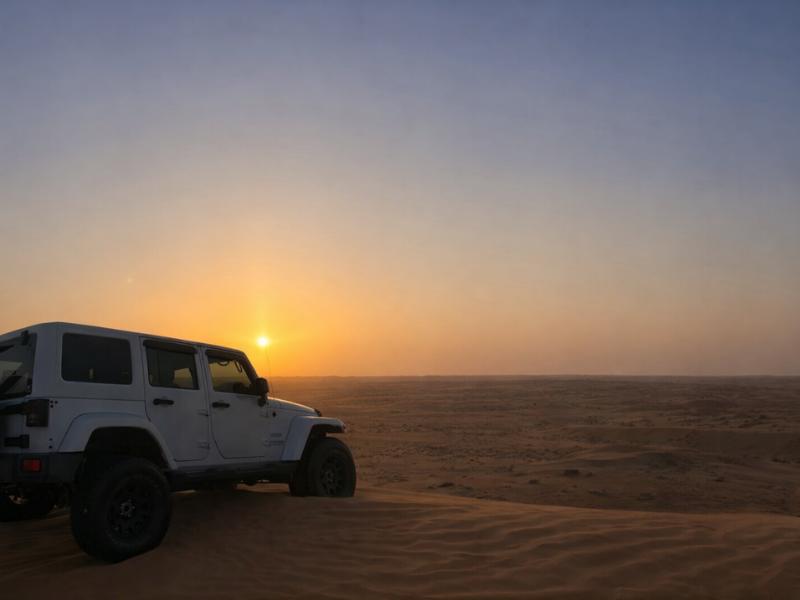
Late afternoon into sunset is the classic slot, and for good reason: cooler air, softer light, and long shadows that make the dunes look their best. Sunrise runs are quieter and cold-crisp. Midday is the least rewarding, with flat, harsh light and fierce heat. If you can pick one, aim for sunset over the dunes.
Timing changes the whole feel of a drive. In the heat of the day the light is flat and white, the air shimmers, and the experience is more endurance than magic. Come the last two hours before dusk, the sand warms to gold, the ridgelines throw long shadows, and every crest becomes a photo. This is why so many trips are built around sunset over the dunes, ending with the vehicle parked high while the sky burns orange.
| Time | Light and heat | Verdict |
|---|---|---|
| Sunrise | Cold, crisp, soft first light | Beautiful and quiet, needs an early start |
| Late morning | Warming, harsher light | Fine, not special |
| Midday | Fierce heat, flat white light | Skip if you can |
| Late afternoon | Cooling, sand turning gold | Excellent |
| Sunset | Soft gold, long shadows, colour | The one to book |
Compare the actual itinerary as well as the price. The local Bidiyah sunset trip includes sandboarding and dinner, with camel riding extra. A Muscat shared day has separate standard, sunset and quad choices. The selected option determines what your quote covers. Related reading: best time to visit camel ride.
Curious about putting sunset at the center of the outing? Discover a four-hour Bidiyah trip built around the evening dunes.
Discover The Bidiyah Sunset Trip4 hours · Bidiyah meeting point, return to start
Camel riding costs extra. No overnight accommodation. Not recommended during pregnancy. Agree the meeting point before arranging transport.
Can you combine dune bashing with sandboarding?
Yes, and it is a natural pairing. The driver takes you up a big dune, then you slide back down on a board while they meet you at the bottom. Sandboarding is slower and gentler than snow, more of a fun glide than a high-speed rush, and it breaks up a drive nicely without adding much cost or risk.
Sandboarding is the most common add-on, and it suits people who want a hands-on moment between the driving. The driver parks near a tall dune, hands you a waxed board, and you either sit or lie on it and let gravity do the rest. Do not expect snowboard speeds; dry desert sand has a lot of friction, so it is a controlled slide rather than a plunge. Standing up and carving takes practice, and most first-timers happily sit or belly-slide and laugh their way down.
| Activity | Thrill level | Effort | Good to know |
|---|---|---|---|
| Dune bashing | Medium to high | Passive, you are driven | Adjustable, sunset is best |
| Sandboarding | Low to medium | You climb, you slide | Slower than snow, climbing back up is the workout |
| Combined session | Balanced | Mix of both | The most complete short desert outing |
The one honest catch with sandboarding is the walk back up. Soft sand is hard to climb, so a single good run costs a sweaty five-minute trudge. That is part of the fun, but wear closed shoes and pace yourself in the heat. Many drivers will ferry you back to the top in the 4x4 if the dune is drivable, which turns it into laps. For a lot of visitors this combined drive-and-slide session is the sweet spot: enough thrill, a bit of activity, and the sunset at the end.
Plan for adding a board and a camel to the desert visit: check your date before arranging the rest of your trip. This option includes a two-hour Bidiyah safari with sand skiing and camel riding.
Dates and booking provided by GetYourGuide. If the calendar cannot load, use the booking link below.
Check Dates For The Bidiyah Camel Safari2 hours · Bidiyah meeting point
Food and tips excluded. Not suitable for back problems or mobility impairments. Confirm child restrictions and the exact meeting point.
Should you do it on a tour or self-drive?
For dune bashing specifically, go with a driver. Reading soft sand at speed is a learned skill, and a stuck or rolled vehicle deep in the dunes is a serious problem. If you want to self-drive the desert edge in your own 4x4, that is possible with experience and a convoy, but the actual dune bashing is best left to someone who does it every day.
Plenty of confident drivers ask whether they really need a 4x4 tour or could just rent and go. On the flat gravel tracks and the compacted approaches, a capable four-wheel drive and some caution get you a long way. The dunes are a different question. Getting a rented vehicle onto steep soft sand, at the angles that make dune bashing exciting, is where inexperience turns costly, and recovery out here is slow and expensive. This is the clearest case in the whole desert for handing the wheel to a professional.
There is also the after-dark payoff to think about. A guided sunset drive usually flows straight into the evening, so you can stay for stargazing once the sand cools and the sky lights up, or roll it into an overnight at a desert camp rather than racing the light back to the road. Getting here from Muscat is a straightforward run of a few hours, and most sunset trips are built to end with you either back on the highway or settled at camp for the night. Weigh the thrill you want against the effort you want to put in, and for the dunes themselves, the driver wins.
Curious about experiencing the dunes from the passenger seat? Discover a local driver for the sunset excursion, returning to Bidiyah.
Discover The Bidiyah Sunset Trip