Best Wahiba Sands Desert Camps: How to Choose
A night among the dunes can mean a mattress under the stars or a suite with a private deck, and the gap between them is wider than the price alone.
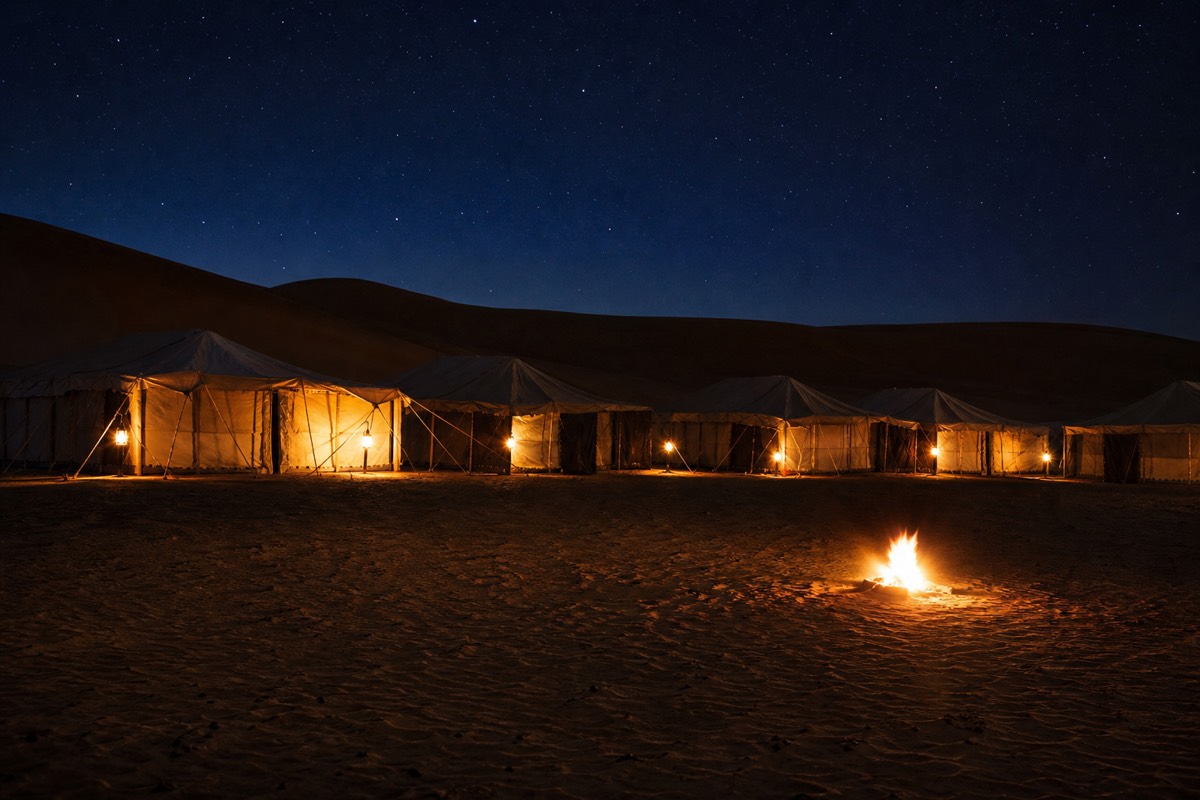
Camp tiers at a glance
How basic, mid-range and luxury desert camps compare on the facilities that matter, with a rough cost signal for each.
What are the desert camp tiers in Wahiba Sands?
Desert camps split into three tiers. Basic Bedouin-style camps offer a simple tent and shared washblocks at a budget price. Mid-range camps add private en-suite tents and a proper restaurant. Luxury camps bring air-conditioned suites, quiet locations deep in the sand, and usually arrive as part of a private package rather than a room booked alone.
Match the departure point, trip length and included activities to the plan above.
At A Glance: Private 4WD trip with an English-speaking guide, Desert Rose Camp standard-room accommodation, dinner and breakfast.
Explore The One-Night Camp StayThe word "camp" hides a lot. At one end sit family-run setups where a woven tent, a floor mattress and a shared shower are the whole offer. At the other end are polished retreats with cooled rooms, en-suite bathrooms and a lantern-lit dinner. Most travellers land in the middle, and knowing which tier you are actually booking saves both money and a letdown on arrival.
The dunes of the Sharqiya Sands rise to roughly 100 metres in places, so a camp's tier is not just about the bed. Price tracks comfort, but it also tracks location, quiet, and how far you sit from the next tent. A cheaper camp near the edge trades some of the drama of the tall dunes for an easier arrival. A premium camp buried in the sand delivers silence and a clean horizon, and that is why it reads as a splurge.
| Tier | Sleeping setup | Bathroom | Meals | Cost signal | Best for |
|---|---|---|---|---|---|
| Basic Bedouin | Canvas or goat-hair tent, floor mattress | Shared block, cooler showers | Simple Omani dinner and breakfast | Budget | Backpackers, one-night stopovers, first-timers |
| Mid-range | Private tent or cabin with real beds | Private en-suite in most | Buffet dinner, cooked breakfast | Moderate | Couples and families wanting comfort without a splurge |
| Luxury | Air-conditioned suite, sometimes a private deck | Private en-suite, hot water | Multi-course dinner, wide breakfast | Premium | Honeymooners, photographers, anyone chasing quiet |
Compare the total for your actual dates and party. The verified room-based overnight includes private Muscat transport, a standard Desert Rose Camp room, dinner and breakfast. Lunch and camel riding are extra. A private vehicle does not mean an exclusive or luxury camp.
Curious about putting a real camp name against the comparison? Discover a standard room at Desert Rose Camp on the private Muscat overnight.
Discover The One-Night Camp StayWhat does a night at a desert camp actually include?
A typical desert camp night runs late afternoon to mid-morning: a dune drive in, sunset from a ridge, Omani coffee and dates, a shared dinner, then stargazing under a dark sky. You sleep in a tent, wake for sunrise over the sand, eat breakfast, and drive out. Overnights fold transport, meals and activities into one price.
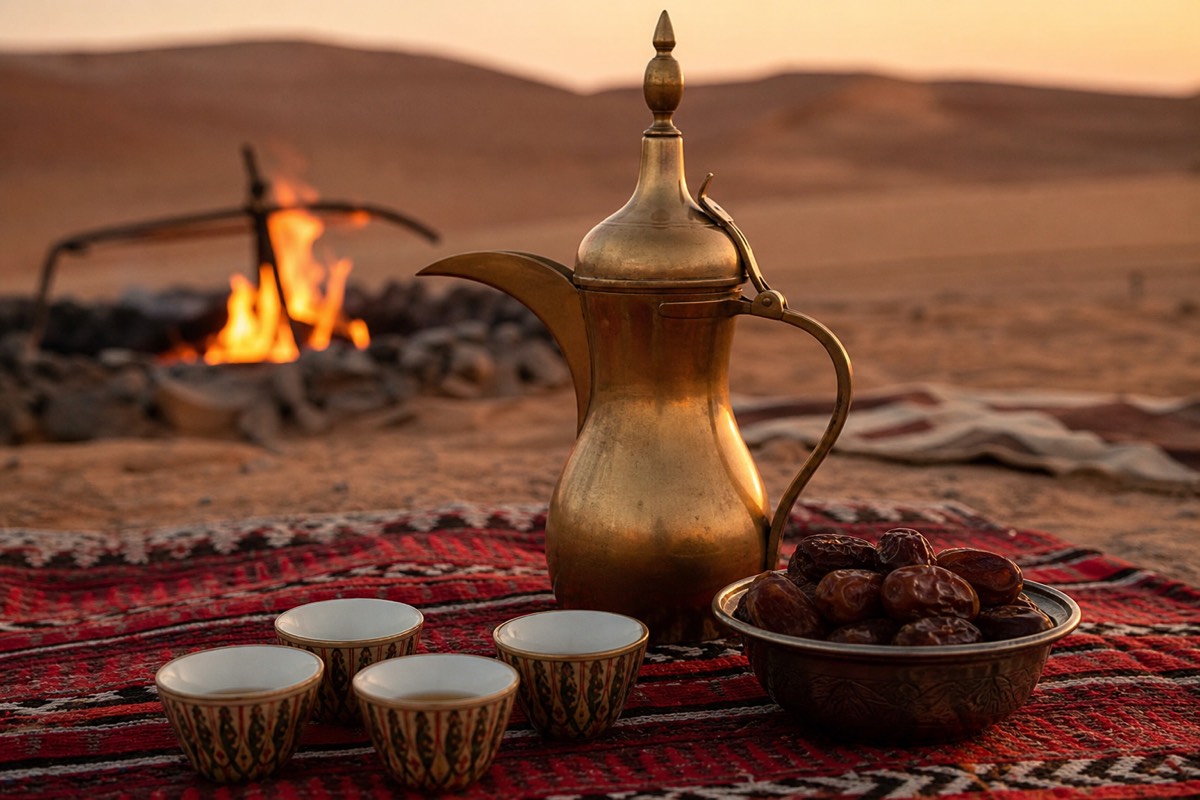
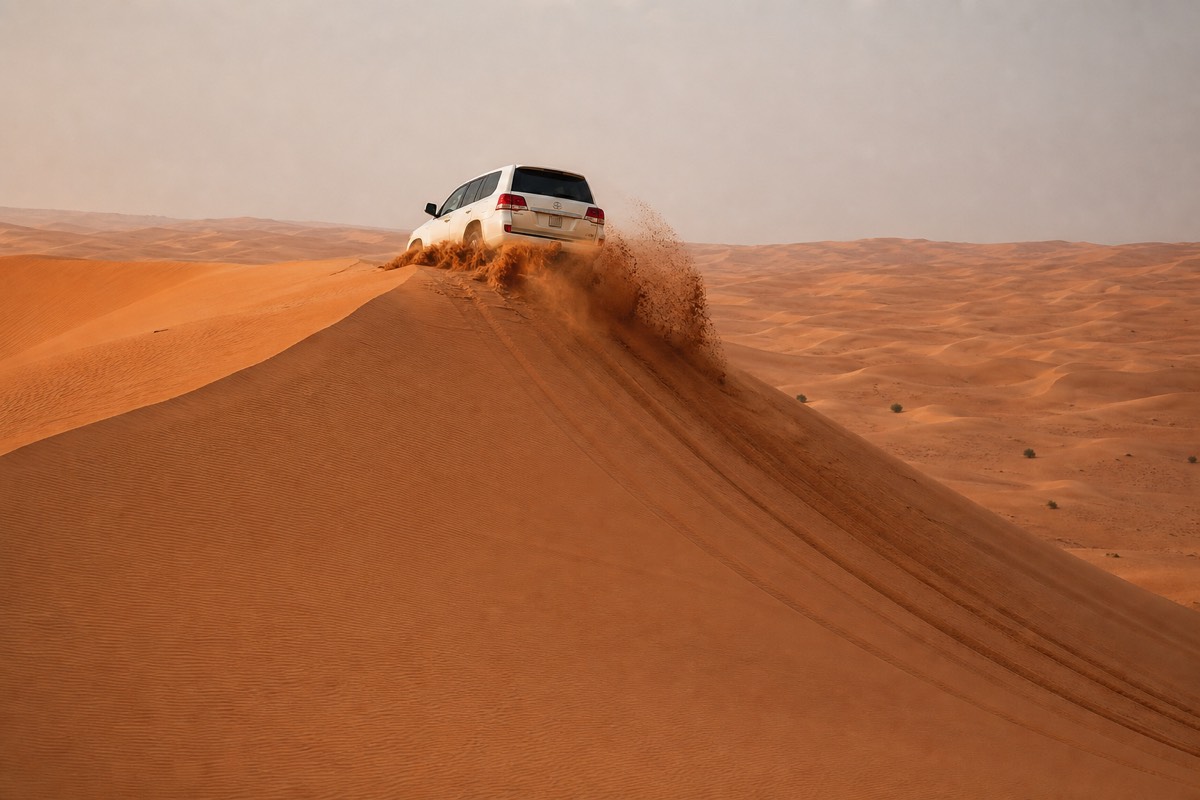
Arrival is usually timed for the golden light. Your driver drops tyre pressure at the sand's edge, then climbs into the dunes toward camp, often pausing on a high ridge so you can watch the sun fall. Back at camp, staff pour cardamom coffee and pass dates, a small ritual that says more about Omani hospitality than any brochure. Dinner is unhurried, and after dark the sky does the heavy lifting.
Stargazing is the quiet headline. Far from town lights, the Milky Way reads clearly on a moonless night, and some camps set out loungers or a telescope. Mornings reward the early riser: dawn light rakes the ridges before the heat builds, so set an alarm even if you plan a lazy day after. This overnight rhythm is the core of the experience, and it is exactly what a day trip skips.
Food deserves a mention of its own. Dinner at a camp leans on Omani staples: grilled meats, rice, flatbread, salads and fruit, usually served buffet-style at the mid tier and plated at the luxury end. Breakfast is simpler, with eggs, bread, dates and coffee, timed so you can eat after sunrise. Nobody goes hungry in a desert camp, and dietary requests are usually easy to arrange if you flag them when you book.
| Time | What happens | Why it matters |
|---|---|---|
| Late afternoon | Sand-edge tyre deflation, dune drive to camp | The approach is half the thrill |
| Golden hour | Sunset from a high ridge | The best light of the day on the dunes |
| Early evening | Omani coffee, dates, welcome | A genuine taste of local hospitality |
| Dinner | Buffet or set Omani meal | Fuel and a slow social hour |
| After dark | Stargazing, quiet, sometimes music | The dark sky the desert is known for |
| Dawn | Sunrise, breakfast, drive out | Cool light and an empty desert |
Plan for checking what the room package includes: check your date before arranging the rest of your trip. This option includes one camp night, dinner, breakfast, water and private transport.
Scheduled departures from Viator. Availability and final price are confirmed on Viator.
2 days, 1 night · Muscat pickup and return
Lunch and camel ride cost extra. Confirm your room and any mobility or child-seat requirements before booking.
Should you sleep inside the dunes or on the edge?
Deep-dune camps deliver the silence, the clean horizon and the darkest sky, but they need a longer 4x4 approach and a firmer budget. Edge camps sit near the paved road, so they are cheaper and easier for young families or short stays, at the cost of some drama, some distant light, and a little more background noise.
Location shapes the whole night. A camp set among the tall dunes puts sand in every direction, cuts out road glow, and gives you that postcard sunrise without a soul in frame. The trade is the drive: a proper 4x4 transfer over soft sand, which most overnight packages handle for you. If you self-drive, this is the point where a two-wheel car has to stop and a guide takes over.
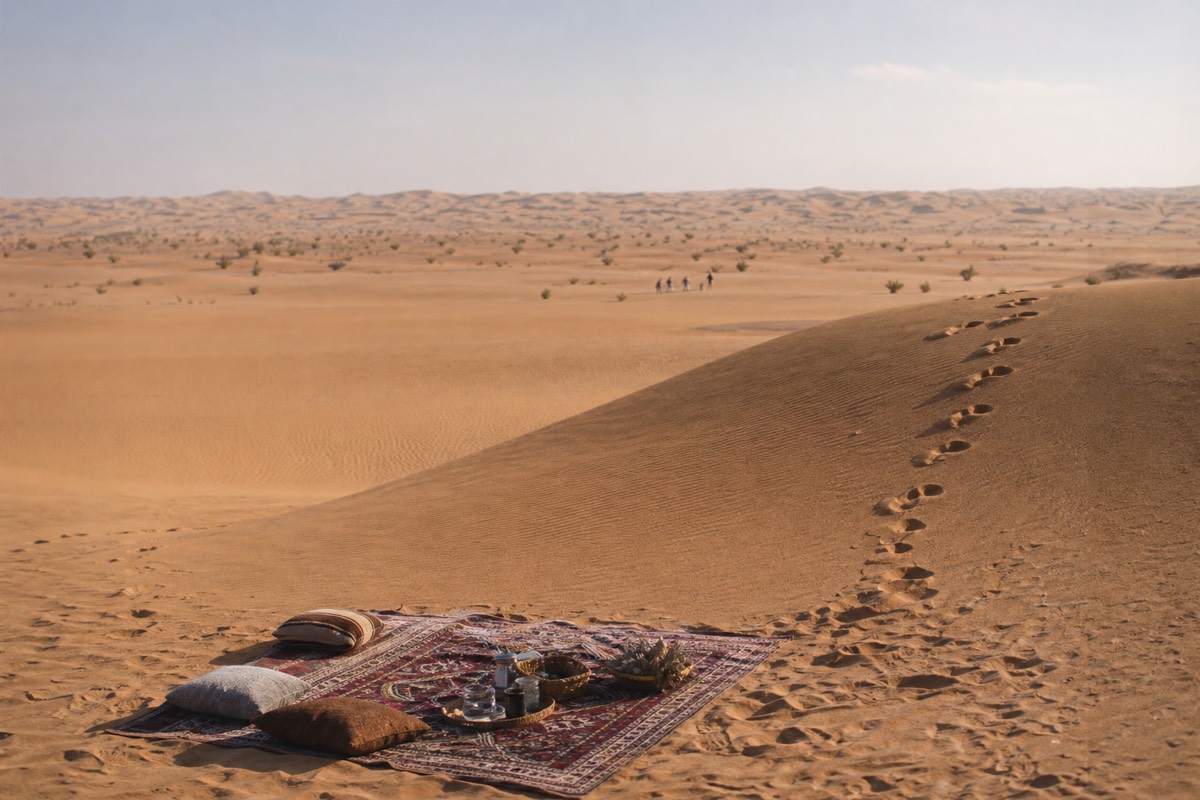
Edge camps, closer to the paved approach near Al Wasil and Bidiyah, make sense when time is tight or when you are travelling with toddlers who will not thank you for a long bumpy transfer. You still get dunes at the doorstep, just not the full ocean-of-sand feeling. For many first-timers this is a fair swap, and it keeps the price down.
| Factor | Deep-dune camp | Edge camp |
|---|---|---|
| Scenery | Sand in every direction | Dunes nearby, some flat ground |
| Night sky | Darkest, no road glow | Good, minor distant light |
| Access | Longer 4x4 transfer over soft sand | Short, close to paved road |
| Quiet | Near silent | Some background sound |
| Price | Higher, often private | Lower, easier to book |
| Suits | Couples, photographers | Young families, short stays |
Curious about fitting a camp night into a longer route? Discover a Muscat itinerary with two wadis and a camp stay.
Dates and booking provided by GetYourGuide. If the calendar cannot load, use the booking link below.
Discover The Camp-And-Two-Wadi Trip2 to 3 days, depending on option · Muscat pickup and return
Confirm the selected option’s camp, meals and extras. Wadi Shab involves hiking and swimming; do not assume accessible trails.
Basic Bedouin-style camps: who they suit
Basic camps keep it honest: a simple tent, a floor mattress, shared bathrooms, and a home-style Omani dinner around a fire. They suit budget travellers, solo trippers and anyone who wants the desert plain and unfiltered. You trade air conditioning and privacy for a lower price and, often, a warmer connection with the family who runs the place.
These are the camps closest to how the desert was always slept in. Expect a canvas tent, bedding laid on rugs, and a washblock shared with a handful of other guests. The food leans traditional, cooked simply and served generously, and the evening often turns on Omani coffee, dates and easy talk with a Bedouin host who has lived this landscape for decades.
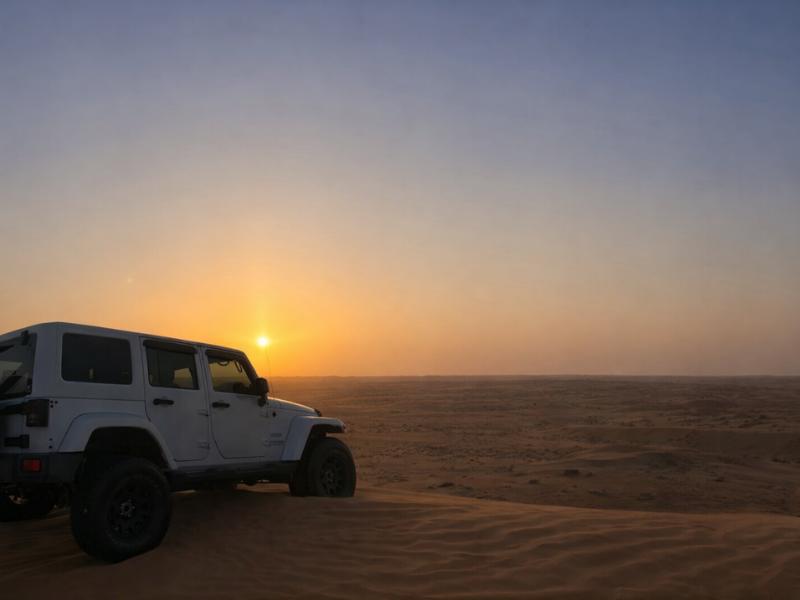
What you give up is comfort in the technical sense. Nights in the cool season can drop toward 10 to 15 degrees, so a basic tent leans on blankets rather than a thermostat. That is fine for one hardy night and a good story, less fine if you need reliable air conditioning or a private shower. A camel ride at dawn is often the natural add-on here, cheap and unhurried.
There is a cultural payoff at the basic tier that money cannot buy higher up. Sitting with a Bedouin family over coffee, hearing how they read the dunes and once moved their herds, is the kind of exchange a polished resort tends to smooth away. If you came to understand the desert as a lived-in place rather than a backdrop, a simple camp often delivers more than its price tag suggests.
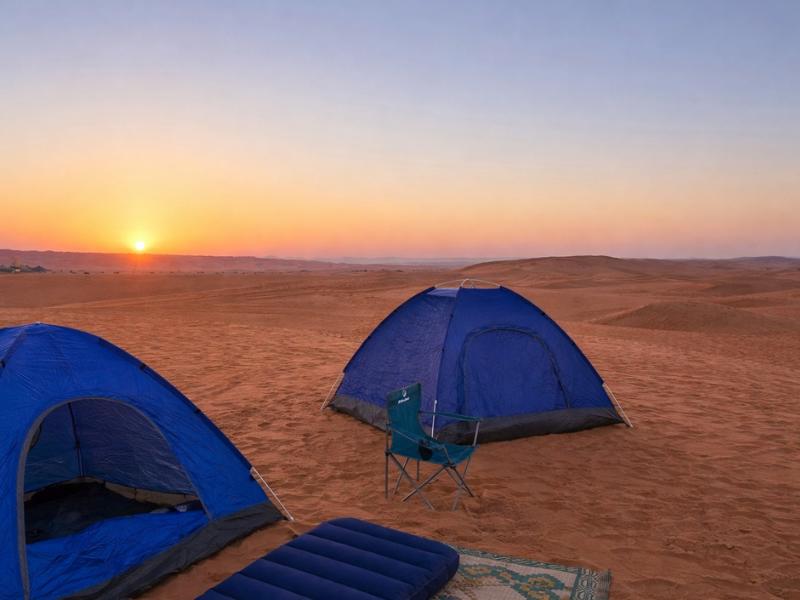
Plan for choosing a simpler night under canvas: check your date before arranging the rest of your trip. This option includes normal camping tents rather than a hotel-camp room.
Check Dates For The Two-Wadi Tent Trip2 days, 1 night · Muscat pickup and return
Normal camping tents, not hotel-camp rooms. Lunch excluded. Not recommended during pregnancy or for spinal or cardiovascular conditions; confirm hiking and swimming requirements.
Mid-range camps: the comfortable middle
Mid-range camps are the sweet spot for most visitors. You get a private tent or cabin with real beds and, usually, an en-suite bathroom, plus a buffet dinner and a cooked breakfast. The setting still feels like the desert, but you sleep well and wash in private. For couples and families, this tier balances atmosphere against comfort better than either extreme.
Step up from basic and the privacy arrives first. Your own tent, a door that zips shut, a proper bed, and in most cases a small en-suite with a hot shower. Meals move to a buffet with more choice, and the camp usually has a shaded majlis area for tea and a bar of sorts. The desert is still right there; you have just stopped roughing it.
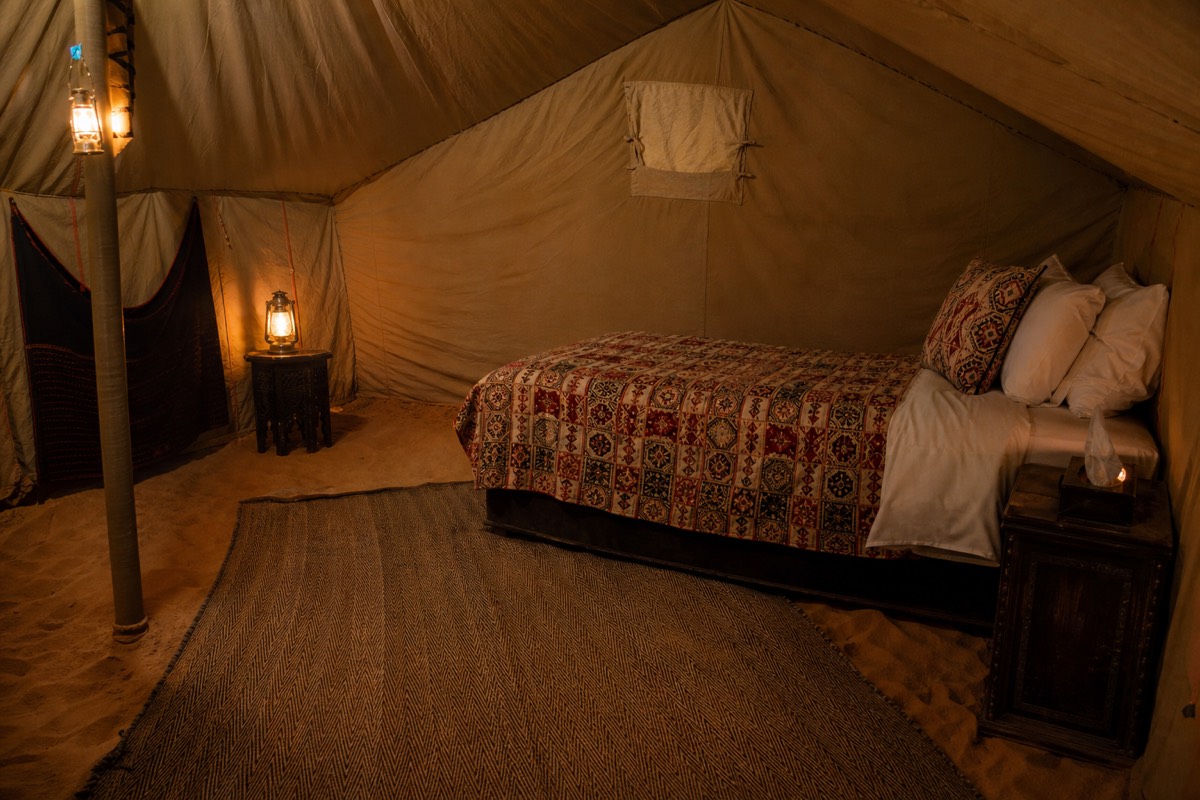
This tier is where the where to stay decision gets easy for a lot of people. It is comfortable enough for parents and grandparents, affordable enough not to blow the trip budget, and social enough to meet other travellers over dinner without feeling crowded. If you are unsure how many days to give the desert, a single mid-range night is a low-risk way to test whether one is enough.
Booking is easiest at this tier because supply is widest. Most bundled overnight packages sit here, which means more dates, more pickup options and better availability than the scarce luxury camps deep in the sand. If your plans are still loose, a mid-range camp is the least likely to sell out from under you, and it rarely disappoints anyone travelling as a couple or a small family.
Curious about finding a room-based overnight? Discover the standard Desert Rose Camp room itinerary.
Discover The One-Night Camp StayLuxury camps: what the premium actually buys
Luxury camps buy quiet, location and comfort. Think air-conditioned suites, private decks facing the dunes, hot en-suite bathrooms and a multi-course dinner, usually set deep in the sand as a private experience. You are paying for isolation and polish more than for square footage. For a honeymoon, a milestone trip or serious photography, the premium earns its keep.
At the top tier the camp itself becomes part of the holiday. Suites hold their temperature through a hot afternoon, bathrooms run hot water on demand, and the layout keeps neighbours out of sight and earshot. Sunset comes with a chilled drink on a private deck, and dinner is a plated affair rather than a buffet scramble. The stars, of course, are free, and here they are as good as the desert gets.
These camps usually reach you as a private package: your own vehicle, your own guide, and a camp reserved for a small number of guests. That structure is what pushes the price toward the upper figures quoted earlier. The reward is a version of the desert with almost nobody else in it, which for many travellers is the whole point of coming this far.
No verified option in this shortlist guarantees a luxury suite, private deck or exclusive camp. Targeted provider research did not establish those facilities; do not treat a private vehicle as a luxury room.
Facilities compared across the three tiers
Move up the tiers and the same features keep appearing: private bathrooms, air conditioning, hot water and better food. Basic camps share facilities and lean on blankets, mid-range camps privatise the essentials, and luxury camps add cooling, plated dining and isolation. Match the row you care about most, whether that is a private shower or a quiet, dark sky, to the tier that guarantees it.
The fastest way to choose is to scan the features you refuse to compromise on. Some travellers cannot sleep without air conditioning; others will trade every comfort for the darkest possible sky. Read the matrix below against your own non-negotiables, then check the operator's listing to confirm which of these a specific camp actually provides, since setups vary even within a tier.
One caveat is worth flagging: a label like luxury is not standardised out in the desert, so two camps at the same tier can differ. One might cool every tent while another cools only the suites, and hot water can mean a solar tank that runs cold by the last shower. The matrix shows the typical pattern, but the listing is where you confirm the specifics for the exact camp you are booking.
| Facility | Basic Bedouin | Mid-range | Luxury |
|---|---|---|---|
| Private tent or room | Sometimes | Yes | Yes |
| En-suite bathroom | Shared | Usually | Yes |
| Hot water | Limited | Usually | Yes |
| Air conditioning | No | Some | Yes |
| Restaurant or buffet | Set meal | Buffet | Plated |
| Deep-dune location | Rare | Some | Common |
| Best sky darkness | Good | Very good | Excellent |
Confirm the exact room's bathroom, cooling and power arrangements. Camp tiers and a private tour label do not guarantee those facilities.
How do you pick the right camp for your trip?
Start with three questions: your budget, who is travelling, and how much comfort you need after dark. Solo and thrifty points to basic. Couples and families usually land mid-range. If quiet, privacy or a milestone occasion drives the trip, luxury pays off. Then match your dates to a package that includes the transfer, since the drive into soft sand needs a 4x4.
Decision-making gets simpler when you stop shopping on price alone and start with the trip you want. A family with young kids values a short transfer and a private bathroom over a deep-dune address. Two photographers value darkness and isolation over a buffet. A backpacker on a Muscat loop just wants one memorable night that does not wreck the budget. The camps map cleanly onto those needs.
The team behind Wahiba Sands Tours books all three tiers through the operators we work with, so the practical move is to pin down your priorities first, then pick the package that bundles them. Many visitors pair a camp night with Wadi Bani Khalid on the drive back, turning one overnight into a fuller loop. If you are still weighing a day trip vs overnight, the table below shows who each tier really suits.
| Traveller | Recommended tier | Why |
|---|---|---|
| Solo or budget | Basic Bedouin | Lowest price, most authentic, one good night |
| Couple | Mid-range or luxury | Privacy and comfort without roughing it |
| Family with kids | Mid-range, edge location | Short transfer, private bathroom, easier night |
| Photographer | Luxury, deep-dune | Darkest sky, clean horizons, isolation |
| Honeymoon or milestone | Luxury | Private deck, plated dinner, quiet |
Plan for booking the bed and journey together: check your date before arranging the rest of your trip. This option includes private Muscat transport and one standard camp room night.
Scheduled departures from Viator. Availability and final price are confirmed on Viator.
2 days, 1 night · Muscat pickup and return
Lunch and camel ride cost extra. Confirm your room and any mobility or child-seat requirements before booking.
When to camp: seasons and the weather
The best time to visit the camps is October to April, when days sit around 25 to 30 degrees and nights are cool and clear. Summer, May to September, can push past 45 degrees by day, so some camps trim hours or close. Book the cool season early, since the same nights are the busiest.
Weather is the single biggest lever on a desert night. In the cool months the daytime heat is manageable, the evening turns pleasant, and the sky stays sharp for stargazing. That window, roughly late October through March, is when official Oman tourism guidance and every camp operator will point you, and it is also when beds fill fastest around holidays and long weekends.
Come in high summer and the calculus changes. Midday heat can be punishing, sand gets too hot to walk barefoot, and a basic tent without cooling is a rough proposition after dark. If summer is your only option, lean toward a mid-range or luxury camp with air conditioning, and time your outdoor activity for dawn and dusk. The month scorecard below sums up the trade-offs.
| Season | Months | Day feel | Camping verdict |
|---|---|---|---|
| Peak cool | November to February | Around 25 degrees, cool nights | Ideal, book early |
| Shoulder | October, March | Warm days, mild nights | Very good, easier availability |
| Warm edge | April | Hot afternoons | Fine with air conditioning |
| Hot season | May to September | Often past 45 degrees | Only with cooling, dawn and dusk activity |
No summer cooling guarantee was verified for these room options. Confirm the exact room and operating dates before choosing a hot-season stay.
What to pack for a night in the dunes
Pack light but smart: a warm layer for the cold desert night, sun cover for the day, closed shoes plus sandals, a headscarf against blowing sand, a torch, and any personal medicine. Camps supply bedding and meals, so leave the bulky gear. Modest, breathable clothing works best, and a power bank keeps the camera alive after dark.
Desert nights catch people out. The same day that hit 30 degrees can fall to single digits by dawn in winter, so a fleece or light jacket is the item most first-timers wish they had brought. Sun protection covers the other half of the clock: a hat, sunglasses, high-factor sunscreen, and long sleeves that breathe. Knowing what to pack for one night keeps your bag small, since the camp handles the rest.
For footwear, closed shoes handle the walk over ridges and cool sand at night, while sandals are easier around camp. A lightweight scarf doubles as sun cover and a shield when the wind lifts the sand. Bring a torch or headlamp, a power bank, refillable water, and any medication you need. That short list, checked against the table, covers almost every one-night stay.
| Item | Why you need it | Priority |
|---|---|---|
| Warm layer | Cold desert nights, especially in winter | Essential |
| Sun cover | Hat, sunglasses, high-factor sunscreen | Essential |
| Closed shoes and sandals | Ridges by day, camp by night | Essential |
| Headscarf | Blowing sand and daytime sun | Recommended |
| Torch and power bank | Dark camp, long night of photos | Recommended |
| Personal medicine | Remote location, no pharmacy nearby | Essential |
Curious about leaving the camping shelter out of your bag? Discover normal camping tents supplied on a two-wadi overnight.
Discover The Two-Wadi Tent Trip