What's the Difference Between Wahiba Sands and the Empty Quarter?
Two Omani deserts, constantly confused, with different departure cities and short overnight options.
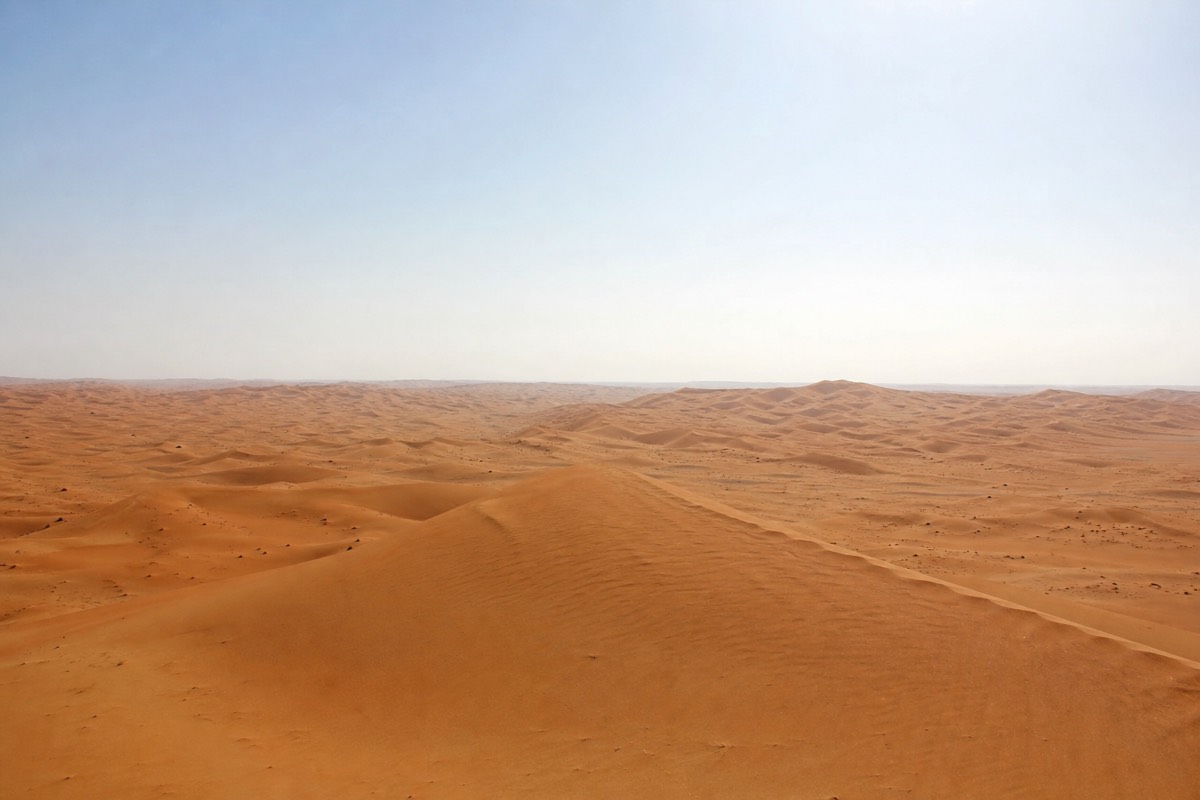
Wahiba Sands vs the Empty Quarter, at a glance
Figures are real: Wahiba Sands ~12,500 km2 with ~100 m dunes; the Rub al Khali ~650,000 km2 with dunes past 200 m.
Are we talking about the same desert, or two different ones?
They are two separate deserts. Wahiba Sands is a compact, visitor-friendly dune belt in eastern Oman, roughly 180 kilometres long. The Empty Quarter, or Rub al Khali, is the enormous sand sea covering around 650,000 square kilometres across four countries. Both have short bookable trips; crossing deep into the Empty Quarter is a different undertaking.
Match the departure point, trip length and included activities to the plan above.
At A Glance: Private 4WD trip with an English-speaking guide, Desert Rose Camp standard-room accommodation, dinner and breakfast.
Explore The One-Night Camp StayPeople mix these two up all the time, usually because both turn up under the phrase "Omani desert" in the same photo galleries. They are not the same place, and they are not even in the same league on scale. Wahiba Sands, known formally as the Sharqiya Sands, sits a few hours from the capital and is where nearly every desert camp, camel ride and dune drive in northern Oman happens.
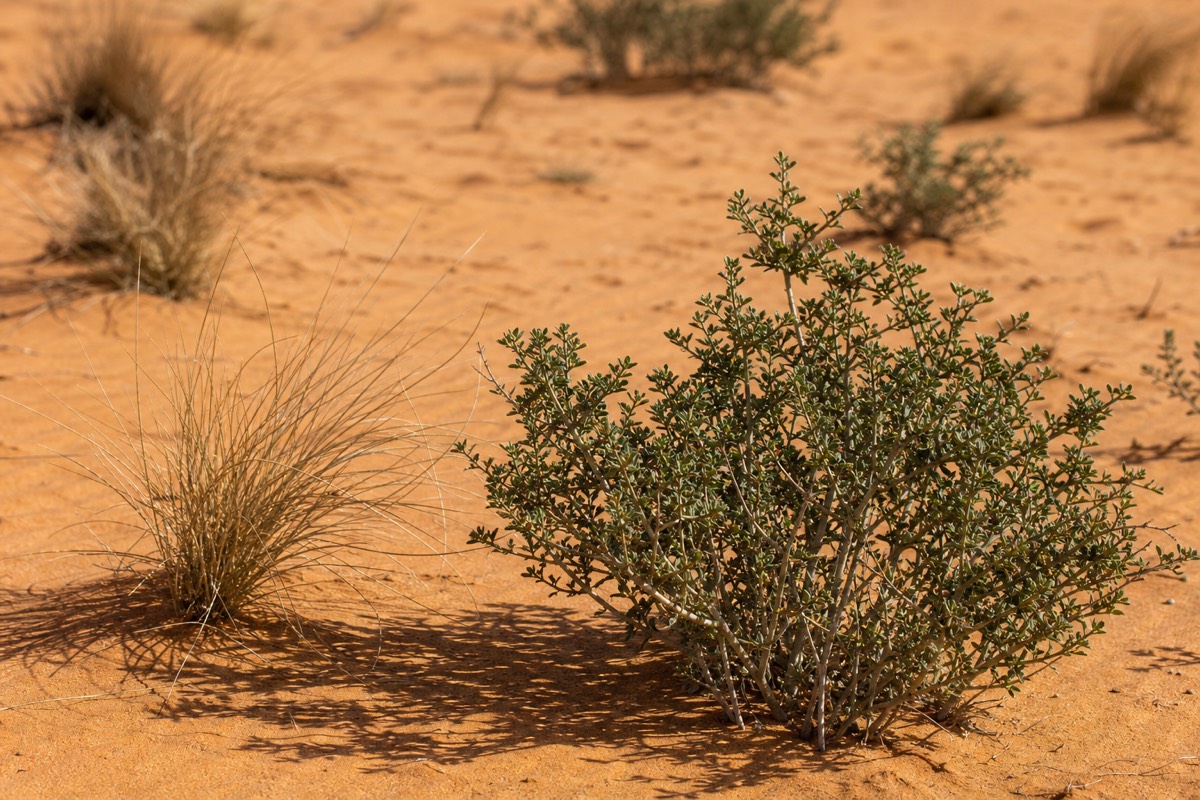
The Empty Quarter is the unbroken sand sea to the south and west, shared with Saudi Arabia, the United Arab Emirates and Yemen. It is the largest continuous stretch of sand on Earth. When travellers picture "the real Arabian desert" with no fence, road or landmark for hundreds of kilometres, they are picturing Rub al Khali, not Wahiba.
The short version, and the reason this question gets asked so often: Wahiba is the desert you visit on a normal Oman holiday, and the Empty Quarter is the desert you mount an expedition into. Everything below is really about that gap in scale, access and difficulty. Once you see the numbers, the choice usually makes itself.
Curious about seeing the Empty Quarter on a short southern trip? Discover a two-day Salalah departure with a desert tent night.
Scheduled departures from Viator. Availability and final price are confirmed on Viator.
2 days, 1 night · Salalah pickup and return
This is in southern Oman, not a Muscat or Wahiba departure. Not wheelchair accessible and not recommended during pregnancy.
How do they compare on size and dune height?
Wahiba Sands covers roughly 12,500 square kilometres with dunes reaching about 100 metres. The Empty Quarter is around 650,000 square kilometres, more than fifty times larger, with some dunes climbing past 200 metres. Wahiba feels big. Rub al Khali feels endless, with no town, road or signal deep inside.
Numbers make the difference concrete. Wahiba runs roughly 180 kilometres north to south and about 80 kilometres east to west, a belt you can picture on a map and cross in a day with the right vehicle. The Rub al Khali is the largest continuous sand desert on the planet, a basin so wide that a single crossing is measured in days, and a single dune can rise taller than a fifty-storey tower.
| Feature | Wahiba Sands | Empty Quarter (Rub al Khali) |
|---|---|---|
| Area | ~12,500 sq km | ~650,000 sq km |
| Rough span | ~180 km by 80 km | spans four countries |
| Tallest dunes | around 100 m | past 200 m |
| Countries | Oman only | Oman, Saudi Arabia, UAE, Yemen |
| Location in Oman | eastern Oman (Ash Sharqiyah) | far south and southwest (Dhofar) |
| Typical visit | half-day to overnight | multi-day expedition |
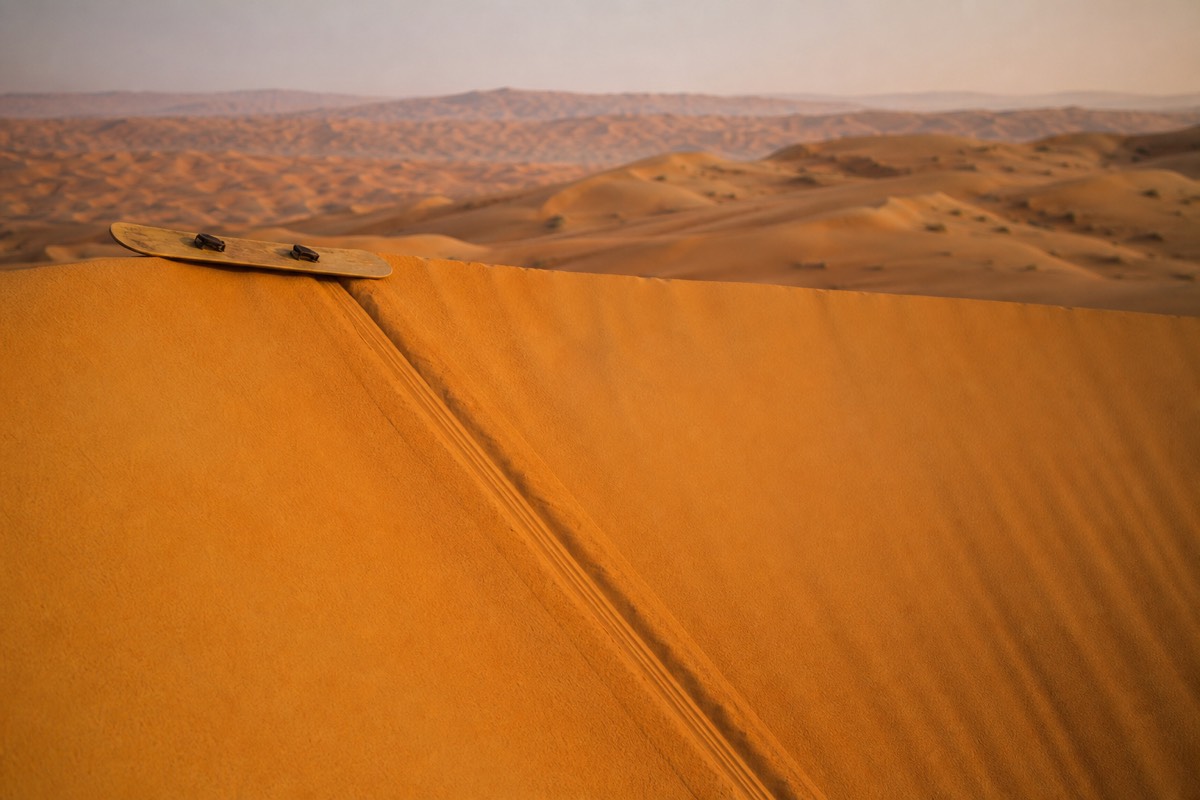
Height matters as much as spread. Wahiba's dunes are tall enough to give you a real climb and a view over a rolling sand horizon, yet you are rarely more than a short walk from a track or a camp. In the Empty Quarter the dunes are on a different scale, and the space between features is emptiness in every direction. That emptiness is the whole appeal for some travellers and the whole problem for everyone else.
Plan for experiencing Wahiba without a long crossing: check your date before arranging the rest of your trip. This option includes one desert night and private return transport from Muscat.
Check Dates For The One-Night Camp StayCan you just drive out and see each one?
Wahiba is easy. It is two to three hours from Muscat on paved road, and the dune edge starts where the tarmac ends near Al Wasil and Bidiyah. The Empty Quarter has no gateway town near the capital. Most access is far south from Salalah, and safe travel means a fuelled convoy, a guide and days of self-sufficiency.
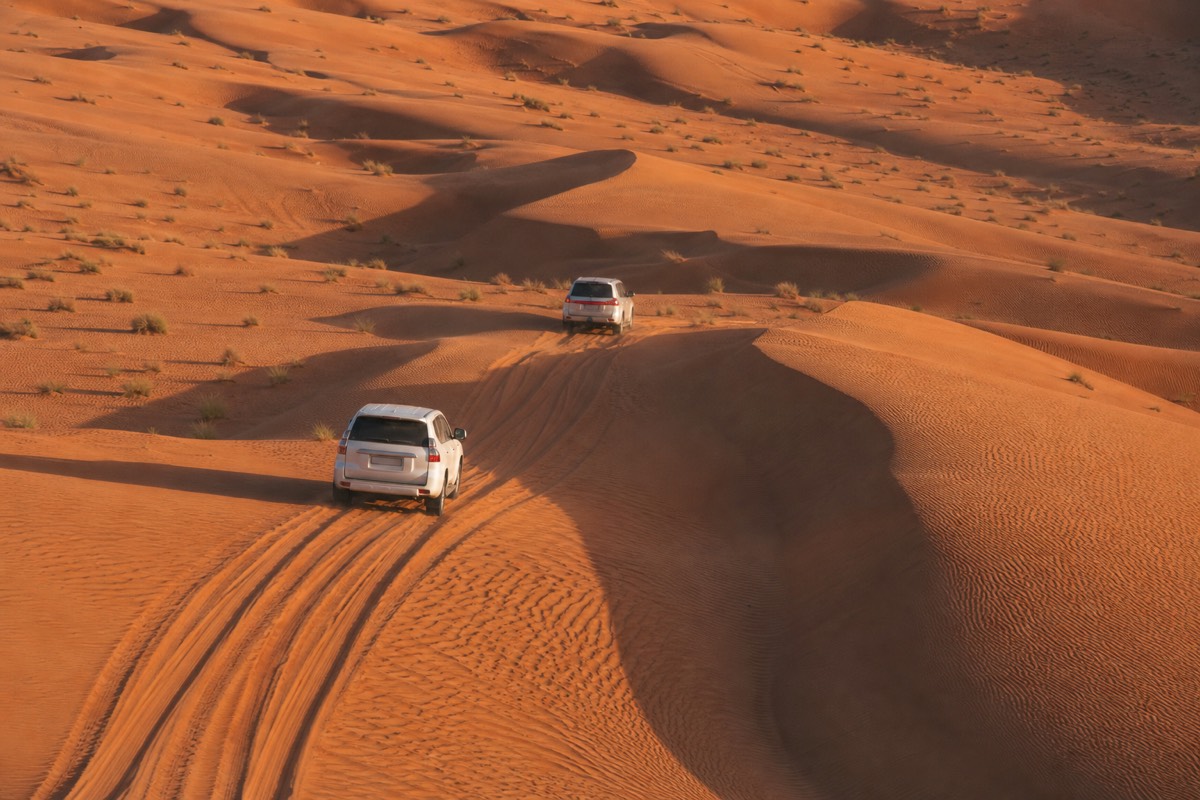
Getting to Wahiba Sands from Muscat is a straightforward highway run, then a short handover to a 4x4 at the sand's edge. Most visitors are climbing their first dune within a few hours of leaving the city. Al Wasil and Bidiyah are the two edge towns where sealed road meets sand, and both have drivers, fuel and supplies. That accessibility is the entire reason Wahiba dominates Oman's desert tourism.
| Logistics | Wahiba Sands | Empty Quarter |
|---|---|---|
| Nearest hub | Muscat (2 to 3 hrs) | Salalah, in the far south |
| Approach | paved highway to Al Wasil / Bidiyah | long remote desert route |
| Infrastructure | edge towns, fuel, camps | almost none inside |
| Phone signal | patchy but present near the edge | none deep inside |
| Guide needed | recommended, not essential at the edge | essential, with recovery kit |
| Water | carried, camps stocked | virtually none in the desert |
The Empty Quarter is a different order of trip. There is no equivalent of Al Wasil to drive to from Muscat. Most southern access starts near Salalah in the Dhofar region, and serious travel needs multiple vehicles, satellite communication, spare fuel and a driver who has done it before. This is not a place to wander into with a rental car and a phone map, and the choice between a day trip vs overnight matters far less here than simply making it out and back alive.
That gap in access explains almost everything else about how the two deserts are visited. Because Wahiba sits within a short drive of a major city, an entire industry of camps, drivers and day tours has grown up around it, and prices stay reasonable because demand is steady and the logistics are simple. The Empty Quarter also has bookable short tours from Salalah. A short Salalah overnight is different from a deep-desert expedition, with transport, a tent night and meals bundled together. When people call Wahiba the accessible desert and Rub al Khali the remote one, this is the practical reality they are describing, not a matter of taste.
Curious about starting from Salalah instead of Muscat? Discover an Empty Quarter overnight including Ubar and Wadi Dawkha.
Discover The Salalah Desert OvernightWhich one has the camps, camels and organised tours?
Almost all of it is in Wahiba. The tourist camps, camel treks, sunset dune drives and stargazing nights run in the Sharqiya Sands, most within an hour of the highway. The Empty Quarter has a handful of specialist expedition outfits and one or two remote luxury camps, but nothing like the everyday tour network Wahiba offers.
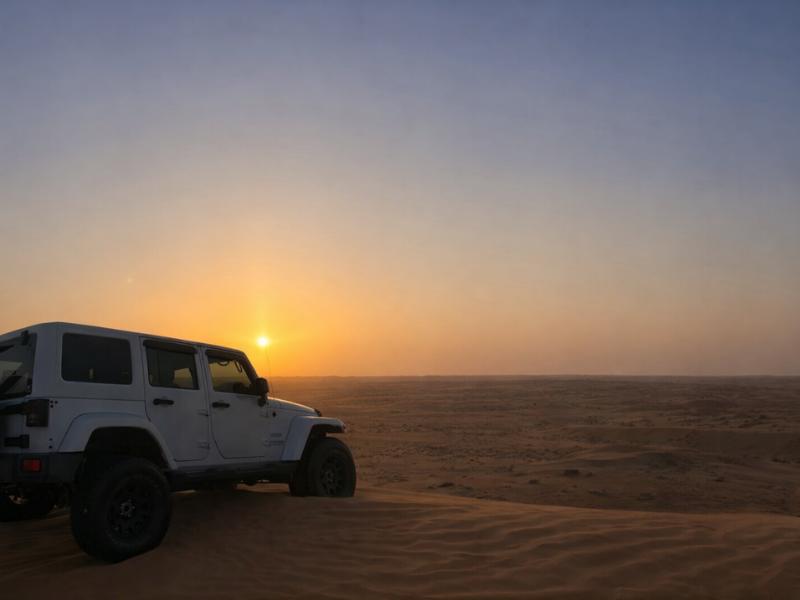
If you want a night in a desert camp, a camel ride at golden hour and a driver who handles the dune bashing for you, that experience lives in Wahiba. The overnight camps and driver-guides Wahiba Sands Tours works with all sit inside the Sharqiya belt, which is why a first desert trip to Oman almost always means these dunes and not the far south.
| Activity | Wahiba Sands | Empty Quarter |
|---|---|---|
| Overnight desert camps | many, all standards | a couple of remote luxury camps |
| Camel rides | widely offered | rare, expedition-only |
| Dune bashing / 4x4 tours | daily, from the edge towns | as part of a longer crossing |
| Stargazing nights | a core draw | excellent, but hard to reach |
| Day trips from a city | yes, from Muscat | no, distances too great |
Rub al Khali rewards a very different traveller: someone chasing distance, silence and the challenge of the sand sea itself. The few operators who go there run planned expeditions, not evening excursions, and they carry recovery gear because there is no one else out there to help. For a camel ride and a Bedouin welcome, Wahiba is the obvious home.
The everyday tour network in Wahiba also means real choice, which the Empty Quarter cannot offer. You can pick a short sunset run or a two-night stay, a shared group vehicle or a private driver, a simple camp or one with proper beds and a cook. That range lets you match the desert to your budget, your energy and the people you are travelling with, whether that is a couple after a romantic night under the stars or a family who need an easy pace. For a short southern visit, a two-day Salalah tour offers a tent night without being a full desert crossing.
Plan for combining camels and a Bedouin visit locally: check your date before arranging the rest of your trip. This option includes a two-hour Bidiyah safari with camel riding included.
Dates and booking provided by GetYourGuide. If the calendar cannot load, use the booking link below.
Check Dates For The Bidiyah Camel Safari2 hours · Bidiyah meeting point
Food and tips excluded. Not suitable for back problems or mobility impairments. Confirm child restrictions and the exact meeting point.
What is each desert actually like once you are standing in it?
Wahiba mixes dunes with life: Bedouin families, grazing camels, the odd 4x4 track and camps glowing at night. The Empty Quarter is pure emptiness, hyperarid and almost unpopulated, named for exactly that. Both are beautiful, but one feels like an adventure with a safety net and the other like genuine wilderness.
Spend an afternoon in Wahiba and you notice how inhabited it is. Bedouin of the Wahiba tribe still graze camels across the sands, children wave from pickups, and by dusk the ridgelines carry the glow of a dozen camps. The silence at night is real, yet help is never truly far away. That balance of wildness and reassurance is why families and first-time desert travellers do so well here.
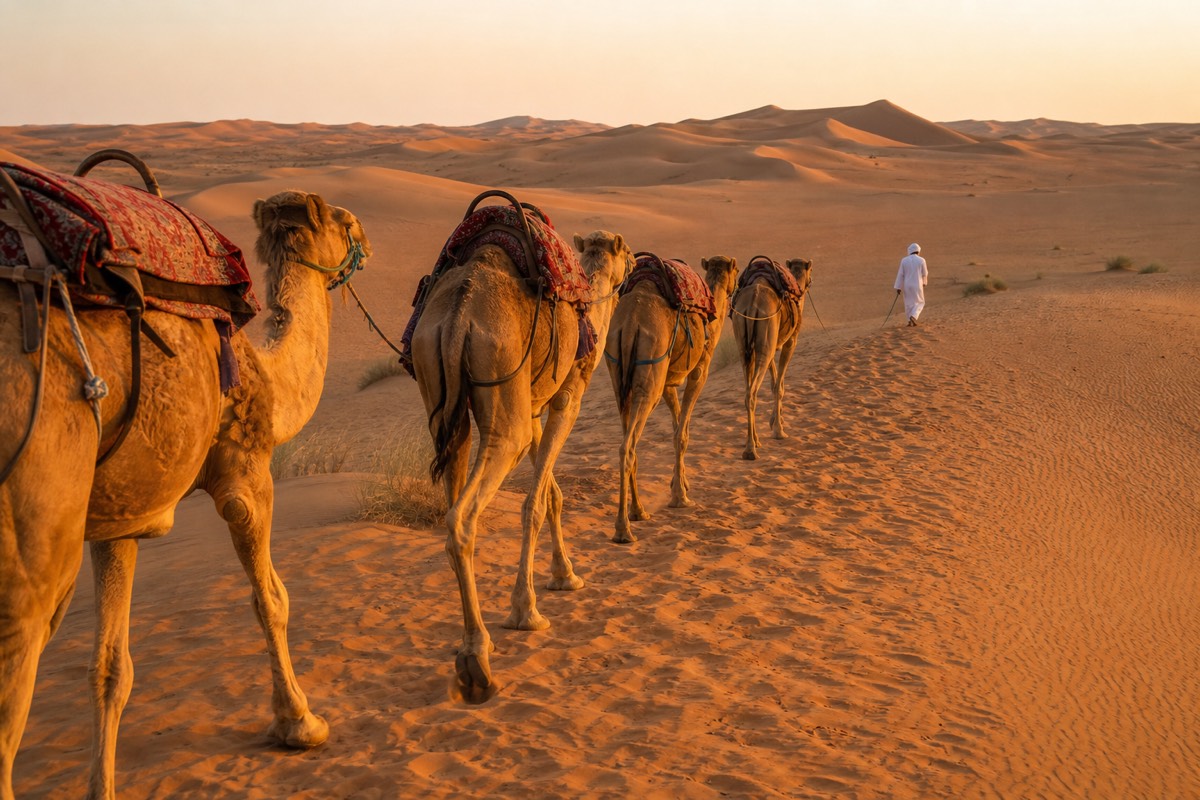
The Empty Quarter withholds all of that. Its name means the empty quarter for a reason: with almost no water, it is one of the least inhabited places on Earth. Wildlife exists, and Oman is rightly proud of reintroducing the Arabian oryx to its deserts, but you will not stumble across a camp or a coffee pot. The reward is a purity of space that few landscapes anywhere can match, paired with a seriousness that never lets up.
There is a middle truth worth stating plainly. Wahiba is not a watered-down version of the Empty Quarter. It is its own desert, big enough to feel remote, gentle enough to enjoy, and rich in the human culture that the deep sand sea simply cannot support.
Wildlife tells the same story of contrast. Oman is rightly proud of bringing the Arabian oryx back from the brink, and its deserts also hold sand gazelle, the shy Rueppell's fox and a surprising number of reptiles and birds that time their lives around the cool hours. In Wahiba you might spot tracks at dawn and hear birds near a camp; in the deep Empty Quarter, life clings on in far smaller numbers, spread thinly across an enormous space. Neither desert is lifeless, but Wahiba wears its living side more openly, which adds to the sense that you are visiting a place people and animals still share.
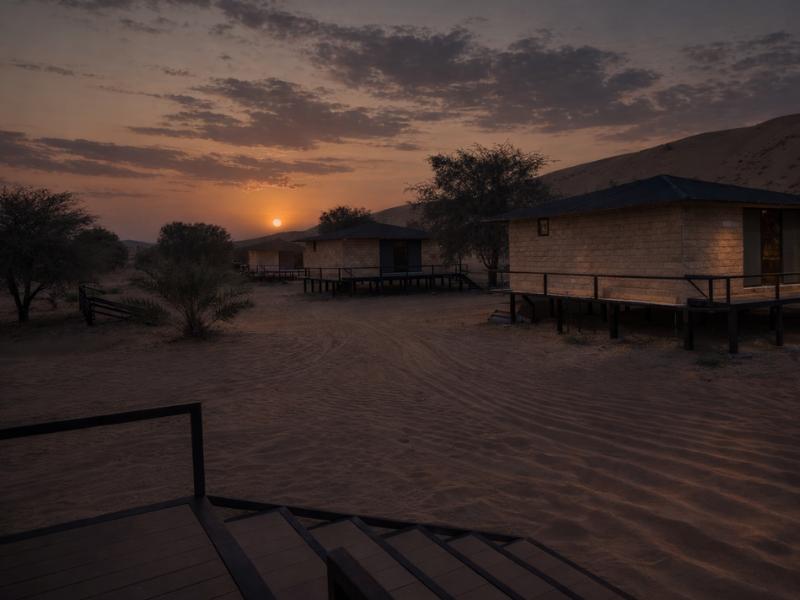
Curious about spending a night among Wahiba's dunes? Discover a standard Desert Rose Camp room, dinner and a sunrise itinerary.
Discover The One-Night Camp Stay2 days, 1 night · Muscat pickup and return
Lunch and camel ride cost extra. Confirm your room and any mobility or child-seat requirements before booking.
When should you go, and does the season differ?
Both share the same rhythm. October to March is the window. Winter days sit around a pleasant 25 to 30 degrees and nights drop near 15, so camping is comfortable. From May to September the sand can hit 50 degrees and most tours pause. The deeper Empty Quarter is even less forgiving of summer heat.
The best time to visit either desert is the cool season, and the reasons are simple physics. In winter the days are warm rather than punishing and the nights are cold enough to want a jacket by the fire. Shoulder months at each end can still push toward the high thirties in the afternoon, but low humidity makes that far more bearable than the coast. Oman's official tourism guidance points visitors to these same cooler months for desert travel.
| Season | Daytime | Night | Verdict |
|---|---|---|---|
| Nov to Feb | ~25 to 28 C | ~15 C | ideal for both deserts |
| Oct and Mar | up to ~37 C | ~18 C | good, warmer afternoons |
| Apr and Oct edges | high 30s | ~20 C | doable early and late in the day |
| May to Sep | up to ~50 C | warm | avoid; most tours pause |
The difference is one of degree, not direction. Both deserts are winter destinations, but the Empty Quarter's remoteness stacks the risk higher in summer: a breakdown in 50-degree heat, hours from help, is a genuine emergency in a way that a hot afternoon near a Wahiba camp is not. Plan either trip for the cooler half of the year and you remove most of the difficulty in one decision.
Plan for putting the southern desert date on your calendar: check your date before arranging the rest of your trip. This option includes a private Salalah round trip with dinner and breakfast.
Check Dates For The Salalah Desert OvernightCan you fit both into one Oman itinerary?
You can, but not on the same loop. Wahiba pairs naturally with Muscat, the coast and the mountains of the north. The Empty Quarter belongs to a southern trip built around Salalah. Most visitors do Wahiba on a first holiday and save Rub al Khali for a dedicated return, often flying south rather than driving the long way.
Geography, not preference, keeps these two apart on a map. Wahiba sits within easy reach of the capital, so it slots into a northern circuit alongside Muscat, the coastal wadis and the Hajar mountains without stretching the route. You can drive out, sleep in the dunes and be back among green oases the next afternoon. That closeness is exactly why it appears on almost every first Oman itinerary.
| Region | Base | Desert within reach |
|---|---|---|
| Northern Oman | Muscat | Wahiba Sands (2 to 3 hrs) |
| Eastern Oman | Bidiyah / Al Wasil | Wahiba Sands (at the edge) |
| Southern Oman | Salalah (Dhofar) | Empty Quarter (Rub al Khali) |
The Empty Quarter lives on a different trip entirely. Reaching it means basing yourself far south around Salalah, then heading out on a planned expedition, which is why people usually fly between the two rather than trying to join them by road. Chaining both into one holiday is possible for travellers with two or three weeks and a taste for long distances, but for most it is cleaner to give each desert its own visit. Do Wahiba now, learn whether the sand gets under your skin, and let the far south pull you back another year.
Curious about keeping the northern desert on your Muscat itinerary? Discover Wadi Bani Khalid, Wahiba and Ibra across two days.
Scheduled departures from Viator. Availability and final price are confirmed on Viator.
2 days, 1 night · Muscat pickup and return
Lunch and camel ride cost extra. Confirm your room and any mobility or child-seat requirements before booking.
So which desert should you actually book?
For a normal Oman holiday, book Wahiba Sands. You get real dunes, a night under the stars and a camel ride without a survival plan. Choose the Empty Quarter if your route includes Salalah and a guided desert overnight or a longer expedition. For most people that is a separate, later trip, not a first visit.
Deciding how many days you have and whether you want a day trip vs overnight in Wahiba is a much more useful question than Wahiba versus Rub al Khali, because for the overwhelming majority of trips the answer is Wahiba. It gives you the dunes, the camps and the quiet without asking you to become an expedition leader, and it is close enough to fold into a wider Oman itinerary.
| If you are... | Book | Why |
|---|---|---|
| On a first Oman trip | Wahiba Sands | easy access, camps, camels, stargazing |
| Travelling with kids or parents | Wahiba Sands | short drive, comfortable camps |
| Short on time | Wahiba Sands | a day trip or one night does it |
| A seasoned desert traveller | Empty Quarter | true wilderness, big crossings |
| Chasing total emptiness | Empty Quarter | no camps, no crowds, pure sand |
Save the Empty Quarter for when you already know you love the desert and want to go deeper, literally. It is one of the last genuinely wild places anywhere, and it deserves the planning a wild place demands. For nearly everyone asking whether Wahiba is worth visiting, start there, sleep a night in the sand, and let the far south stay on the list for a bolder trip later.
Plan for choosing the southern overnight with clear endpoints: check your date before arranging the rest of your trip. This option includes a Salalah pickup and return rather than a Muscat transfer.
Check Dates For The Salalah Desert Overnight