What to Pack for a Wahiba Sands Desert Trip
A practical packing list for the dunes: layers for hot days and cold nights, sun and sand protection, and the kit the camp already has covered.
Day pack vs overnight bag
What changes between a day trip and an overnight, given the desert camp already provides bedding, towels, meals and water.
What do you actually need to pack for Wahiba Sands?
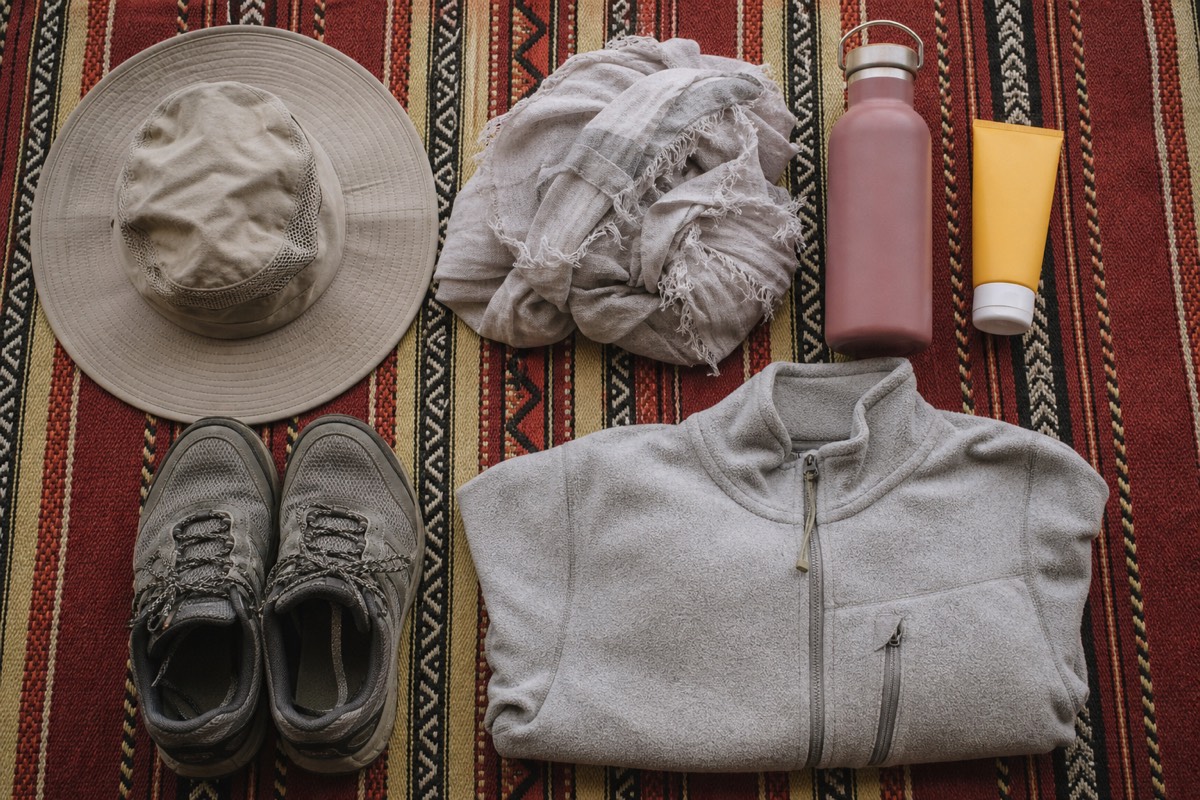
Pack light, breathable clothing for hot days, a warm fleece and jacket for cold nights, and full sun protection: hat, sunglasses, high-SPF sunscreen and a scarf against blowing sand. Add closed shoes for the dunes, a power bank, wet wipes and any medication. Most camps provide bedding, towels, meals and water.
Match the departure point, trip length and included activities to the plan above.
At A Glance: Private 4WD trip with an English-speaking guide, Desert Rose Camp standard-room accommodation, dinner and breakfast.
Explore The One-Night Camp StayThe whole packing puzzle comes down to one fact: the desert is hot by day and cold by night, and the wind carries sand into everything. Get your gear right for that swing and the trip is easy; get it wrong and you spend the evening shivering or the afternoon burning. Knowing what to wear here is less about fashion and more about layers you can add and shed.
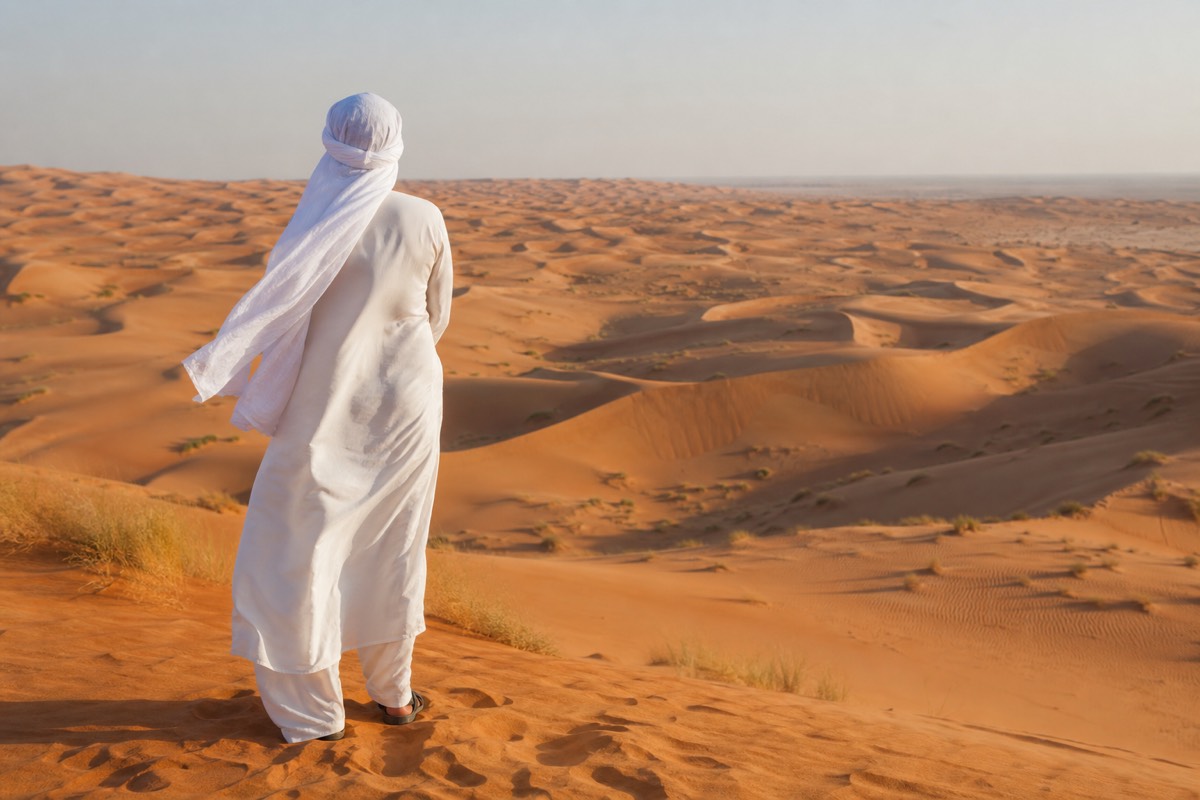
Keep the bag small. A desert camp is not a hotel where you unpack a suitcase, and the 4x4 transfer has limited space, so a soft duffel or backpack beats a hard case. The overnight camps our operators use, including those Wahiba Sands Tours works with, hand you bedding and towels at the tent, which trims the list further. Everything below builds from that.
A useful way to build the bag is to sort everything into three piles: sun and sand protection, day clothing, and warm night gear. Almost nothing you bring should fall outside those three, plus a small pouch of tech and toiletries. If an item does not clearly serve the heat, the cold or the grit, it probably does not need to come. That test alone keeps most people from hauling a case twice the size they end up using, and a lighter bag is easier to wrestle in and out of a 4x4.
For a sense of what you are dressing for, the desert's wide day-to-night temperature swing is the whole reason layering matters here. Oman's tourism board describes the A'Sharqiyah Sands and its climate, and the background on the Wahiba Sands explains why an inland sand sea heats and cools so sharply. Read either before you pack and the list below makes more sense: light, breathable cover for a hot, exposed afternoon, and genuine warmth for a clear, cold night. It also underlines why sand protection matters as much as sun protection, since fine, wind-blown grit is a constant companion on the dunes and works into anything left open.
| Category | Bring | Priority |
|---|---|---|
| Clothing | Light layers, fleece, jacket | Essential |
| Sun | Hat, sunglasses, SPF, scarf | Essential |
| Feet | Closed shoes and sandals | Essential |
| Tech | Power bank, charging cable | Recommended |
| Health | Medication, wet wipes, lip balm | Recommended |
Curious about shrinking the overnight bag? Discover a standard camp room, dinner, breakfast and water in the Muscat overnight package.
Discover The One-Night Camp StayWhat clothes work best in the desert?
Layering is the answer. Wear loose, light long sleeves and trousers in natural fabrics by day for sun cover that still breathes, then add a fleece and a windproof jacket as the temperature drops after sunset. Choose desert tones over black, and keep everything comfortable for climbing and sitting on sand.
Deciding what to wear is easier once you think in layers rather than outfits. Loose, breathable clothing keeps you cool and, counter-intuitively, covering your skin protects it better than baring it, since it blocks the sun and traps a little shade against you. Natural fibres like cotton and linen handle the dry heat well and shake sand off easily.
Come evening, the same body that wanted airflow now wants insulation, so a fleece plus a wind layer covers the gap. Bring one more warm item than you think you need in the cool season. Modest cuts also suit Oman's culture, especially near villages and the wadi, so pack with both the climate and local custom in mind.
Colour is a small thing that helps in the heat. Pale, sandy tones reflect the sun and hide the fine dust that settles on everything, while black soaks up warmth you do not want during the day. Loose cuts beat tight ones, since a little airflow against the skin is what keeps you cool when there is no shade. Bring one set of clothes per day out for a short trip, and remember that sand brushes off natural fibres far more willingly than it lets go of heavy synthetics.
| Layer | Item | When |
|---|---|---|
| Base | Light long-sleeve top, trousers | Hot daytime |
| Mid | Fleece or wool jumper | Evening |
| Outer | Windproof jacket | Night, breezy ridges |
| Sleep | Warm socks, beanie | Peak-winter nights |
Plan for putting your sunset layers to use: check your date before arranging the rest of your trip. This option includes four hours of dunes, sandboarding and dinner from Bidiyah.
Scheduled departures from Viator. Availability and final price are confirmed on Viator.
4 hours · Bidiyah meeting point, return to start
Camel riding costs extra. No overnight accommodation. Not recommended during pregnancy. Agree the meeting point before arranging transport.
How do you protect yourself from the sun and sand?
Sun and sand are the two constants, so cover for both. Bring a wide-brimmed hat, wrap-around sunglasses, and high-SPF sunscreen for face, neck, ears and hands. A scarf or shemagh shades your neck, filters dust, and can cover your face on a windy ridge. Reapply sunscreen often; the glare off the sand doubles your exposure.
There is no shade out on the dunes, and the pale sand throws light back up at you, so protection has to work from every angle. A brimmed hat and proper sunglasses guard your face and eyes, while broad-spectrum sunscreen goes on the spots people forget: ears, the back of the neck, and the tops of the hands and feet.
The single most useful item is a scarf or shemagh. Wrapped loosely, it shades your neck all day; pulled up, it filters blowing sand from your mouth and nose when the wind picks up. It also keeps grit out of your collar. One large cotton scarf earns its place more than almost anything else in the bag.
Reapplication is where sun plans usually fail. Sweat, wind and the simple passage of hours strip sunscreen faster than people expect, so a small tube you can carry beats a big bottle left in the vehicle. Cover the easy-to-miss spots deliberately: the part in your hair, the underside of the chin where sand reflects light upward, and the tops of the feet if you wear sandals. Sunglasses should wrap or sit close to the face, both to block glare and to keep blown grit out of your eyes on an exposed crest.
| Item | Protects against |
|---|---|
| Wide-brim hat | Direct sun on face and neck |
| Wrap sunglasses | Glare and blowing sand |
| High-SPF sunscreen | Burn, reflected UV |
| Scarf / shemagh | Sun, wind, dust |
| Lip balm with SPF | Chapped, burned lips |
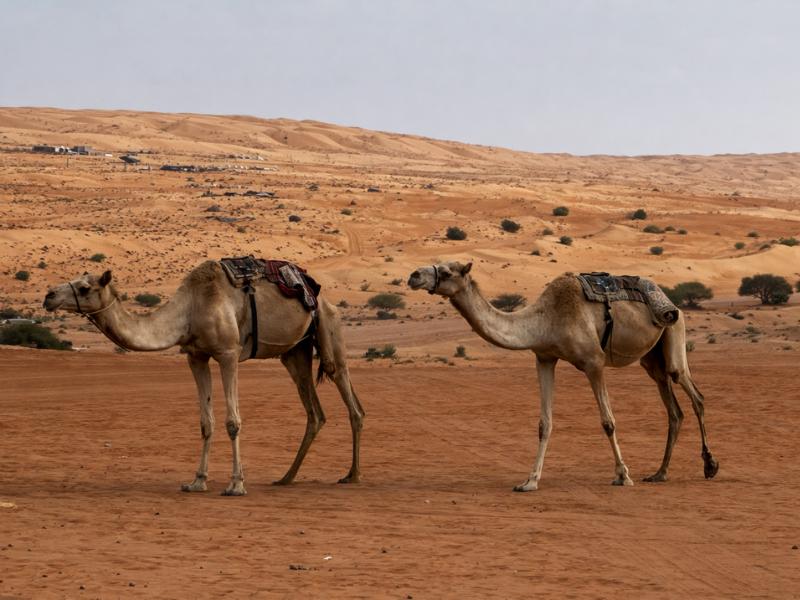
Curious about using your scarf on a desert outing? Discover an included camel ride and Bedouin house visit from Bidiyah.
Discover The Bidiyah Camel Safari2 hours · Bidiyah meeting point
Food and tips excluded. Not suitable for back problems or mobility impairments. Confirm child restrictions and the exact meeting point.
What footwear works on the dunes?
Bring two kinds. Open sandals are perfect around camp and let you tip out the sand easily, while closed, low shoes or trainers protect your feet on a camel ride and on longer walks over hot or coarse ground. Skip heavy hiking boots; they trap sand and are overkill for soft dunes.
Footwear in soft sand is a small decision that makes a big difference. Around camp and on the dunes, sandals win because sand pours straight out of them, and going barefoot on cool evening sand is one of the trip's small pleasures. During the day, though, the surface can get hot enough to want something between it and your soles.
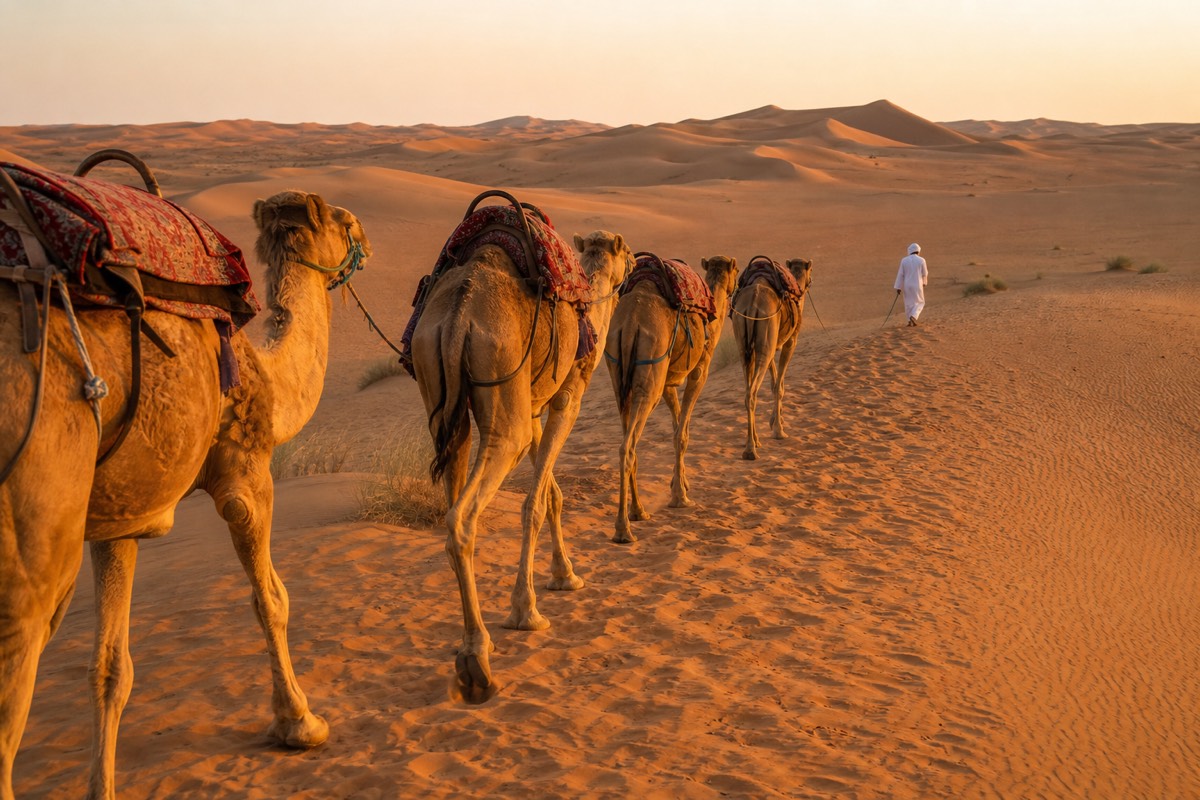
For a camel ride, closed shoes are the sensible choice, giving your feet cover and a bit of grip in the stirrup. If you plan any walking around the wadi or over rocky patches, trainers or light closed shoes handle it. Leave stiff hiking boots at home, since they fill with sand and give you nothing the softer options do not.
Whatever you wear, expect sand to get inside it, and choose shoes you can empty in seconds. That is the quiet case for sandals around camp and lightweight closed shoes for anything more active. Socks are worth packing even if you plan to live in sandals, since they add warmth on a cold night and a barrier for a camel ride. If a single pair has to cover everything, a breathable trainer you do not mind filling with sand is the most flexible choice for the dunes.
| Footwear | Best for | Notes |
|---|---|---|
| Open sandals | Camp, evenings, soft sand | Sand tips out easily |
| Trainers / closed shoes | Camel ride, walking, rocks | Protects from heat and grit |
| Hiking boots | Not recommended | Trap sand, unnecessary |
Plan for choosing footwear for a camel outing: check your date before arranging the rest of your trip. This option includes a two-hour local safari with a camel ride included.
Dates and booking provided by GetYourGuide. If the calendar cannot load, use the booking link below.
Check Dates For The Bidiyah Camel Safari2 hours · Bidiyah meeting point
Food and tips excluded. Not suitable for back problems or mobility impairments. Confirm child restrictions and the exact meeting point.
How do you stay warm at night?
Desert nights turn cold fast once the sun sets, so bring a fleece, a windproof jacket, and in peak winter a warm hat and socks for sleeping. Camp bedding is usually heavy and warm, and a fire takes the edge off the evening, but your own warm layer is what keeps you comfortable between activities.
The overnight cold surprises people every season. Clear skies pull the day's heat away quickly, and by the time you are stargazing after dinner the air has a real bite to it, especially in December and January. This is exactly why the packing list leans warmer than a hot afternoon would suggest.
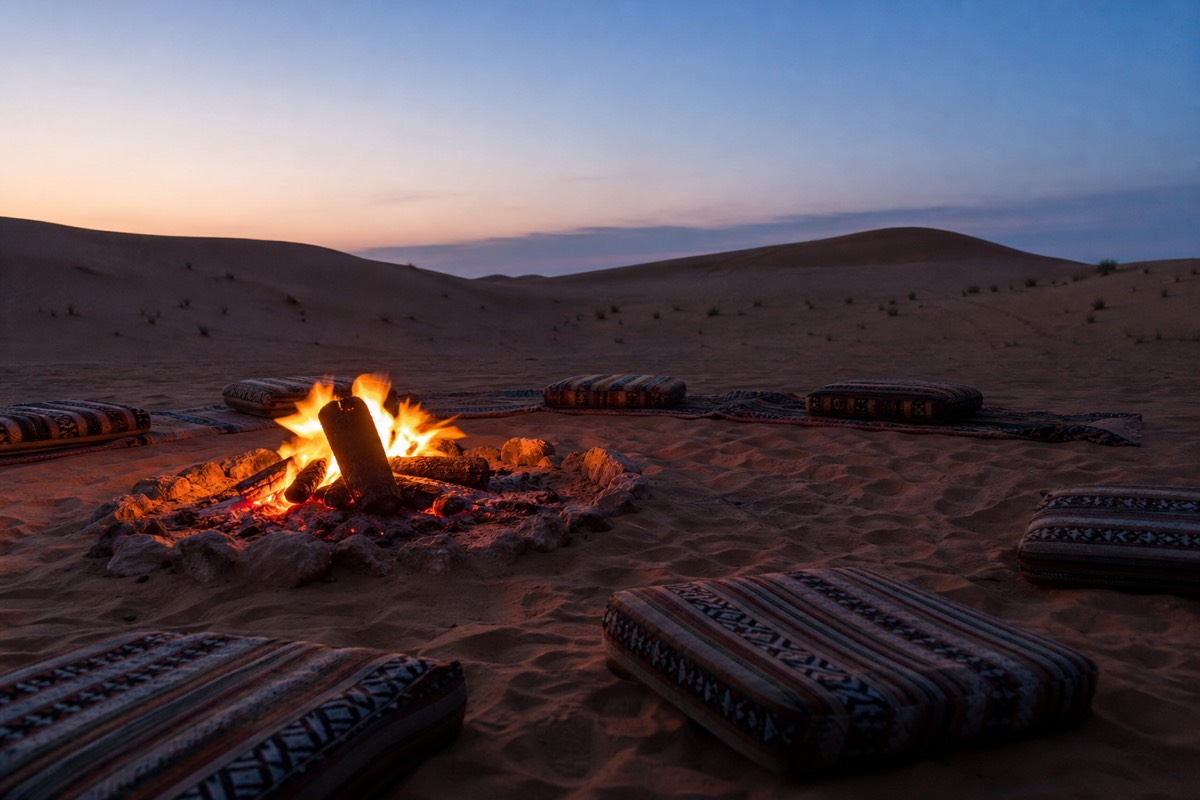
Layers you added at sunset should carry you through the evening at a desert camp, and the bedding handles sleeping. Still, a beanie and warm socks make a cold night far more pleasant, and they weigh almost nothing. Think of the fire and the camp blankets as backup, not as a substitute for bringing one proper warm layer of your own.
The mistake nearly everyone makes is packing for the photos they have seen, all sunlit dunes and t-shirts, and forgetting the hours after dark. A fleece, a wind layer and something for your head cost little space and rescue the evening. Think about the gap between dinner and sleep especially, when you might sit out for the stars for an hour or more with the temperature still falling. Bring that one extra warm thing you are tempted to leave behind; it is the item people most often wish they had.
| Night item | Why | Season |
|---|---|---|
| Fleece | First warm layer | All cool months |
| Windproof jacket | Cuts the evening chill | All cool months |
| Beanie and warm socks | Comfort for sleeping | Dec to Feb |
Curious about staying through the cold end of the night? Discover a camp-room itinerary with dinner and a sunrise stop.
Scheduled departures from Viator. Availability and final price are confirmed on Viator.
2 days, 1 night · Muscat pickup and return
Lunch and camel ride cost extra. Confirm your room and any mobility or child-seat requirements before booking.
Day trip vs overnight: how does the kit change?
A day trip needs only sun protection, water, a scarf and closed shoes, since you are back in the city by night. An overnight adds the warm layers, a toothbrush and small toiletries, a power bank and a torch. You still travel light, because the camp supplies bedding, towels and meals for the night in the sand.
Sorting your bag by day trip vs overnight keeps it from ballooning. If you are only out for the day, you can leave the warm gear behind and focus on beating the sun: hat, scarf, sunscreen, sunglasses and plenty of water, plus a swimsuit if the wadi is on the plan. Simple and light.
Choosing to stay overnight changes little more than you would expect. Add the fleece and jacket, a headtorch for the dark camp, a power bank, and a minimal wash kit. Because the camp covers the big items, the difference between a day pack and an overnight bag is often just one warm layer and a charger.
It helps to physically split the bag by trip length before you leave. For a day out, a small daypack holds water, sun kit, a scarf and a swimsuit, and you carry nothing you do not use. For an overnight, add a compact stuff-sack with the warm layers, a wash kit and a torch, and you are done. Because the camp shoulders the bulky items, the overnight bag stays surprisingly small, which matters when several guests and their luggage share one vehicle across the sand.
| Item | Day trip | Overnight |
|---|---|---|
| Sun kit and water | Yes | Yes |
| Warm layers | No | Yes |
| Torch / headtorch | No | Yes |
| Toiletries and power bank | No | Yes |
| Swimwear (for the wadi) | Optional | Optional |
Plan for packing only for a day away: check your date before arranging the rest of your trip. This option includes a Muscat desert-and-wadi day with no camp night.
Check Dates For The Muscat Desert DayWhat does the desert camp provide, so you do not over-pack?
Most camps supply the heavy items: a bed with warm bedding, towels, dinner and breakfast, and drinking water. Many run power in the evening for charging, and mid-range and luxury tiers add private bathrooms. That means you carry clothing, sun protection and personal items, not camping gear, sleeping bags or food.
Knowing what the camp handles is the fastest way to shrink your bag. Deciding where to stay affects the details, but almost every desert camp gives you a real bed, blankets suited to the cold nights, and towels, so there is no reason to bring your own bedding. Dinner and breakfast are included, usually as a buffet around the fire.
Water is provided, though carrying a refillable bottle is smart for the daytime activities. Power is often limited to evening hours, which is why a power bank matters more than a pile of chargers. Confirm your tier's bathroom and electricity setup when you book, and pack for the gap between what you need and what the camp already covers.
A refillable water bottle deserves special mention, since staying ahead of thirst is the single biggest comfort factor in the desert, day or night. Fill it whenever you pass water and sip steadily rather than gulping when you finally feel parched. Sand protection for electronics is the other easy win: a couple of zip-lock bags weigh nothing and keep phones, spare batteries and a camera working. Add a lens cloth, and the grit that ruins other people's photos never becomes your problem.
| Camp usually provides | You still bring |
|---|---|
| Bed and warm bedding | Clothing and warm layers |
| Towels | Toiletries and medication |
| Dinner and breakfast | Snacks if you are picky |
| Drinking water | Refillable bottle |
| Evening power | Power bank |
Curious about knowing which bulky items the booking covers? Discover a standard room at Desert Rose Camp rather than a bring-your-own tent trip.
Discover The One-Night Camp StayWhat tech, health and extra items should you bring?
Bring a power bank and cable, a torch or headtorch, a camera with a sealed bag against sand, and a small first-aid and medication kit. Add wet wipes, hand sanitiser, lip balm and cash for tips. Keep electronics in a zip bag, because fine sand finds its way into every port and lens.
Power and light top the extras list. Sockets are scarce and often evening-only, so a charged power bank keeps your phone alive for photos and maps, and a headtorch frees your hands around a dark camp. If photography matters to you, protect the gear: a simple zip-lock bag and a lens cloth save a camera from the grit that gets everywhere on windy days.
For health and comfort, pack any regular medication, a basic first-aid kit, and rehydration salts if you are prone to feeling the heat. Wet wipes and hand sanitiser stand in for a quick wash, and cash covers tips for drivers and camp staff. None of this is bulky, and each item quietly removes a small hassle from the trip.
None of these extras is heavy, and each covers a small gap the desert would otherwise expose. A power bank keeps the phone alive for photos and the drive home; a headtorch turns a dark walk to the tent from a stumble into a stroll. Rehydration salts are worth tucking in if you feel the heat, and a basic first-aid kit handles the scrapes and blisters that come with climbing dunes. Cash covers the tips that card machines out here cannot, for the driver and the camp team who make the night work.
| Item | Why it matters |
|---|---|
| Power bank and cable | Limited sockets in camp |
| Headtorch | Hands-free light after dark |
| Camera in a sealed bag | Sand protection |
| Wet wipes, sanitiser | Quick clean-up |
| Cash | Tips and small purchases |
Plan for giving your night kit a purpose: check your date before arranging the rest of your trip. This option includes a telescope session with an astronomy guide and photos.
Check Dates For The Guided Telescope SessionWhat should you leave at home?
Skip the hard suitcase, heavy hiking boots, formal clothes and anything you would hate to see coated in fine sand. You do not need a sleeping bag, tent or cooking gear, since the camp covers all of it. Drones need permits in Oman, so check the rules before bringing one, and leave valuables you will not use.
Over-packing is the common mistake, not under-packing. A rigid suitcase is awkward in a 4x4 and useless on sand, so a soft bag is the move. Stiff boots, dressy outfits and delicate items add weight and worry for no payoff, since the desert dress code is comfortable, covered and casual.
Camping hardware stays home too: no tent, no sleeping bag, no stove, because the camp is the accommodation. If you are tempted to bring a drone, look into Oman's permit requirements first, as rules apply and casual flying is restricted. Pack for sun, sand and cold nights, and leave the rest, and the desert becomes a lot simpler to enjoy.
The broader principle is to pack for sun, sand and cold, and to trust the camp for the rest. Every item that does not serve one of those is weight you carry for nothing, and space you lose in a shared vehicle. Leave the just-in-case pile at the hotel; the desert rewards a light, deliberate bag far more than a thorough one. Bring what protects you and what keeps you warm, and you will spend the trip looking outward at the dunes instead of digging through a suitcase.
| Leave behind | Reason |
|---|---|
| Hard suitcase | Poor fit for 4x4 and sand |
| Hiking boots | Trap sand, unnecessary |
| Tent and sleeping bag | Camp provides shelter and bedding |
| Drone (without a permit) | Regulated in Oman |
| Valuables you will not use | Nothing to gain in the dunes |
Curious about leaving your tent behind? Discover a two-wadi itinerary with normal camping tents supplied.
Discover The Two-Wadi Tent Trip