Visiting Wahiba Sands: The Complete Travel Guide
Everything a first-timer needs to plan an Oman desert trip: where the sands are, how to reach them, where to sleep, and what to do once the tarmac ends.
Muscat to the dunes at a glance
Distances and drive times from Muscat to the Wahiba Sands gateway, the desert camp and the Wadi Bani Khalid detour.
Where exactly are Wahiba Sands, and what makes this desert different?
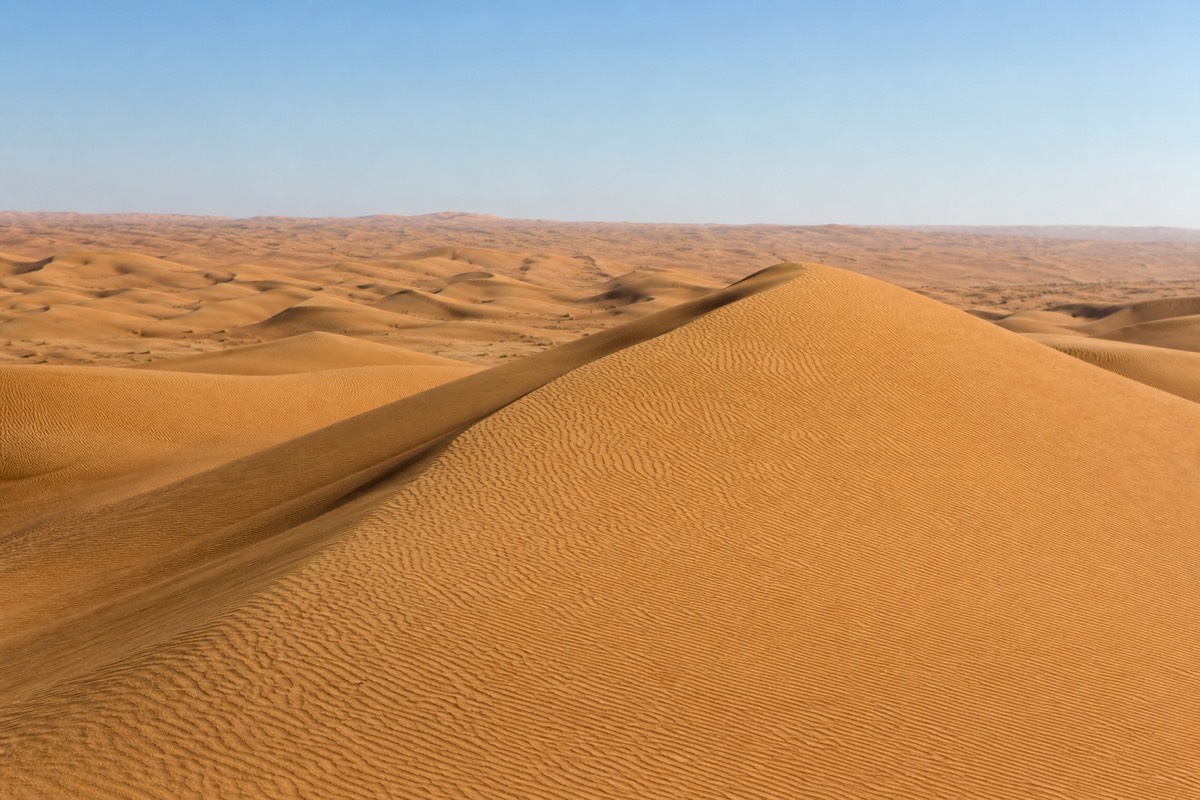
Wahiba Sands, also called the Sharqiya Sands, is a sea of honey-coloured dunes in eastern Oman, roughly 180 kilometres north to south and 80 kilometres wide. It covers about 12,500 square kilometres, with golden sand ridges climbing up to around 100 metres above the gravel plains below.
Match the departure point, trip length and included activities to the plan above.
At A Glance: Private 4WD trip with an English-speaking guide, Desert Rose Camp standard-room accommodation, dinner and breakfast.
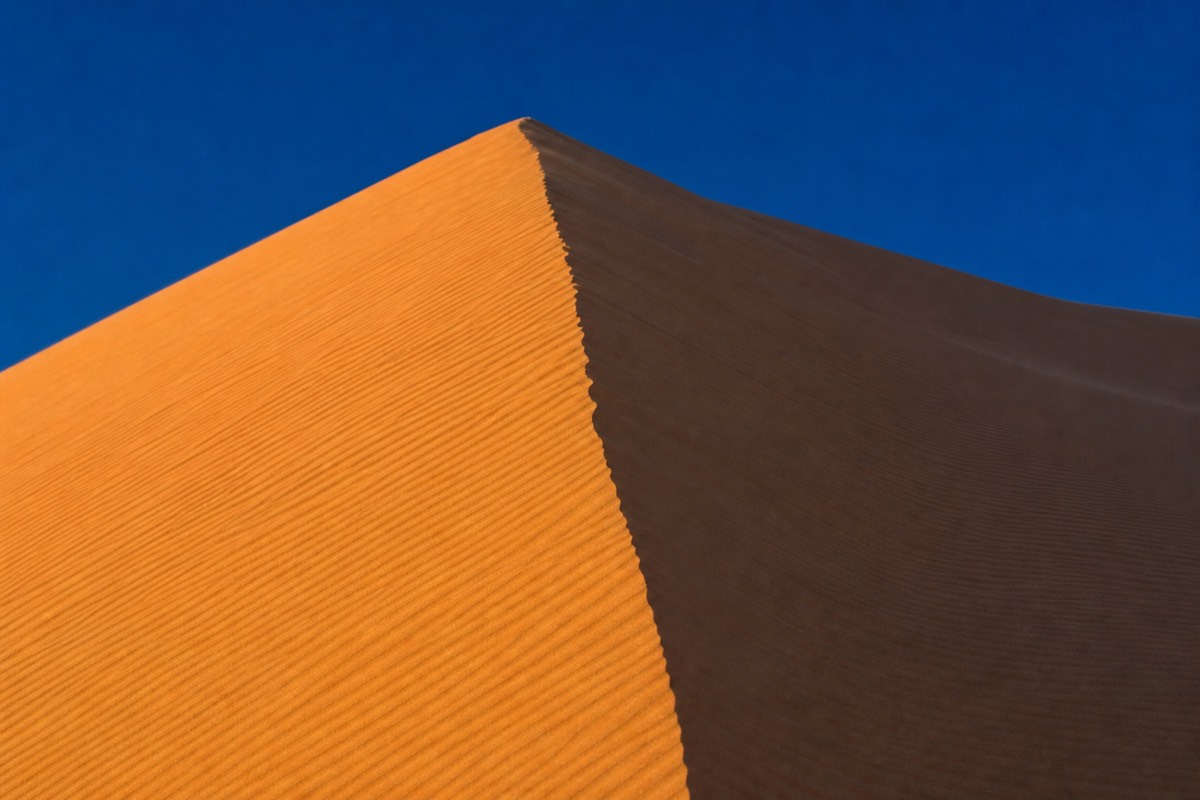
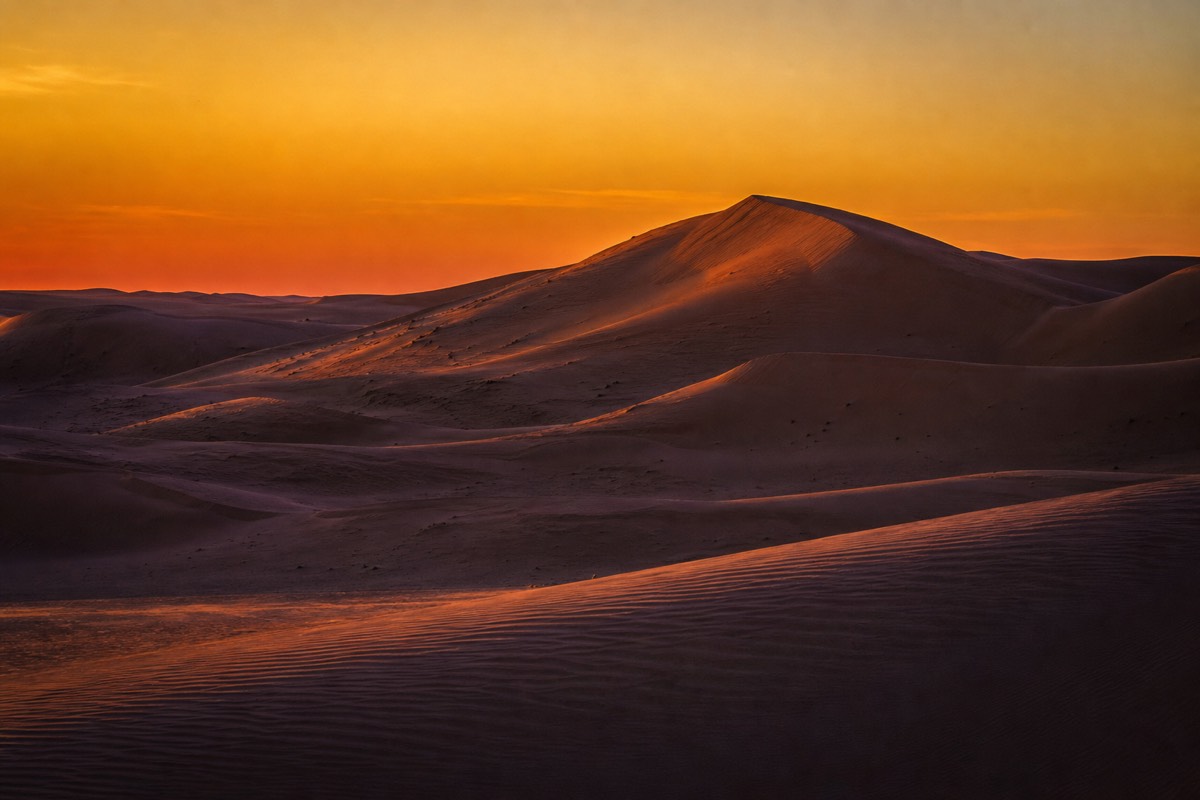
Explore The One-Night Camp StayDrive south-east out of Muscat and the coast slowly gives way to gravel, then, near the town of Al Wasil, the first real dune rises like a slow wave. This is the northern edge of a desert the Bedouin have crossed for centuries. The sand shifts from pale gold on the crests to a deep rust-red at the base, a colour split that grows sharper as the sun drops toward the horizon.
The formal name is the Ramlat al-Wahiba, after the Bani Wahiba tribe whose herders still graze camels along the fringes. The dune field is boxed in by the Hajar Mountains to the north and the Arabian Sea to the east and south, part of why the ridges here are so tall and so cleanly shaped. A Royal Geographical Society expedition ran here from 1985 to 1987, cataloguing plants, insects and mammals and turning what looked like empty ground into one of the best-studied deserts anywhere. For a wider overview of the geography, Britannica's entry on the Al-Wahibah Dunes is a reliable primer.
The dunes are not static. Wind constantly reshapes the crests, which is how a sand sea this size keeps its sculpted ridgelines, and it is also why fixed roads never survive inside it. Beneath the surface lies a surprise the Royal Geographical Society documented: pockets of groundwater that support hardy plants, insects, reptiles and small mammals, along with the grazing that has sustained Bedouin life here for generations. Stand on a high ridge at dawn and the field reads as row after row of parallel dunes marching toward the horizon, a pattern you only fully grasp from the top.
| Feature | Detail |
|---|---|
| Local names | Wahiba Sands, Sharqiya Sands, Ramlat al-Wahiba |
| Rough size | About 180 km north-south, 80 km east-west, near 12,500 sq km |
| Tallest dunes | Up to around 100 metres |
| Named after | The Bani Wahiba Bedouin tribe |
| Gateway towns | Al Wasil and Bidiyah |
| How you enter | 4x4 only, once the tarmac runs out |
Curious about seeing the northern dunes without a camp stay? Discover a Bidiyah sunset outing with sandboarding and dinner.
Discover The Bidiyah Sunset TripIs Wahiba Sands worth visiting on an Oman trip?
For most travellers, yes. Few places let you stand on a 100-metre dune at sunset, sleep under a sky thick with stars, and be back in a city hotel by the next afternoon. Wahiba Sands sits close enough to Muscat for a single overnight, yet feels genuinely wild once you are inside it.
The appeal is partly access. This is a vast dune field you can reach in an easy half-day, unlike the far larger Empty Quarter (Rub al Khali) that spreads across southern Oman and takes real expedition planning. Families manage it, first-time desert travellers manage it, and photographers keep coming back for the light. That mix of scale and reach is rare.
The other draw is variety. In one short stay you can trade a camel ride at walking pace for a stomach-lurching 4x4 climb, then swap both for a silent hour watching the stars. People who think a desert is "just sand" tend to change their minds around the first sunset. If you are still asking whether the trip is worth visiting, the honest answer is that almost nobody regrets the night in the dunes; the regret is usually not staying longer.
There is also the contrast a desert night provides against the rest of an Oman trip. Days spent in Muscat's souqs or along the coast are lively and full; the sands offer the opposite, a stillness many travellers say becomes their strongest memory of the country. Children tend to love it for the freedom, rolling down slopes and chasing the light, while adults are more often caught by the quiet. That range of appeal, active and calm in the same place, is what makes the detour so hard to regret.
| Traveller | Why it works | Suggested length |
|---|---|---|
| First-time desert visitor | Easy access, camp does the hard part | 1 night |
| Family with kids | Camel rides, sandboarding, safe camp base | 1 night |
| Photographer | Sunrise and sunset light on tall dunes | 1 to 2 nights |
| Adventure seeker | Dune bashing, quad biking, longer 4x4 loops | 1 to 2 nights |
| Stargazer | Dark skies far from city glow | 1 night, clear sky |
Plan for turning the detour into a night away: check your date before arranging the rest of your trip. This option includes sunset, a standard camp room and sunrise.
Check Dates For The One-Night Camp Stay2 days, 1 night · Muscat pickup and return
Lunch and camel ride cost extra. Confirm your room and any mobility or child-seat requirements before booking.
How do you get to Wahiba Sands from Muscat?
From Muscat it is roughly 190 kilometres to Al Wasil, about a 2.5 to 3 hour drive on good tarmac along Route 23 toward Sur. The last stretch into the sand is off-road: ordinary cars stop at the edge while a 4x4 transfer arranged by your camp carries you over the dunes to the tents.
The drive is straightforward. Head south-east from Muscat, follow the highway toward Sur, and turn off at Bidiyah or Al Wasil, the two gateway towns that sit right where the dunes begin. Both have petrol stations, small shops and 4x4 outfits, so fill the tank and grab water before the tarmac ends. The distance from Muscat is the easy part; the real transition is that final soft-sand section, which no 2WD saloon should attempt.
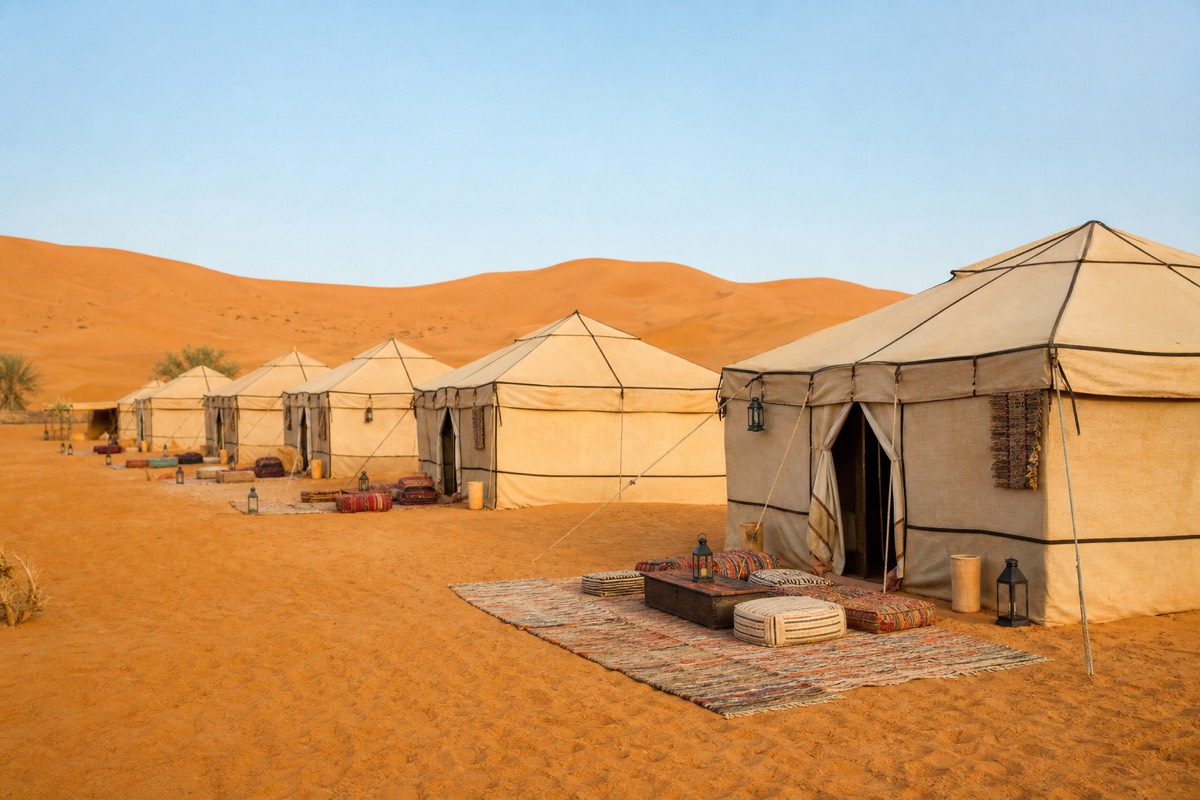
You have two ways in. Self-drive is popular with confident 4x4 drivers who air down their tyres at the edge and follow a camp's directions or a lead vehicle. Everyone else takes a guided transfer, either a full-day tour or an overnight package that collects you in Muscat and handles the whole run. For a first visit, letting a driver take the wheel for the dunes is the calmer choice.
| Segment | Distance | Time | Surface |
|---|---|---|---|
| Muscat to Bidiyah / Al Wasil | ~190 km | 2.5 to 3 hrs | Paved highway (Route 23) |
| Gateway town to desert camp | ~5 to 15 km | 20 to 40 min | Soft sand, 4x4 only |
| Detour to Wadi Bani Khalid | ~45 km from gateway | ~45 to 55 min | Paved, then short walk |
Curious about having the route from Muscat arranged? Discover a shared desert-and-wadi day with pickup and return.
Scheduled departures from Viator. Availability and final price are confirmed on Viator.
9 hours · Muscat pickup and return
Ages 5+. Child seats and life jackets excluded. Camel rides cost extra; quad only in the quad option. Lunch not provided during Ramadan. Not recommended during pregnancy or for cardiovascular conditions.
Where do you sleep: choosing a desert camp
Almost everyone stays at a desert camp inside the dunes rather than a hotel. Choices run from simple Bedouin-style huts to mid-range tented camps with shared showers, up to luxury camps with en-suite bathrooms and air conditioning. Every one sits a short 4x4 ride from where the tarmac ends.
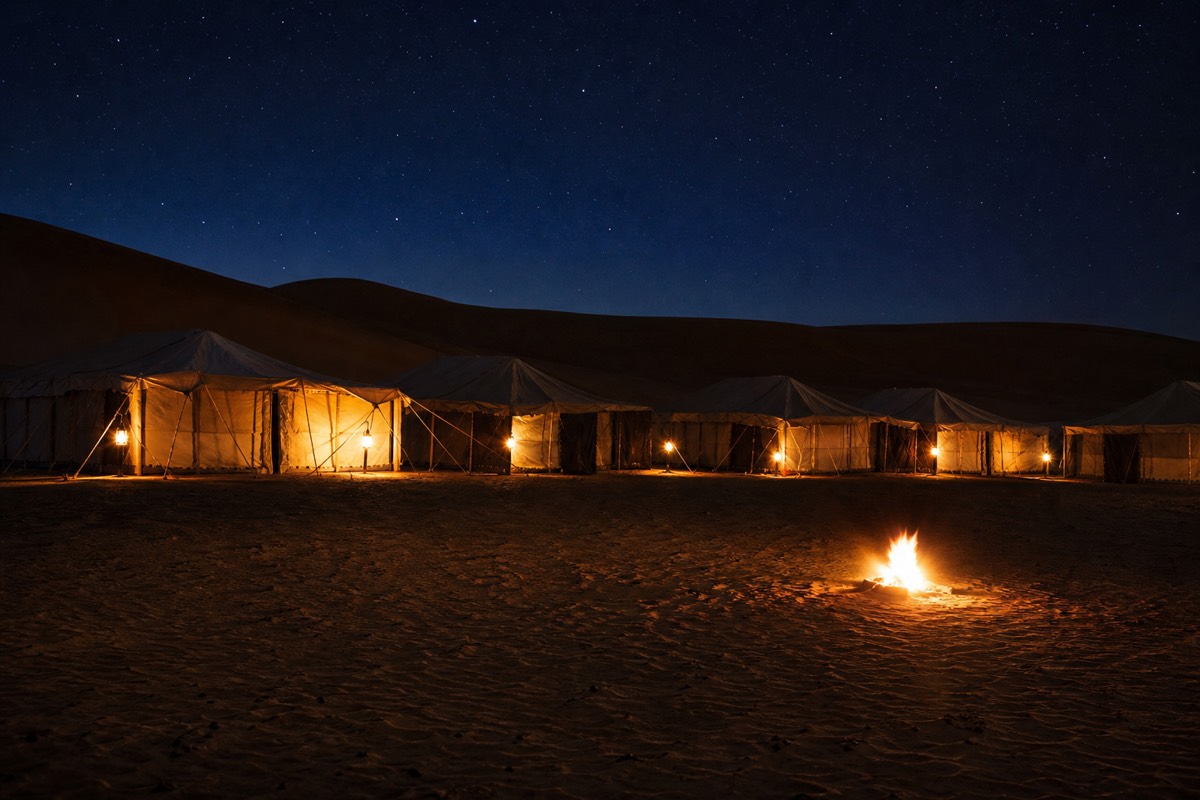
Deciding where to stay mostly comes down to comfort and budget. The best desert camps light their tents with lanterns after dark, serve a buffet dinner around a fire, and wake you for sunrise. Overnight at a desert camp is the whole point of the trip: the quiet after the day-trippers leave is something a hotel simply cannot sell. The camps and drivers Wahiba Sands Tours works with run 4x4 transfers from the tarmac to the tents each evening, so you never worry about the soft-sand section yourself.
Tents range from open barasti shelters to fully furnished units with real beds and private bathrooms. Meals, bedding and drinking water are almost always included, which keeps your own packing light. If you plan to stay overnight, book ahead in the cool season, when the good camps fill fast on weekends and around holidays.
| Camp style | What you get | Good for |
|---|---|---|
| Bedouin-style / budget | Simple hut, shared facilities, buffet dinner | Backpackers, one-night stays |
| Mid-range tented | Furnished tent, shared or private shower, meals | Couples, families |
| Luxury camp | En-suite tent, air conditioning, private terrace | Honeymoons, comfort seekers |
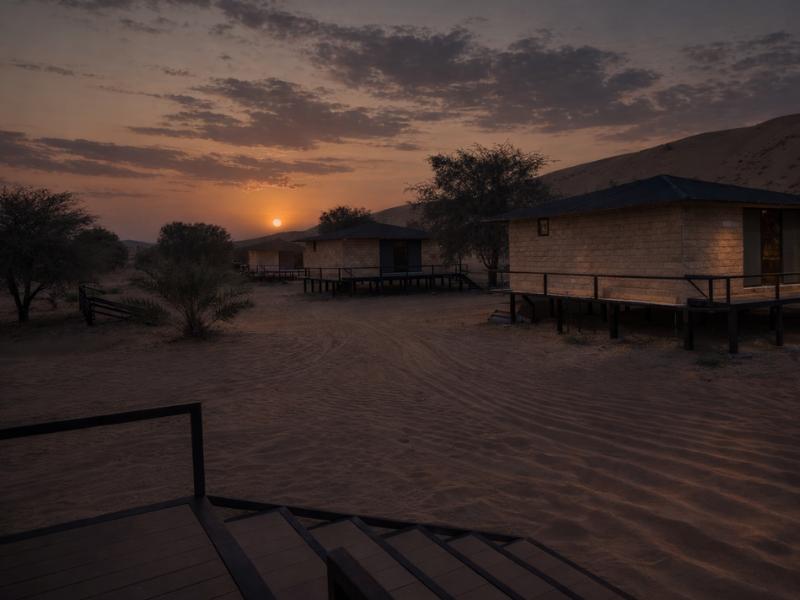
Plan for choosing a named room-based overnight: check your date before arranging the rest of your trip. This option includes a standard Desert Rose Camp room with dinner and breakfast.
Check Dates For The One-Night Camp StayWhen is the best time to visit the sands?
The best time to visit runs from October to March, when daytime highs sit in the mid-20s to low-30s Celsius and the light is soft. Summer, roughly May to September, pushes past 40C and is best avoided. The coolest months, December and January, call for a warm layer once the sun goes down.
Season shapes everything about a desert trip: how you sleep, what you pack, and whether midday outside is pleasant or punishing. Weather in the cool months is close to ideal, with dry air, gentle nights and a low chance of rain. Oman's official tourism board also points visitors toward the October to March window on its A'Sharqiyah Sands page.
Summer is a different animal. The sand radiates heat well into the evening, and outdoor activity in the middle of the day becomes risky rather than fun. If summer is your only option, camps run air conditioning and shift everything to dawn and dusk, but the cooler half of the year is the easier call. For a full breakdown, see our best time to visit guide.
| Season | Months | Day high | Verdict |
|---|---|---|---|
| Peak cool | Nov to Feb | ~25 to 30C | Ideal, book ahead |
| Shoulder | Oct and Mar | ~30 to 37C | Warm but good |
| Hot | Apr and Sep edges | ~38 to 42C | Dawn and dusk only |
| Summer | May to Aug | Often 40C plus | Best avoided |
The shortlist does not guarantee summer cooling or weather suitability. Confirm conditions and the exact room for your dates.
What is there to do in the dunes?
The headline activity is dune bashing, a 4x4 ride over the crests, usually timed for sunset. Add a camel ride at Bedouin pace, sandboarding down a slip face, quad biking, and after dark some of the clearest stargazing in Arabia. Many trips also fold in the nearby Wadi Bani Khalid oasis.
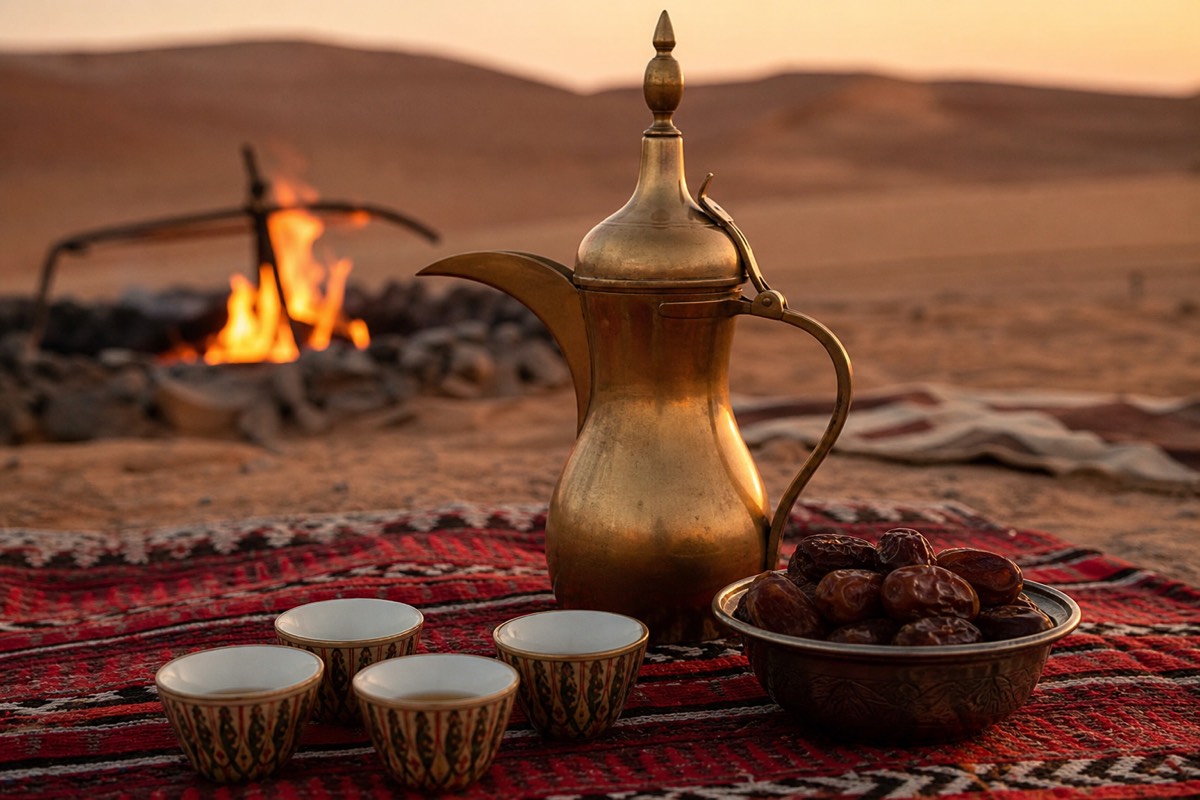
Dune bashing is the ride most people remember, a guided 4x4 that climbs, pauses on a knife-edge ridge, then drops down the far side. It looks alarming and is an adventure activity with risks even in trained hands. Beyond it, the menu is wide: a camel ride led by Bedouin handlers, hot sweet coffee and dates in the shade, sandboarding for the kids, and quad or ATV loops for anyone who wants their own throttle.
After sunset the desert changes character. With almost no light pollution, the Milky Way arcs overhead and stargazing becomes a proper activity, sometimes with a telescope and a guide who names what you are seeing. At dawn, a few operators launch a hot-air balloon over the ridges. Slightly further out, the emerald pools of Wadi Bani Khalid pair beautifully with a desert night, which is why so many day tours and overnights combine the two.
Bedouin hospitality runs through many of these experiences. A stop for cardamom-scented coffee and dates is a genuine custom rather than a show, and it opens a window into how families here have lived with the desert for centuries. Some camps arrange short talks on tracking, weaving or camel husbandry, and others keep a small herd you can meet. For families, the gentler options, sandboarding, a short camel ride and stargazing, tend to land better than a hard hour of dune bashing, so mix the intense and the easy across your stay.
| Activity | What it is like | Roughly | Suited to |
|---|---|---|---|
| Dune bashing | 4x4 ride over the crests | 45 to 90 min | Most ages |
| Camel ride | Slow walk led by a handler | 20 to 60 min | Families |
| Sandboarding | Slide down a dune face | Free time | Kids, active adults |
| Quad / ATV | Self-driven loop on the sand | 30 to 60 min | Teens, adults |
| Stargazing | Dark-sky viewing, sometimes a telescope | 1 hr plus | Everyone |
| Hot-air balloon | Dawn flight over the dunes | ~1 hr aloft | Special occasions |
Curious about trying the slower and more active sides together? Discover a camel ride, sand skiing and Bedouin house visit.
Dates and booking provided by GetYourGuide. If the calendar cannot load, use the booking link below.
Discover The Bidiyah Camel Safari2 hours · Bidiyah meeting point
Food and tips excluded. Not suitable for back problems or mobility impairments. Confirm child restrictions and the exact meeting point.
What should you pack for a night in the sand?
Pack light layers for hot days and a warm fleece or jacket for cold nights, plus a hat, sunglasses, high-SPF sunscreen and a scarf against blowing sand. Closed shoes help on the dunes while sandals are fine around camp. Most camps supply bedding, towels and drinking water, so you can travel light.
The desert swings hard between day and night, so what to wear is really a question of layers. Loose, breathable clothing keeps you cool in the sun; a fleece and a windproof layer save the evening once temperatures fall. A scarf or shemagh is genuinely useful, doubling as sun cover and a shield when the wind lifts sand off the crests.
Keep your kit small. Camps hand out bedding and towels, and meals are included, so there is no need to haul supplies. Bring a power bank, because signal and sockets are scarce inside the dunes, plus wet wipes, lip balm and any medication you rely on. Our dedicated what to pack guide has the full checklist if you are building a bag for a longer stay.
| Item | Why | Day trip or overnight |
|---|---|---|
| Light long layers | Sun cover, stays cool | Both |
| Fleece or jacket | Cold desert nights | Overnight |
| Scarf / shemagh | Sun and blowing sand | Both |
| Hat and sunglasses | Glare off the dunes | Both |
| Power bank | Few sockets in camp | Overnight |
Plan for packing against specific overnight inclusions: check your date before arranging the rest of your trip. This option includes a camp room and two meals on the Muscat package.
Check Dates For The One-Night Camp StayWhat does a sample 2-day, 1-night plan look like?
A classic trip leaves Muscat mid-morning, reaches the sands by mid-afternoon, and times dune bashing for sunset before dinner at camp. The next morning brings a quiet sunrise over the dunes, breakfast, and either a slow drive home or a detour to the Wadi Bani Khalid pools on the way.
People often ask how many days they need, and for a first visit one night is the sweet spot. It gives you both a sunset and a sunrise, a proper night under the stars, and time to try more than one activity without rushing. A day trip vs overnight comparison almost always tips toward staying: the day-trip crowd misses the best light and the silence that arrives after dark.
If you stay overnight, keep day one active and day two gentle. Dawn light on the ridges is the softest of the trip, worth the early alarm, and a mid-morning stop at the emerald pools breaks up the drive back to the city. Two nights suit photographers and anyone who simply wants to slow down.
| Time | Day 1 | Day 2 |
|---|---|---|
| Morning | Depart Muscat, drive south-east | Sunrise on the dunes, breakfast |
| Midday | Arrive gateway town, 4x4 into camp | Camel ride or free time |
| Afternoon | Rest, then sandboarding | Drive out, optional Wadi Bani Khalid |
| Evening | Sunset dune bashing, dinner, stars | Return to Muscat |
Curious about following a two-day, one-night route? Discover Wadi Bani Khalid, Wahiba sunset and sunrise, then Ibra.
Scheduled departures from Viator. Availability and final price are confirmed on Viator.
2 days, 1 night · Muscat pickup and return
Lunch and camel ride cost extra. Confirm your room and any mobility or child-seat requirements before booking.
What does a Wahiba Sands trip cost?
Compare the total for your actual dates and party. The verified room-based overnight includes private Muscat transport, a standard Desert Rose Camp room, dinner and breakfast. Lunch and camel riding are extra. A private vehicle does not mean an exclusive or luxury camp.
Cost tracks two things: private versus group, and day trip versus overnight. Sharing a vehicle on a group departure is the budget route, while a private guide and driver buys flexibility and quiet at a higher price. Prices move with season and availability, so treat every figure here as a starting point and check the live price on the operator's listing before you book.
Overnight packages usually bundle the 4x4 transfer, camp bed, dinner and breakfast, and at least one activity, which makes them better value than they first look. If you only have an afternoon, a sunset run is the cheapest way to feel the dunes. For a night in the sand, the from-Muscat overnight is the smoother choice, since it removes the drive and the soft-sand section from your plate.
A few things move the final price beyond the headline figure. Season lifts rates through the cool months, group size changes the per-person cost on private trips, and add-ons like a balloon flight or a telescope-guided night sit on top. Tips for your driver and camp staff are customary and worth setting cash aside for. When you compare options, look past the sticker at what is bundled: a package that folds in transfers, meals and an activity often beats a cheaper-looking rate that leaves you arranging each piece yourself.
| Experience | Rough price | Usually includes | Best for |
|---|---|---|---|
| Sunset dune bashing | Quote for your dates and party | 4x4 ride, sunset stop | Short on time |
| Full day plus Wadi Bani Khalid | Quote for your dates and party | Sands, oasis, transport | Day-trippers |
| Group overnight from Muscat | varies, check listing | Camp, meals, transfers | Value seekers |
| Private guided overnight | Quote for your dates and party | Private driver, camp, activities | Comfort, flexibility |
Plan for comparing a day fare with a camp package: check your date before arranging the rest of your trip. This option includes a shared Muscat return route with optional activities priced separately.
Check Dates For The Muscat Desert DayPracticalities: visa, safety, water and connectivity
Most visitors enter Oman on a free or low-cost short-stay visa, carry far more water than they think they need, and keep phones charged since signal fades inside the dunes. Never push deep into soft sand alone without a second vehicle, and never attempt the dunes in a 2WD: you need a 4x4 and lower tyre pressure.
Oman is one of the calmer, safer countries in the region for travellers, and the desert adds only ordinary outdoor risks: heat, dehydration and getting stuck. If you need a 4x4 and plan to self-drive, go with a companion vehicle, tell someone your route, and know how to air your tyres back up afterward. Trying the dunes without a tour, in a hired saloon, is the classic mistake that ends with a costly recovery.
Signal is patchy once you leave the gateway towns, so download maps and let family know you will be offline overnight. Bring cash for tips and small purchases. Rules and visa categories change, so confirm current entry conditions on an official source, and read Oman's tourism board pages, such as its Sharqiya Sands overview, before you set off.
Heat is the risk that creeps up quietest. Even outside high summer, an afternoon on exposed sand pulls water out of you faster than you notice, so drink before you feel thirsty and keep children in the shade between activities. If a vehicle does get stuck, staying with it is safer than walking off across the dunes, since a parked 4x4 is far easier to spot than a person on foot. Simple habits, more water, sun cover, and never wandering out alone, cover almost every problem the desert is likely to hand a visitor.
| Topic | What to know |
|---|---|
| Entry | Short-stay visa for many nationalities; confirm official rules |
| Water | Carry several litres per person, per day |
| Vehicle | 4x4 essential; 2WD cannot cross the sand |
| Connectivity | Signal fades in the dunes; download maps first |
| Money | Bring cash for tips and small shops |
A tour booking is not entry permission, medical clearance or vehicle-recovery cover. Keep those arrangements separate from choosing the itinerary.