Stargazing in Wahiba Sands: Oman's Dark-Sky Desert
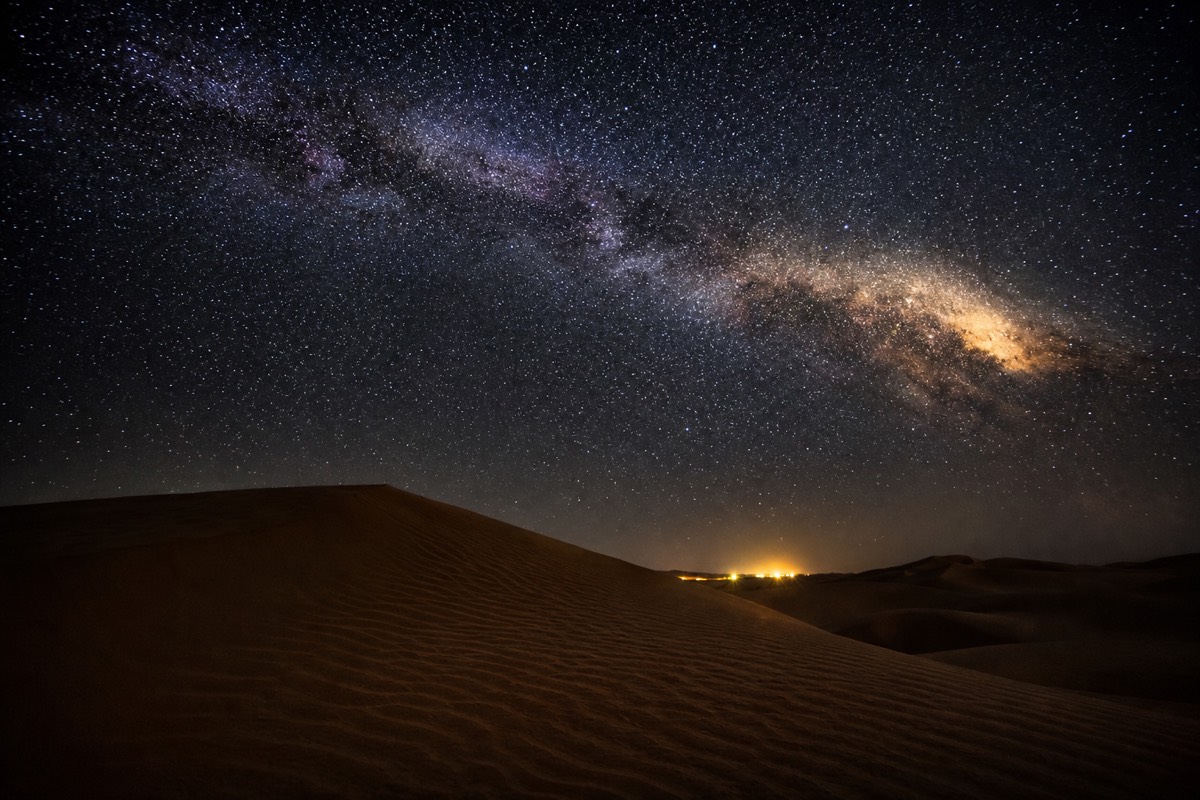
Switch off the camp lights and the sky does something most people have never seen: it fills up. Thousands of stars, a bright band of galaxy, the odd streak of a meteor. This is why the desert night is worth staying for.
When the sky is darkest and the nights comfortable
A month-by-month rating from the guide, blending darkness and night comfort. October to February score highest; aim for nights around a new moon.
Why is the sky so dark out here?
Because there is almost nothing to light it up. The sands sit far from any city, with dry, clear desert air and no towns spilling glow into the sky. That combination puts the deep desert near the dark end of the nine-point Bortle scale astronomers use to rate night skies, so the stars you cannot see from home come flooding back here.
Match the departure point, trip length and included activities to the plan above.
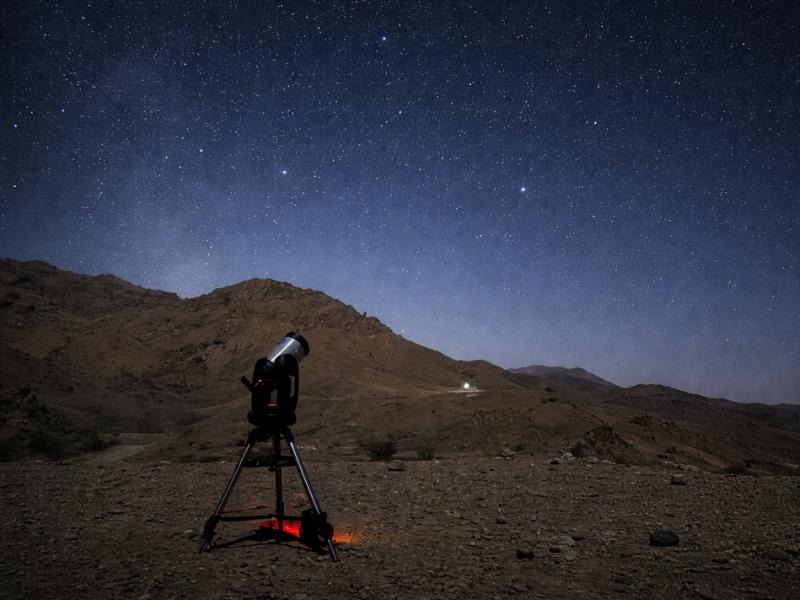
At A Glance: A guided astronomy session using an 11-inch Celestron telescope, with opportunities for phone or camera photographs. English and Arabic offered.
Explore The Guided Telescope SessionLight pollution is what steals the stars from most of us, and out here there is barely any. The nearest real glow is hours away, the air is dry enough to stay crystal clear, and once the camp generator hushes and the lamps go off, the darkness is close to total. The Bortle scale, published by amateur astronomer John Bortle in 2001, runs from Class 1 for the darkest skies on Earth to Class 9 for a city centre. The remote parts of the sands sit toward that dark end, which is why the difference from a suburban sky is not subtle but staggering.
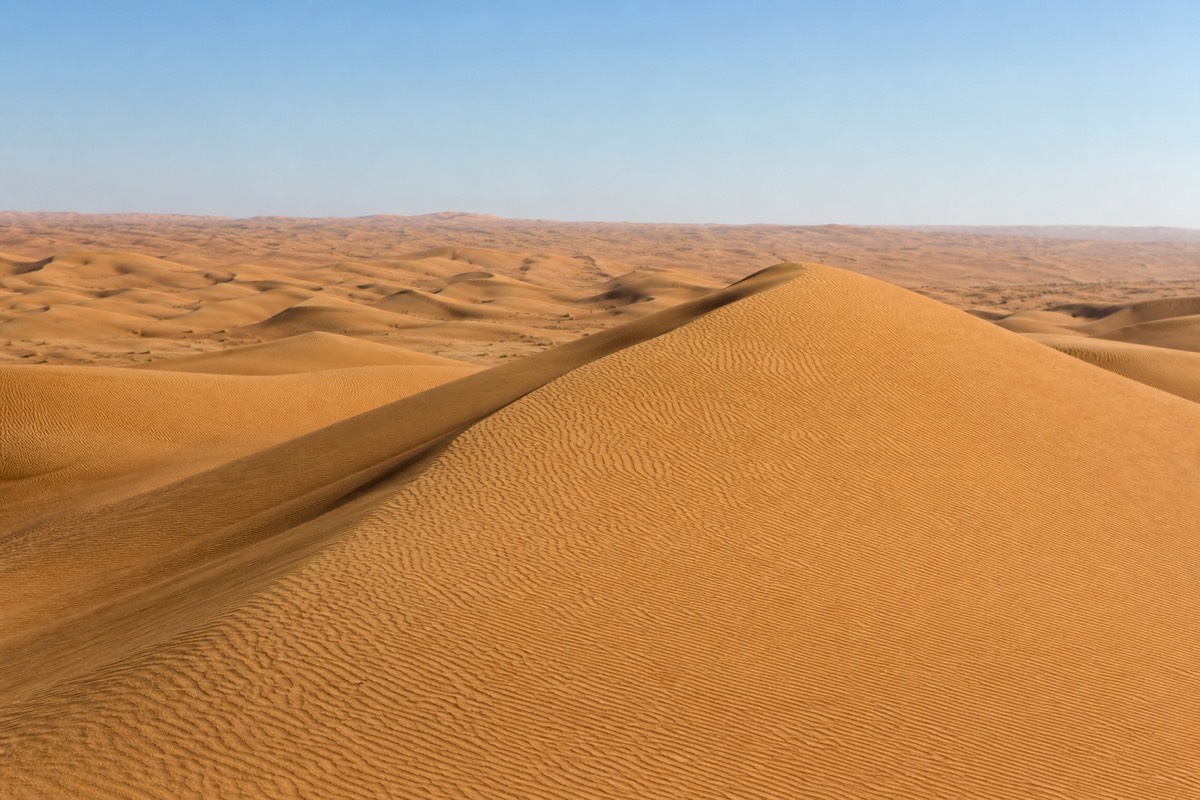
Dry air matters as much as distance. Humidity and dust scatter light and blur fine detail, and the desert has little of either on a clear winter night. The flat, open horizon helps too: with no mountains or trees, you see the whole bowl of the sky down to the edges, so constellations rise and set in full view. All of it adds up to one of the more reliable dark-sky experiences you can reach without a serious expedition.
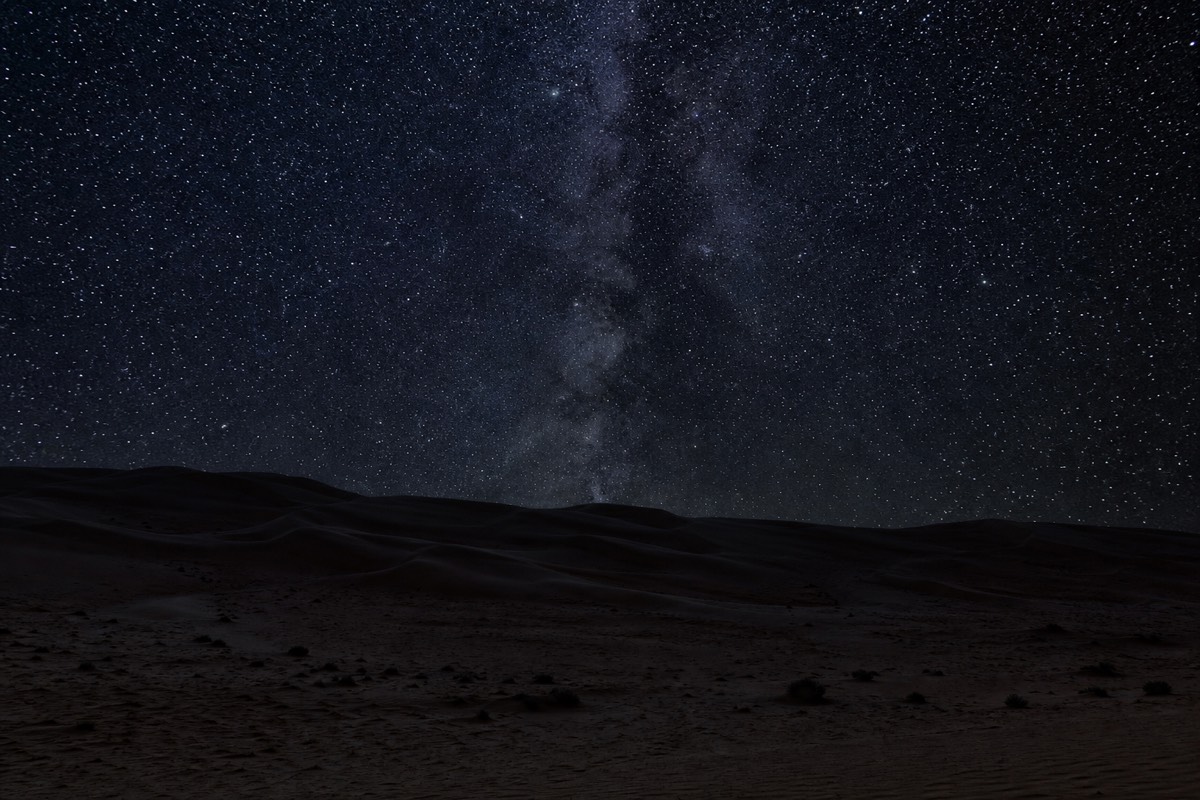
To put it in everyday terms, a typical suburban sky shows a few dozen to a couple of hundred stars on a good night. A truly dark site like the deep desert can show several thousand to the naked eye, along with the galaxy itself. The jump is so large that many first-time visitors say they cannot find familiar constellations at first, simply because there are too many extra stars filling in the gaps. That disorientation fades after a few minutes and turns into the best part of the night.
Curious about staying beyond the day-trip departure? Discover a desert camp room for the night, with sunset and sunrise in the route.
Discover The One-Night Camp StayWhat can you actually see?
A lot. The full band of the Milky Way, thousands of stars, bright planets like Jupiter and Saturn, and famous targets such as the Orion Nebula and the Pleiades cluster. Shooting stars appear on most clear nights, and during a meteor shower you can count dozens an hour. Even with the naked eye, the sky here is genuinely crowded.
Start with the naked eye and you already have a show. The Milky Way stretches overhead as a real, textured band of light, not the faint smudge city-dwellers half-remember. Bright planets hold steady where stars twinkle, and constellations you know look unfamiliar because so many faint stars have filled in around them. Add a telescope or good binoculars and the detail jumps: the Orion Nebula resolves into a glowing cloud, the Pleiades scatter into a cluster of blue jewels, and the moons of Jupiter line up like beads.
| Target | Naked eye | Telescope or binoculars |
|---|---|---|
| Milky Way band | Clear and bright | Rich star fields within it |
| Planets (Jupiter, Saturn, Venus, Mars) | Bright, steady points | Saturn's rings, Jupiter's moons |
| Orion Nebula | A fuzzy patch | Glowing gas cloud |
| Pleiades cluster | A tight knot of stars | Dozens of blue stars |
| Shooting stars | Several an hour on clear nights | Not needed, just look up |
| Satellites | Slow moving points | Not needed |
One honest point about the Milky Way itself: the brilliant galactic core, the thickest, brightest part, is a spring-to-autumn object, best on warm-season nights. Winter still delivers a spectacular sky, just centred on brighter constellations like Orion and Taurus and the fainter winter arm of the galaxy. So you never lose the show, you simply see a different chapter of it depending on the month.
Plan for seeing what an astronomy guide brings into focus: check your date before arranging the rest of your trip. This option includes an 11-inch Celestron telescope session with GeoAstro Oman.
Dates and booking provided by GetYourGuide. If the calendar cannot load, use the booking link below.
Check Dates For The Guided Telescope Session1 to 2 hours observing · Observation location agreed with operator
Transport and food excluded. The itinerary names Wahiba Sands but the meeting map points to Muscat: agree the actual observation location before arranging transport. No camp night included.
When are the best months for stargazing?
October to April is the sweet spot: cooler nights, dry clear air and comfortable viewing. For the darkest possible sky, aim for the days around a new moon, roughly October to February. Summer brings the brightest Milky Way core but brutal heat and more haze. If you want the best mix of dark, clear and comfortable, come in winter.
Two things drive the calendar: comfort and clarity. From roughly October to April the nights are cool and the air is dry and steady, which is both more pleasant and better for seeing fine detail. High summer is punishingly hot even after dark and can carry more dust and haze. So the best time to visit for stargazing lines up neatly with the best time to visit the region generally, the cooler half of the year.
| Month | Night comfort | Sky quality | Notes |
|---|---|---|---|
| Oct to Nov | Cool, pleasant | Excellent | Clear, dry, comfortable, great all-rounder |
| Dec to Feb | Cold at night | Excellent | Darkest, crispest skies; bring warm layers |
| Mar to Apr | Mild to warm | Very good | Galactic core returns pre-dawn |
| May to Sep | Hot, uncomfortable | Good but hazier | Brightest Milky Way core, harsh heat |
Winter nights get genuinely cold in the desert, which surprises first-timers who only felt the daytime heat. That is the trade for the clearest skies of the year. If you are choosing dates and stargazing is a priority, target a few nights either side of a new moon in the October-to-February window, and you stack the odds heavily in your favour.
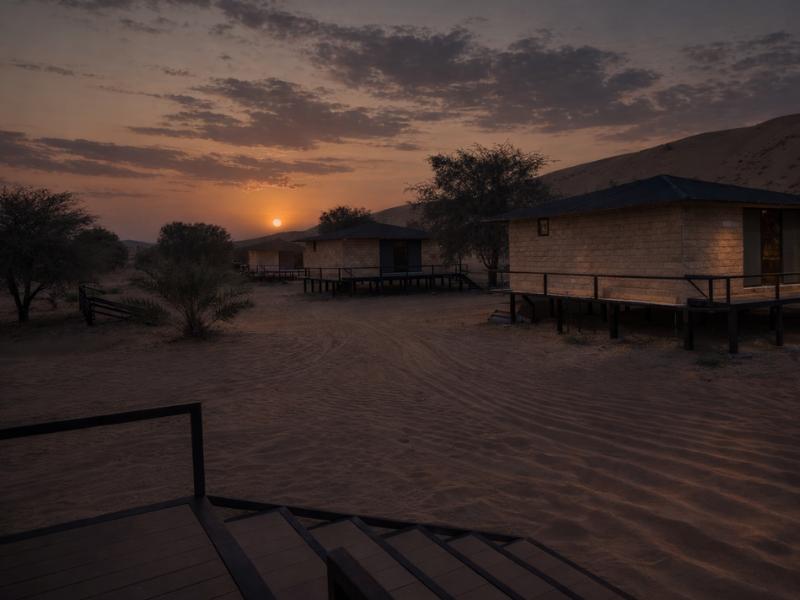
Curious about giving your chosen night more time? Discover a standard camp room with dinner and breakfast, leaving sky viewing self-directed.
Discover The One-Night Camp Stay2 days, 1 night · Muscat pickup and return
Lunch and camel ride cost extra. Confirm your room and any mobility or child-seat requirements before booking.
How much does the moon change things?
Enormously. A full moon is so bright it washes out the Milky Way and all but the brightest stars, like a natural floodlight. A new moon leaves the sky truly black, and the faint detail floods back. For serious stargazing, plan your visit within a few days of new moon; for a bright landscape lit silver, a full moon has its own appeal.
The moon is the one variable you can plan around exactly, because its phases are predictable years ahead. On a full-moon night the desert is beautiful, bright enough to walk without a torch, but the sky is quiet: the moon drowns the Milky Way and the fainter stars. On a new-moon night the same patch of sky is transformed, dense with stars and crossed by the galaxy. If you have a choice of dates, this single factor matters more than almost anything else.
| Moon phase | Sky brightness | Best for |
|---|---|---|
| New moon | Darkest, star-packed | Milky Way, faint objects, photography |
| Crescent | Dark for most of the night | A good compromise, moon sets early |
| Half moon | Half the sky washed | Bright planets and constellations |
| Full moon | Floodlit, few stars | Silver-lit dunes, moonlit walks |
There is a middle path if your dates are fixed. Even near a bright moon, you can time viewing for when the moon is below the horizon, before it rises or after it sets, and reclaim a dark window. A guide who knows the local moonrise and moonset times can plan the night around them. A thin crescent that sets an hour after dusk, for instance, still leaves most of the night genuinely dark for anyone willing to wait up. But if you can pick freely, new moon is the answer, and it costs nothing but a look at a calendar.
Plan for planning the session around your travel night: check your date before arranging the rest of your trip. This option includes an astronomy guide and telescope, with the exact viewing site to agree.
Check Dates For The Guided Telescope SessionWhat happens on a guided telescope session?
An expert sets up a proper telescope, points out constellations with a laser, and steers you to real targets: Saturn's rings, Jupiter's moons, nebulae and star clusters. Sessions usually run one to two hours after dark and mix naked-eye touring with time at the eyepiece. The guide's knowledge is what turns a pretty sky into things you can name and understand.
A good guided session is the difference between staring at a beautiful mess and actually reading the sky. An astronomy guide arrives with a decent telescope, often computer-guided, and starts with the naked-eye tour: tracing constellations with a green laser, explaining what you are looking at, and pointing out the planets. Then comes the eyepiece, where the telescope brings Saturn's rings, the craters of the moon, or a distant nebula into focus for each person in turn.
| Element | What you get |
|---|---|
| Naked-eye tour | Constellations and planets traced with a laser pointer |
| Telescope viewing | Saturn, Jupiter's moons, nebulae, star clusters |
| Expert commentary | The stories and science behind what you see |
| Photo help | Some guides help you shoot the sky or your target |
| Duration | Usually one to two hours after full dark |
Request a quote for the same travelers and dates before comparing shared and private trips. Include transport, meals and any paid activities in both totals. A private vehicle buys exclusivity for the journey; changes to the route still need the operator’s agreement. Related reading: on your own.
Curious about discovering the guided viewing experience? Discover a one-to-two-hour astronomy session with photos included.
Discover The Guided Telescope SessionHow do you photograph the night sky?
You need a camera with manual settings, a wide fast lens, and a tripod. The basic recipe: a wide aperture around f/2.8, a high ISO of 3200 to 6400, and a long shutter of 15 to 25 seconds, focused manually on a bright star. Shoot in RAW, use a timer to avoid shake, and expect to fine-tune from there.
Phone cameras with a night mode can capture a surprising amount now, but a proper Milky Way shot still wants a camera you can control by hand. The physics is simple: the sky is faint, so you gather as much light as you can without the stars smearing into streaks as the Earth turns. That means a wide aperture, a high ISO, and the longest shutter you can use before the stars trail, which is where the settings below start.
| Setting | Start here | Why |
|---|---|---|
| Lens | Wide, 14 to 24 mm | Fits the sky and allows longer exposures |
| Aperture | f/2.8 or wider | Gathers maximum light |
| ISO | 3200 to 6400 | Brightens the faint sky |
| Shutter | 15 to 25 seconds | Long enough for light, short enough to keep stars sharp |
| Focus | Manual, on a bright star | Autofocus fails in the dark |
| Format and timer | RAW, 2-second timer | More editing room, no shake from your finger |
Two practical tips save most beginners. First, a sturdy tripod is non-negotiable; any camera shake ruins a long exposure. Second, red light only for checking your gear, because white light wrecks your night vision and everyone else's. The dunes themselves make a stunning foreground, so include a ridgeline or a lone camel-thorn for scale. Start with the recipe above, then adjust ISO and shutter until the histogram looks right.
A little planning beats luck. A free star-chart app on your phone, switched to its red night mode, tells you where the Milky Way, the planets and each constellation will sit at a given hour, so you can frame a shot before the light even fades. Check the moon phase and the moonrise time for your night, since a bright moon rules out serious astrophotography. And give your camera battery some thought: cold desert nights drain batteries faster than you expect, so carry a spare and keep it warm in an inside pocket until you need it.
Plan for arranging a guided night with photos: check your date before arranging the rest of your trip. This option includes the GeoAstro telescope experience, separate from a camp booking.
Check Dates For The Guided Telescope SessionCan you catch a meteor shower?
Yes, and the dark sky makes it spectacular. Several reliable showers peak each year, and during a strong one like the Geminids or Perseids you can see dozens of meteors an hour under these conditions. You need no equipment, just a clear night near the shower's peak, a reclined seat, and patience while your eyes adjust.
Meteor showers happen when Earth crosses a trail of debris left by a comet or asteroid, and they recur on the same dates each year. Under a bright city sky you might catch a handful; under the dark desert you can watch them fall steadily. The naked eye is the right tool, since meteors flash across wide arcs that no telescope could frame. The table lists the dependable annual showers and their rough peak windows, though exact peak nights shift by a day or two each year, so check the dates for your trip.
| Shower | Rough peak | Strength |
|---|---|---|
| Quadrantids | Early January | Strong but brief |
| Lyrids | Around late April | Moderate |
| Eta Aquariids | Early May | Good, from Halley's debris |
| Perseids | Around mid-August | Strong, but summer heat |
| Orionids | Around late October | Moderate, comfortable nights |
| Geminids | Around mid-December | Strongest of the year, cool nights |
For comfort and count together, the Geminids in December are hard to beat here: the year's most prolific shower falling on cool, clear desert nights. Give your eyes at least 20 minutes to adapt to the dark, avoid looking at any screen, and lie back so you take in as much sky as possible. Meteors come in bursts, so the trick is patience; the long quiet stretches are broken by runs of several in a minute.
A few small habits improve your tally. Do not stare at one point; let your gaze wander across a wide patch of sky, since meteors can flash anywhere. Watch the hours after midnight where you can, as rates usually climb toward the pre-dawn side of the night. And do not judge a shower by its first ten minutes: a slow start often gives way to a good run, so settle in, keep warm, and let the sky come to you. Even outside a named shower, the dark here throws up a stray meteor often enough to keep you looking up.
No meteor-shower-specific departure or sighting guarantee was verified. A telescope booking cannot guarantee meteors; keep the wide-sky viewing plan above.
Where is darkest, and should you stay the night?
The darkest skies are deep in the sands, away from camp lighting, which is why an overnight stay beats a quick evening visit. Stay over and you get the full dark-sky window, time for self-directed sky viewing, and a calm dawn on the dunes. A day trip cannot deliver this; the stars need you to be here after everyone else has gone quiet.
Even a good desert camp has some lighting, so the truly dark viewing happens a short walk out onto the sand, away from lamps and phone screens. This is the clearest argument for choosing an overnight over a day trip: stargazing simply is not a daytime activity, and racing back to Muscat after sunset means missing the entire point. Staying puts you in the right place at the right time, with hours of darkness ahead rather than a departure deadline.
An overnight also bundles the night sky with the rest of the desert's best moments. You reach camp for sunset, share dinner and coffee, watch the stars come out, and wake for the quiet light of dawn on the dunes. The desert camps Wahiba Sands Tours works with keep their lighting low and point guests to the darkest patches of sand once the meal is done, which is exactly what you want when your eyes are adjusting. Getting here from Muscat takes a few hours, so the night saves you a tiring late drive as well.
Compare the total for your actual dates and party. The verified room-based overnight includes private Muscat transport, a standard Desert Rose Camp room, dinner and breakfast. Lunch and camel riding are extra. A private vehicle does not mean an exclusive or luxury camp. Related reading: overnight camp trip.
Curious about reserving an overnight base for your own sky watching? Discover one camp room night with private Muscat transport.
Scheduled departures from Viator. Availability and final price are confirmed on Viator.
2 days, 1 night · Muscat pickup and return
Lunch and camel ride cost extra. Confirm your room and any mobility or child-seat requirements before booking.