Can You See Both Sunrise and Sunset at a Desert Camp?
Twelve hours separate the two best moments in the desert, which makes this a question about where you sleep.
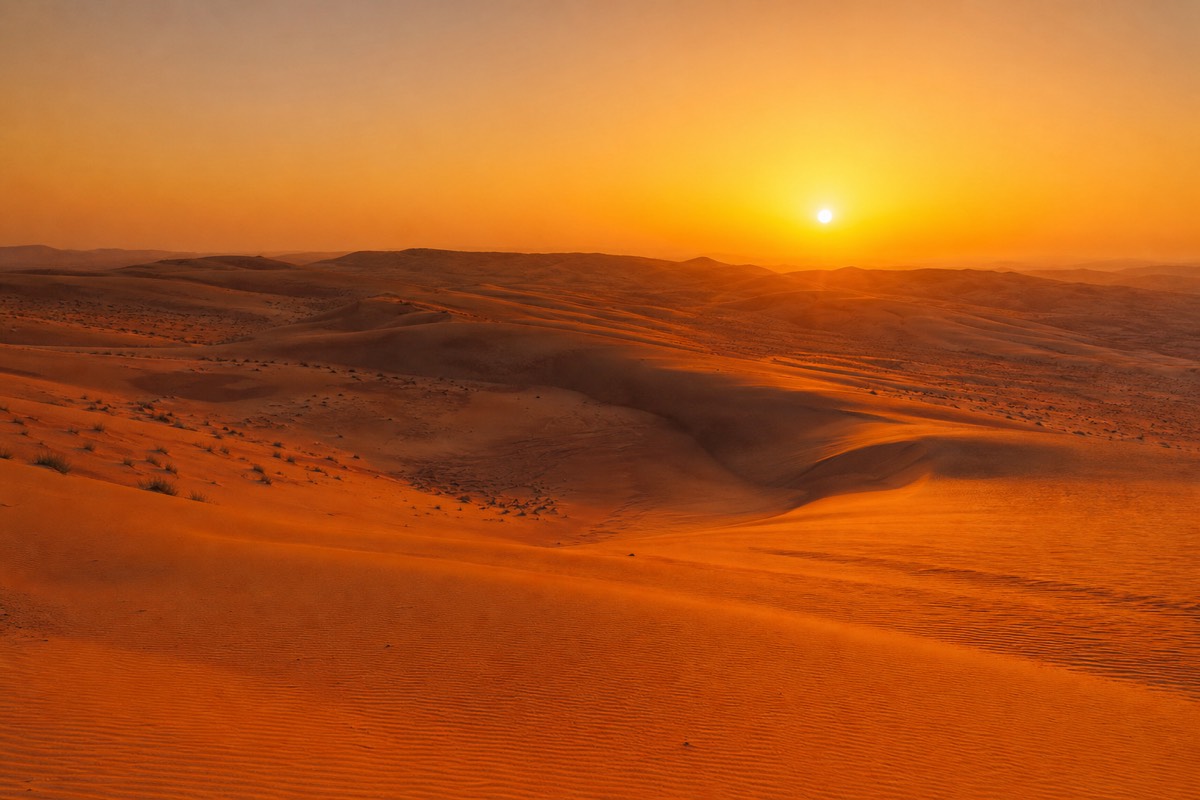
Day trip vs overnight: which light you catch
A day trip catches only sunset before the drive home. An overnight puts you in the dunes for sunset, the night sky and sunrise.
Can a single visit really get you both?
Only if you stay the night. Sunset and sunrise are roughly twelve hours apart, so the one way to catch both is an overnight in a desert camp. A day trip gives you one or the other, usually sunset, and a rushed version at that. To stand on a dune for both, you sleep in the sand.
Match the departure point, trip length and included activities to the plan above.
At A Glance: Private 4WD trip with an English-speaking guide, Desert Rose Camp standard-room accommodation, dinner and breakfast.
Explore The One-Night Camp StayThe desert's two best hours sit at opposite ends of the day. You cannot drive out, wait around and collect them both, because in between comes a full night. That simple fact is why the question is really about staying over, not about timing a clever day trip.
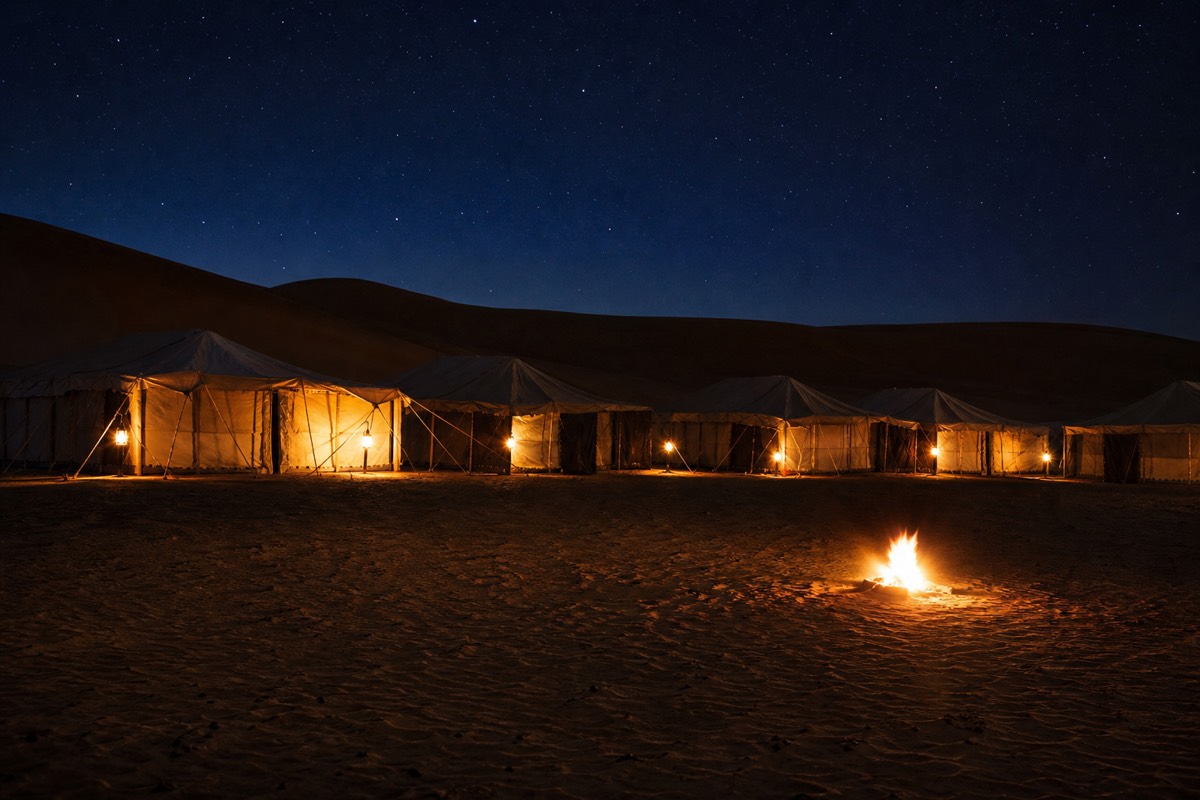
Choosing an overnight camp trip solves it in one move. You watch the light drain out of the dunes in the evening, sleep out there, and are back on the ridge before the sun returns. Everything else is a compromise, and the rest of this page walks through exactly why, and how to make sure both moments actually happen when you book.
Curious about collecting sunset and sunrise in one stay? Discover a one-night camp itinerary with both moments listed.
Discover The One-Night Camp StayWhy does a day trip usually give you one, not two?
Timing is the whole problem. Day trips reach the dunes in the afternoon, catch sunset, then drive back in the dark, so sunrise is long gone by the time you wake at your hotel. Leave early enough for sunrise instead and you are out of the desert before the evening light returns. One visit, one show.
The drive from Muscat runs two to three hours each way, which shapes the whole day. Most day tours are built to land you on the dunes for late-afternoon light and sunset, then get you home at a reasonable hour. By the next dawn you are far away in a city hotel, and the sunrise over the sand is happening without you.
| Day-trip style | You catch | You miss |
|---|---|---|
| Afternoon and sunset run | golden hour and sunset | night sky, sunrise |
| Early sunrise dash | sunrise (if you leave overnight) | sunset, night sky |
| Midday visit | dunes in flat, harsh light | both golden hours |
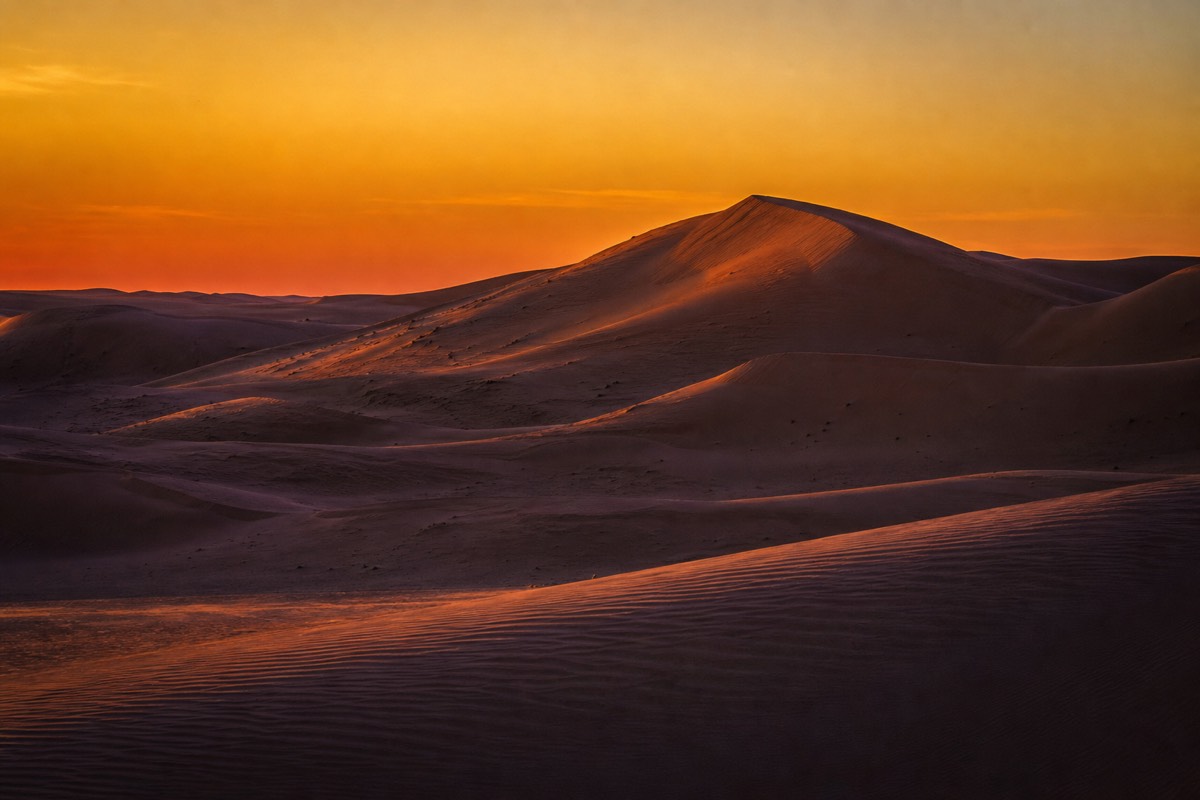
You could flip the plan and chase sunrise, but that means leaving in the small hours and being finished by mid-morning, with no sunset. Either way, a day trip buys you one golden hour, not two. The desert is generous with light, just not on a schedule that fits a there-and-back day.
The maths is unforgiving once you lay it out. If sunset is around six in the evening and sunrise around six the next morning, a day tripper would need to be in the dunes for twelve hours to catch both, then add the drive at each end. No day trip is built that way, and nobody wants to sit in the sand through a cold night with nowhere to sleep. The moment you accept that you want both, you have already decided to stay over. Everything after that is just picking the right camp and the right dune.
Plan for choosing sunset when you cannot stay overnight: check your date before arranging the rest of your trip. This option includes a four-hour Bidiyah outing with sunset and dinner.
Scheduled departures from Viator. Availability and final price are confirmed on Viator.
4 hours · Bidiyah meeting point, return to start
Camel riding costs extra. No overnight accommodation. Not recommended during pregnancy. Agree the meeting point before arranging transport.
What does the overnight actually look like, hour by hour?
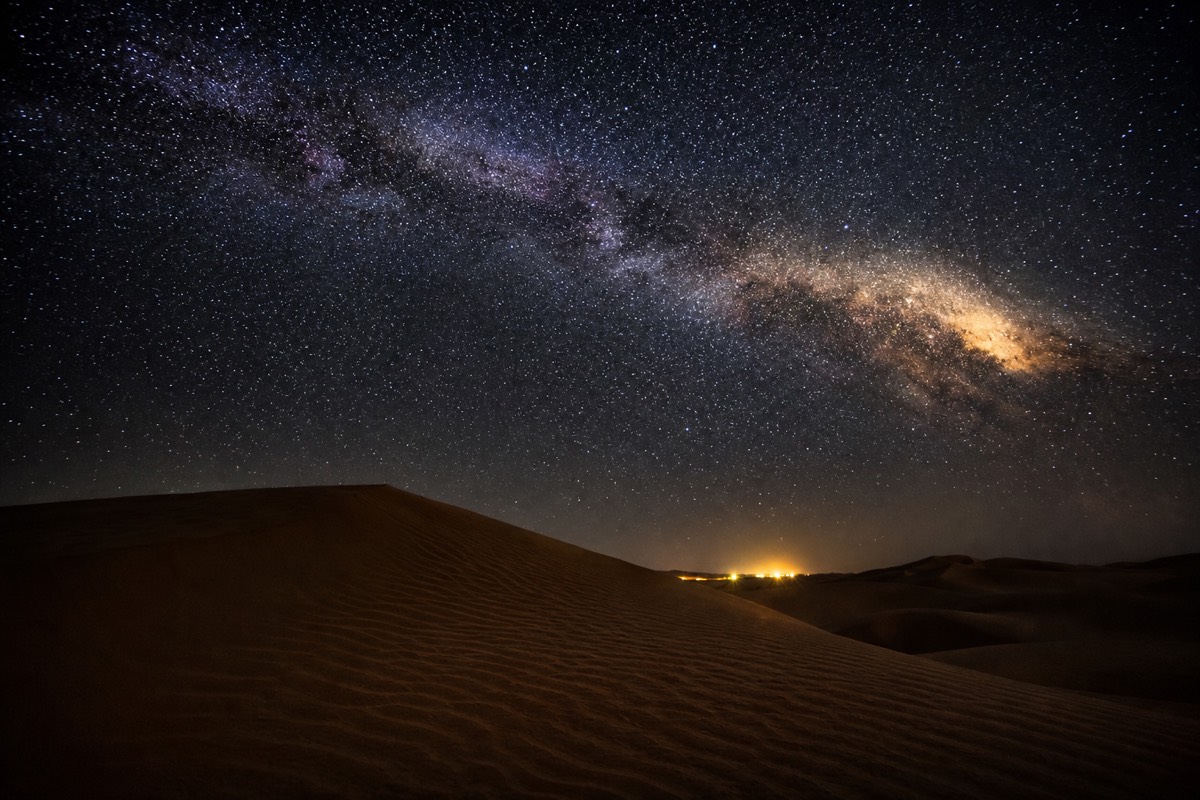
You arrive late afternoon, climb a dune for sunset, eat under the stars, and wake before dawn for sunrise from the same ridge. Between the two, the sky goes fully dark and the Milky Way appears, which is the real bonus of staying. The camp handles dinner, bedding and the pre-dawn wake-up.
An overnight is paced around exactly these moments. The stargazing in the middle is what most people remember most, because Wahiba's dark skies show the Milky Way with almost no light pollution once the camp lamps dim. It turns a two-golden-hour trip into a three-part show, with the night as the quiet centrepiece.
| Time | What happens |
|---|---|
| Late afternoon | arrive, tyres deflated, drive in to camp |
| Golden hour | climb the dune for sunset |
| Evening | dinner at camp, then stargazing under the Milky Way |
| Night | sleep in a tent among the dunes |
| Pre-dawn | wake, coffee, back up the ridge in the dark |
| Sunrise | first light spreading over the dunes |
The rhythm is unhurried on purpose. Nobody is racing a clock back to the city, so sunset can run its full course, dinner is relaxed, and the pre-dawn wake-up feels like a small adventure rather than a chore. That is the difference a night makes: the desert stops being a stop on an itinerary and becomes a place you actually stay.
Camps vary in how much structure they put around these hours, and it is worth knowing your own pace. Some run the evening as a shared event, with a set dinner, music and a group climb for sunset; others leave you to wander off to your own dune and come back when you please. Neither is better, they simply suit different travellers. If catching both golden hours cleanly matters to you, a quick word with the camp about wake-up times and the best nearby ridge means nothing is left to chance, and you can spend the actual moments watching the light rather than working out where to stand.
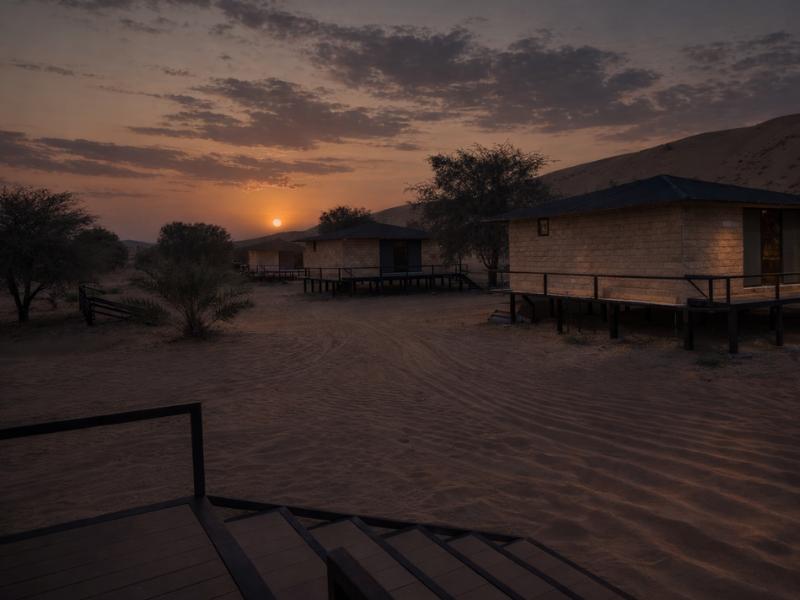
Curious about seeing how the hours between the two fit together? Discover a standard room, dinner and breakfast on the overnight route.
Discover The One-Night Camp Stay2 days, 1 night · Muscat pickup and return
Lunch and camel ride cost extra. Confirm your room and any mobility or child-seat requirements before booking.
Which is better, sunrise or sunset in the desert?
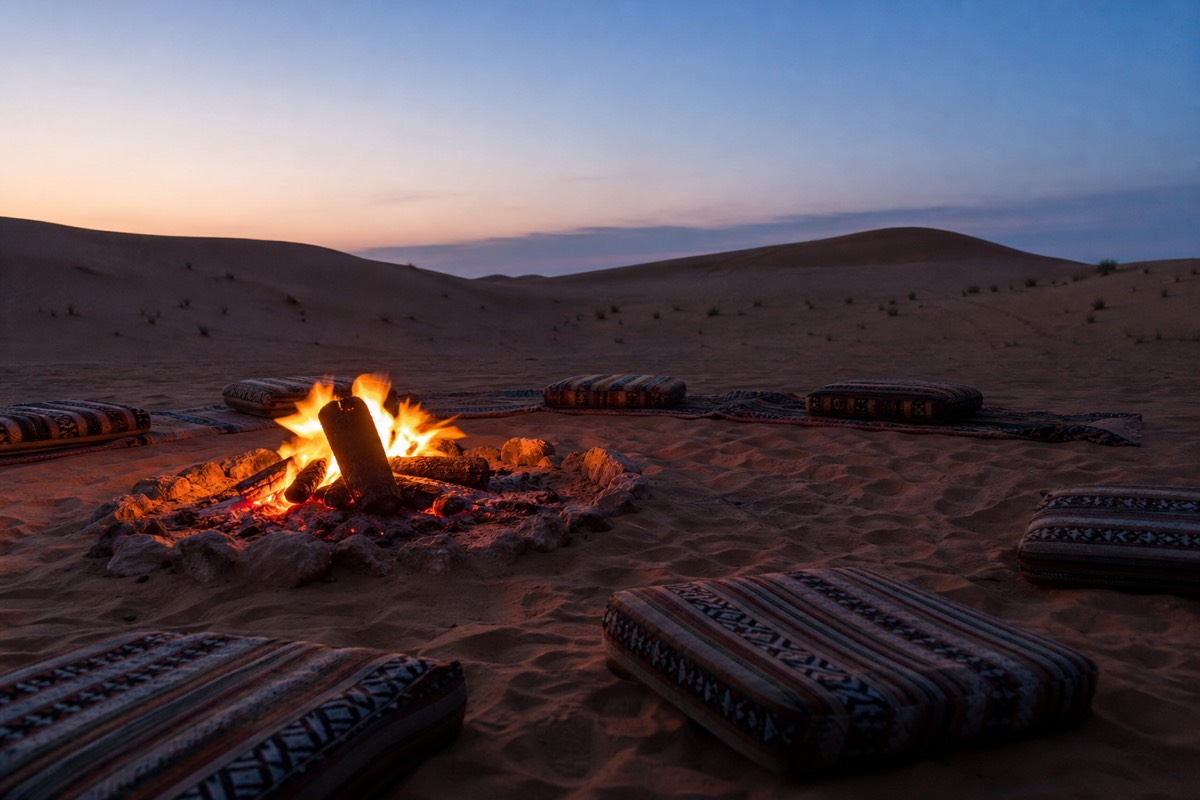
They are different pleasures. Sunset is warm, social and busy, the day's heat still in the air as the dunes turn gold and red. Sunrise is quiet, cold and almost private, with firmer sand for the climb and the softest light of the day. Stay overnight and you do not have to choose.
Sunset gets the crowds because it fits everyone's schedule, and there is a real energy to it: groups gathering on the ridgelines, cameras out, the sand glowing. Sunrise asks more of you, a cold pre-dawn walk on a dark dune, and it rewards that effort with stillness. Fewer people, cleaner light and a desert that feels like it belongs to you alone.
| Aspect | Sunset | Sunrise |
|---|---|---|
| Temperature | warm, softening | cold, crisp |
| Crowd | busier, social | quiet, often alone |
| Effort | easy, before dinner | a dark, early climb |
| Light | gold to deep red | soft, pink to gold |
| Best paired with | dinner and stargazing | coffee and silence |
Ask ten desert regulars and you will get a split answer, which is the point. Sunset is the showstopper everyone expects; sunrise is the one that surprises people into loving it. The overnight hands you both, plus the star-filled gap between them, so the honest advice is to stop picking and stay the night.
There is a practical reason sunrise wins over so many people, too. By dawn the wind has usually dropped, the sand is smooth and unmarked by the previous day's footprints and tyre tracks, and the low light rakes across those clean ridges to pick out every ripple. Photographers chase this window for exactly that reason. Sunset can be busier and the sand more churned up by a day of activity, which takes nothing away from the colour but does change the mood. Having both in one stay means you get to compare them yourself rather than take anyone's word for it.
Plan for keeping both golden hours on the itinerary: check your date before arranging the rest of your trip. This option includes a two-day Muscat camp trip with sunrise before the return.
Scheduled departures from Viator. Availability and final price are confirmed on Viator.
2 days, 1 night · Muscat pickup and return
Lunch and camel ride cost extra. Confirm your room and any mobility or child-seat requirements before booking.
Where should you stand for the best light?
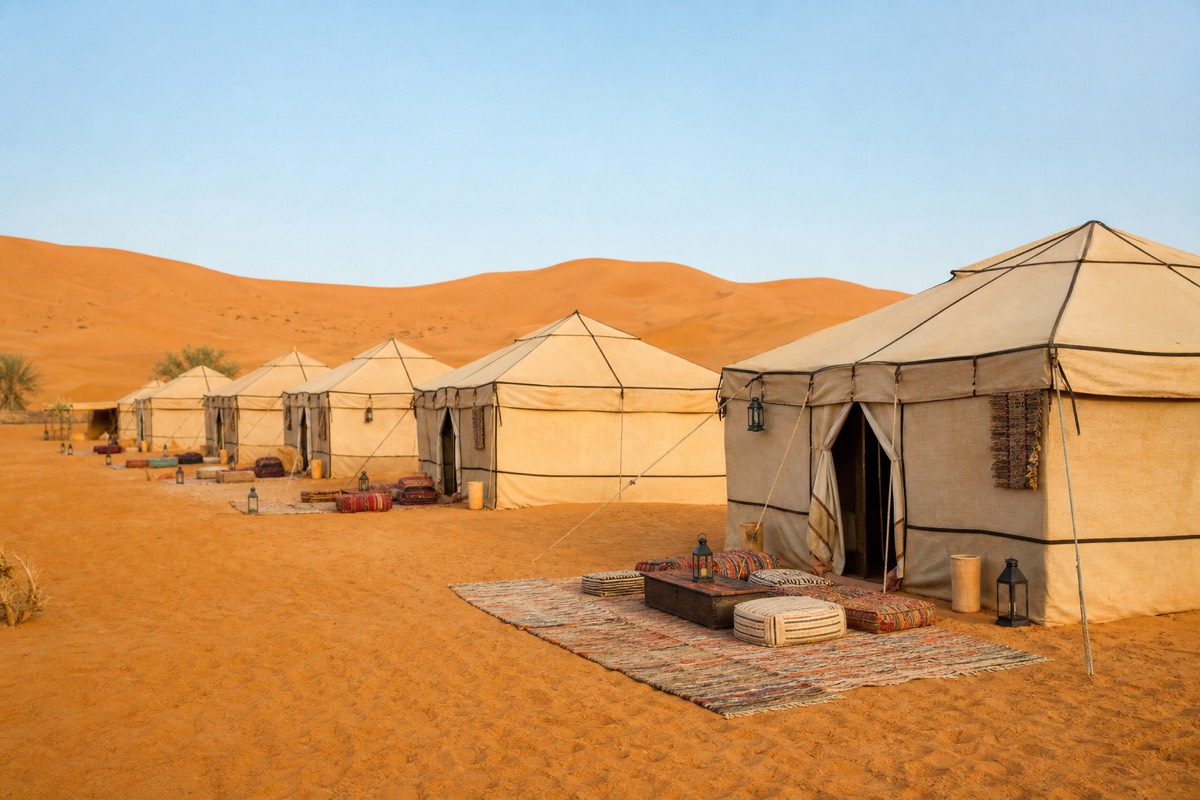
Pick one tall dune near camp with an open horizon on both sides. At sunset the colour comes from the west, so look toward the lit dune faces; at sunrise the light arrives from the east onto those same slopes. A high crest a few minutes' walk from the tents beats any fixed viewpoint, and you can use it twice.
The good news is you rarely need to move far. The best camps sit among big dunes, so the same ridge that frames sunset also frames sunrise from the opposite direction. Walk up before the light peaks, not during it, so you are already in place when the colour arrives and not scrambling up loose sand as it fades.
| Moment | Where to be | Tip |
|---|---|---|
| Sunset | crest with an open western horizon | face the lit dune faces for colour |
| Blue hour | same crest, stay put | the sky deepens for 20 minutes |
| Night sky | away from camp lamps | let your eyes adjust for the Milky Way |
| Sunrise | same ridge, eastern horizon | arrive in the dark, before first light |
Firm morning sand also makes the pre-dawn climb easier than the evening one, when the surface is loose and warm. Wear something genuinely warm for both edges of the night: desert nights and dawns are cold, even after a scorching day, and shivering ruins a sunrise faster than clouds do.
One more piece of positioning advice saves a lot of frustration. Scout your dune in daylight, the afternoon you arrive, so you know the easiest line up it and roughly where the sun will drop and rise. Loose sand makes even a modest climb slow going, and hunting for the right crest in the dark, half asleep, is how people miss the first minutes of sunrise. Bedouin camps are usually pitched with the good ridges close by for exactly this reason, so ask your hosts which way to walk. A two-minute conversation the evening before turns a scramble into a stroll.
No tour in this shortlist guarantees a particular photography crest or an unobstructed horizon. Agree the viewpoint and walking demands with your camp.
What else does the night between them give you?
The best part, arguably. With sunset behind you and sunrise still hours away, the desert goes fully dark and the stars take over. Away from any town, the Milky Way is visible to the naked eye on a clear, moonless night. Add a slow dinner, Bedouin coffee and total silence, and the gap becomes the highlight.
People book the overnight for the two golden hours and come home talking about the middle. Wahiba's distance from city light makes it one of the better dark-sky spots within reach of Muscat, and the sky on a moonless night is genuinely startling if you have only ever seen stars from a town. Some camps bring out a telescope; most simply switch off the lamps and let the sky do the work.
The moon is the one thing worth checking before you go. A bright full moon washes out the faintest stars and hides the Milky Way, while a new moon leaves the sky at its darkest and deepest. If the night sky is a priority, aim your overnight for the days around a new moon and you will see far more. It is a small piece of planning that costs nothing and changes the whole character of the hours between sunset and sunrise, turning a nice starry evening into the kind you remember for years.
Then there is the human side. A desert camp at night runs on unhurried hospitality: dates and cardamom coffee, a shared meal, the crackle of a fire and the sound of the wind on the dunes. That evening is where the overnight earns its keep beyond the photos, and it is the part a day trip can never hand you.
Curious about adding a guided look through the night sky? Discover a telescope session with GeoAstro Oman, with the exact viewing location to agree.
Dates and booking provided by GetYourGuide. If the calendar cannot load, use the booking link below.
Discover The Guided Telescope Session1 to 2 hours observing · Observation location agreed with operator
Transport and food excluded. The itinerary names Wahiba Sands but the meeting map points to Muscat: agree the actual observation location before arranging transport. No camp night included.
What should you pack for a night between the two?
Dress for a hot day and a cold night. Bring a warm layer or two, a scarf for wind-blown sand, sturdy closed shoes for the dune climbs, a head torch for the pre-dawn walk, plenty of water and a camera. Nights and dawns are genuinely cold even after a scorching afternoon, so warmth is the thing people most often underpack.
The desert's swing between day and night catches first-timers out. An afternoon that had you in a t-shirt gives way to a night that has you reaching for a fleece, and the coldest moment of all is that pre-dawn climb for sunrise. What to pack for the overnight is therefore mostly about layers you can add as the temperature drops and peel off again once the sun is up.
| Item | Why you want it |
|---|---|
| Warm layer or fleece | nights and dawns are cold |
| Scarf or shemagh | wind-blown sand and daytime sun |
| Sturdy closed shoes | climbing loose dune sand |
| Head torch | the dark pre-dawn walk to the ridge |
| Plenty of water | dry air dehydrates you quickly |
| Camera or phone | two golden hours and the stars |
A few small things make the difference between comfort and a rough night. Sand gets into everything, so a zip-lock bag for your phone and a soft brush for your camera lens are worth their space. If you plan to shoot the Milky Way, a lightweight tripod turns a snapshot into a keeper. And whatever the forecast says about the daytime heat, throw in one more warm thing than you think you need; nobody regrets it at four in the morning.
Plan for using the warm layers for a full desert night: check your date before arranging the rest of your trip. This option includes a camp room rather than an overnight spent waiting beside the road.
Check Dates For The One-Night Camp StayHow do you book it so both actually happen?
Book an overnight camp trip, not a day tour, and check that the camp sits deep enough in the dunes for a clean horizon. Add a dawn hot-air balloon if you want sunrise from the air instead of a ridge. The overnight starts in Muscat; the verified balloon trip collects from selected desert camps, not Muscat.
The overnight camps Wahiba Sands Tours works with all build the evening around sunset and the pre-dawn wake around sunrise, so both are part of the plan rather than a matter of luck. When you compare options, look for a camp set among the dunes rather than on the flat edge, so your horizon is clean sand in both directions and neither golden hour is blocked by scrub or buildings. It also pays to ask how far the camp sits from the tarmac. A little deeper into the sands usually means darker skies for the stars and a cleaner, wider sunrise, at the small cost of a slightly longer drive in and out. For most people that trade is well worth making, since the whole point of staying over is to be properly inside the desert rather than parked at its doorstep.
| Option | Sunset | Sunrise |
|---|---|---|
| Day trip | usually yes | no |
| Overnight desert camp | yes | yes |
| Sunrise hot-air balloon | no | yes, from the air |
| Overnight plus dawn balloon | yes | yes, twice over |
If you want something different for the morning, a sunrise hot-air balloon lifts off at first light, when the winds are calm, and gives you the dunes from above. Pair a night in the sand with a dawn flight and you collect sunset, the night sky and sunrise in a single, unhurried stretch. How many days you spend in Oman will decide the rest of your trip, but one desert night is all it takes to catch both.
Curious about planning the dawn view from above? Discover a balloon experience with about 50 minutes in flight and selected-camp pickup.
Discover The Wahiba Balloon Flight