Do You Need a 4x4 for Wahiba Sands?
The dunes decide this one for you, and a normal car does not get a vote.
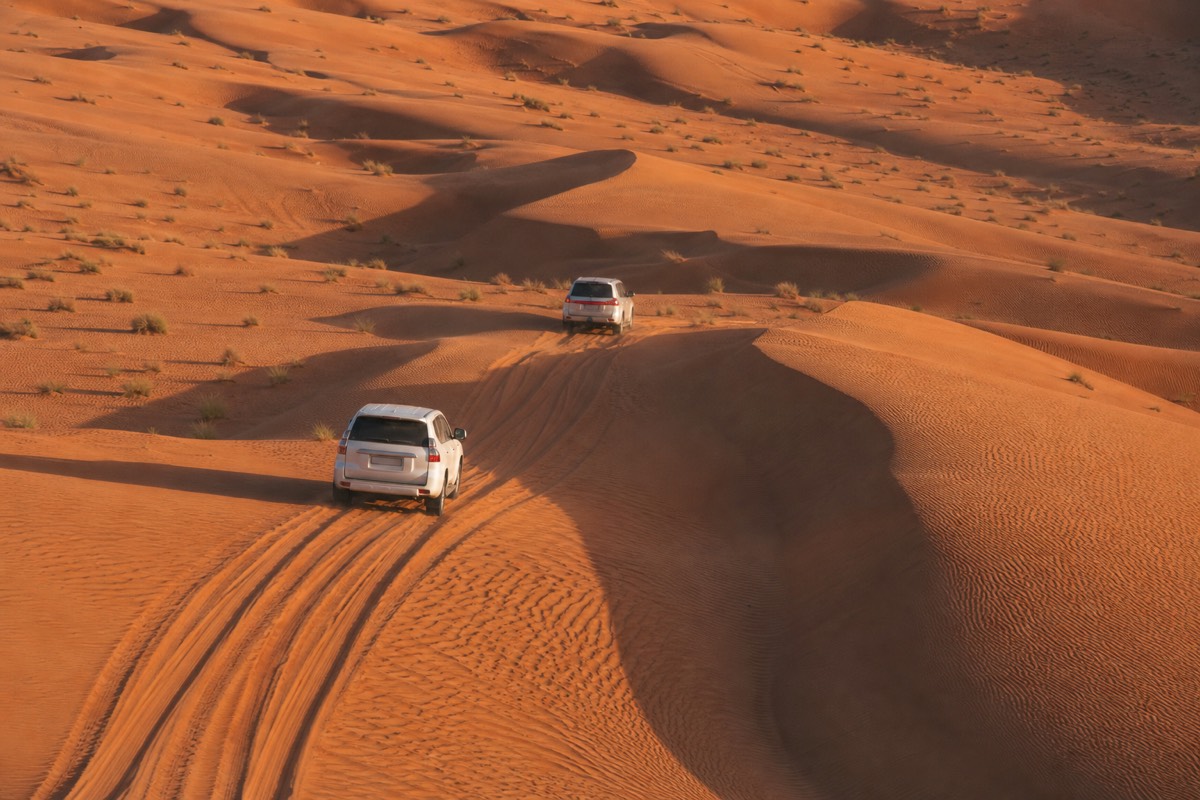
Where each vehicle actually reaches
Real figures: a 2WD reaches only the paved edge; dune driving needs a 4x4 with tyres dropped to roughly 15 to 20 psi.
Do you actually need a 4x4?
Yes, if you want to reach the dunes. Soft sand swallows a normal car within metres, so the camps, ridgelines and dune drives all need a high-clearance 4x4 with low-range gearing. A 2WD can only reach the paved edge of the sands near Al Wasil and Bidiyah. Beyond that, it is 4x4 or a guided transfer.
Match the departure point, trip length and included activities to the plan above.
At A Glance: Private guided dune drive, sunset, sandboarding, Bedouin house visit and dinner at a desert camp.
Explore The Bidiyah Sunset TripThis is one of the few travel questions with a hard answer. Wahiba is a sea of loose, fine sand, and loose sand is exactly what ordinary tyres cannot handle. The difference between a good day and a stranded afternoon is not skill or bravado, it is the vehicle under you.
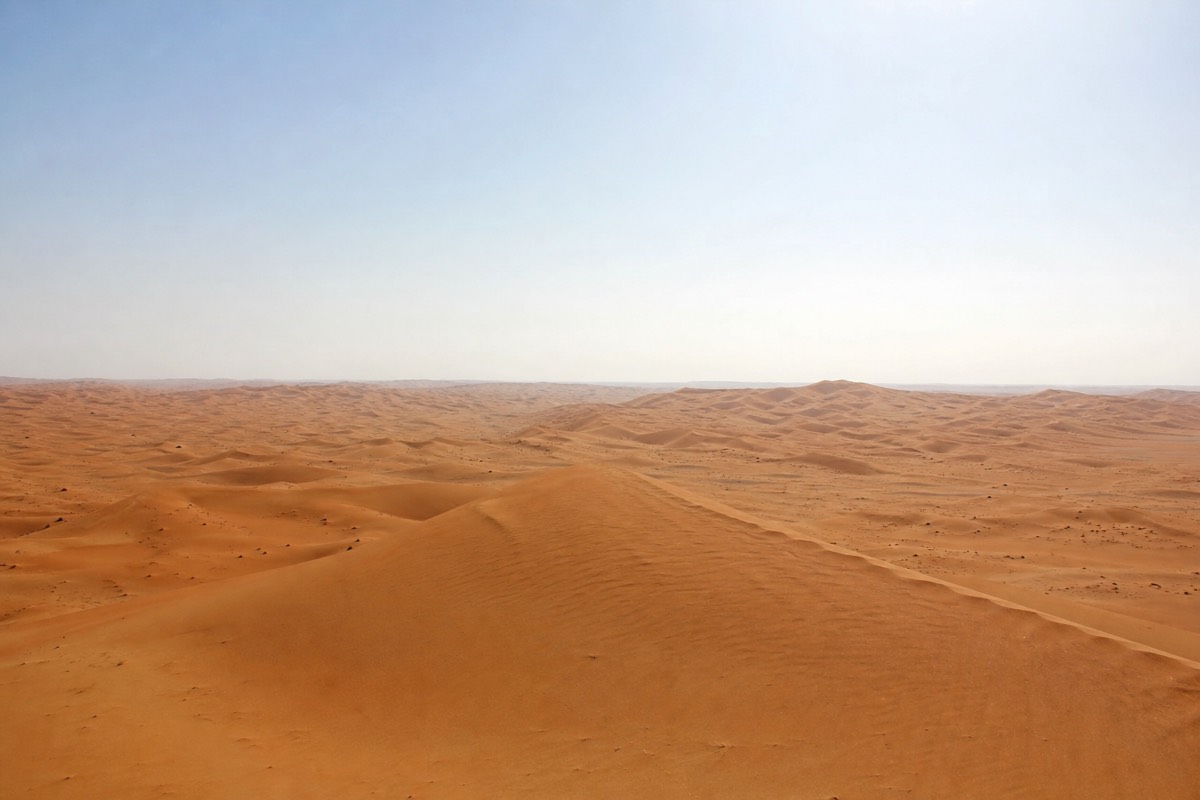
People arrive expecting a scenic car park at the top of a dune. There isn't one. The sand starts where the road stops, and everything worth seeing, the high ridges, the camps, the sunset views, is out on that sand. The rest of this page is about how far each kind of vehicle really gets, what dune driving demands, and why most visitors happily let someone else take the wheel.
It helps to separate two questions that often get muddled. One is whether a 4x4 is required to reach the dunes, and the answer to that is a flat yes. The other is whether you personally need to drive that 4x4, and the answer there is almost always no. Once you split them, the decision gets much simpler: you are not choosing between the desert and no desert, you are choosing who sits behind the wheel while you enjoy the sand. For confident off-road drivers that can be you; for everyone else, a driver who knows the dunes is the obvious pick.
Curious about the last stretch beyond the tarmac? Discover a Bidiyah meeting point and a driver for the dunes.
Discover The Bidiyah Sunset TripHow far does an ordinary car get?
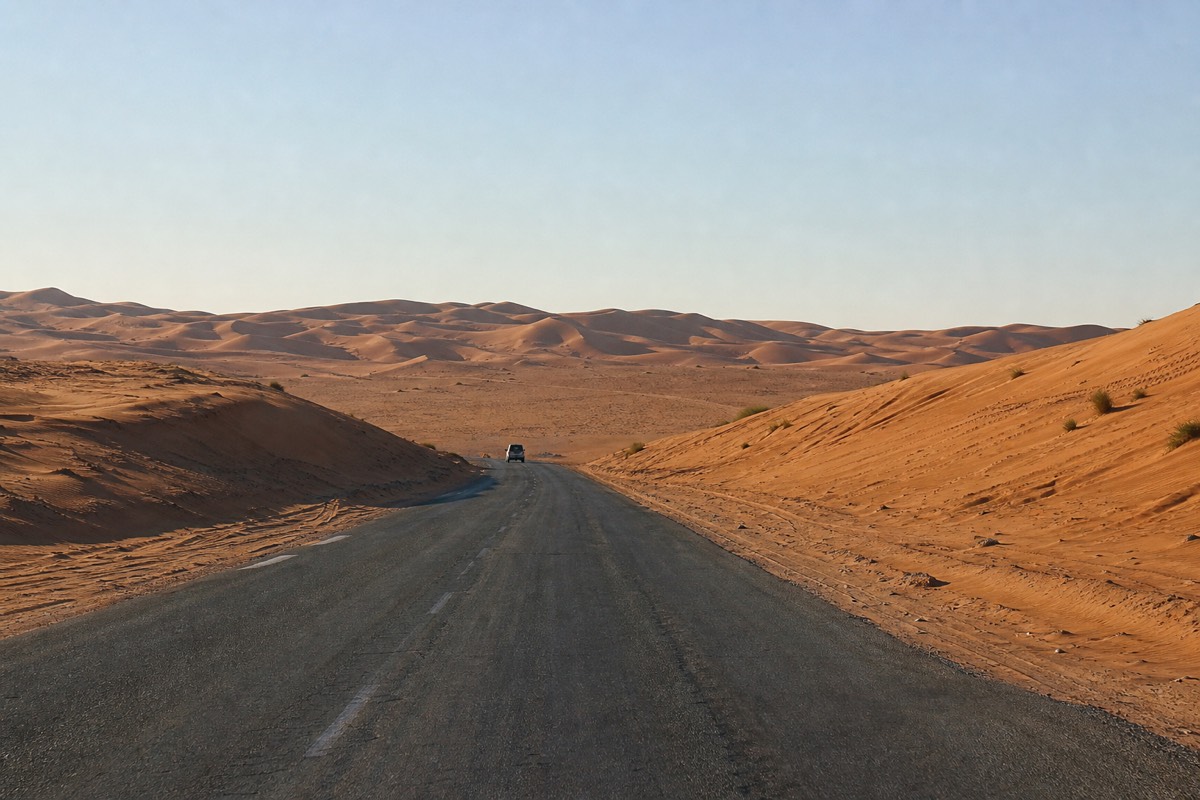
About as far as the last stretch of tarmac. The highway from Muscat runs to the edge villages, and a saloon car can park there and photograph the first dunes. It cannot climb them. The moment the tyres touch soft sand, a 2WD digs in, and there is no recovery service waiting out in the desert.
The drive from Muscat is entirely on good paved road, so any car reaches the fringe of Wahiba without trouble. That fools some visitors into thinking the whole desert is that accessible. It is not. Al Wasil and Bidiyah are the handover points, where tarmac ends and the real terrain begins, and it is here that most people swap into a 4x4 or meet their driver.
| Where you want to go | 2WD car | 4x4 (deflated) |
|---|---|---|
| Paved road to the edge | Yes | Yes |
| Sand-edge photo stop | Edge only, with care | Yes |
| Firm gravel tracks | Risky | Yes |
| Soft dune flanks | No | Yes |
| High crests and camps | No | Yes |
If you only have a 2WD, you will see sand, take a photo and turn around. To actually get among the dunes, you need something built for it, either your own capable 4x4 or a driver's. Trying to nudge a rental saloon a little way onto the sand is how people end up buried to the axles with a long, hot wait for help.
There is a grey zone worth flagging: the graded and gravel tracks that run part-way into the sands near the edge towns. A high-clearance vehicle can sometimes manage short stretches of these when they are firm, which tempts drivers to push a little further each time. That is exactly where confidence outruns capability. The surface changes without warning, a firm track gives way to a soft patch, and a car that felt fine a moment ago is suddenly stuck. Treat the tarmac as the honest limit for an ordinary vehicle, and let a 4x4 take over from there.
Plan for keeping your ordinary hire car on the road: check your date before arranging the rest of your trip. This option includes a four-hour local outing that returns to its Bidiyah starting point.
Scheduled departures from Viator. Availability and final price are confirmed on Viator.
4 hours · Bidiyah meeting point, return to start
Camel riding costs extra. No overnight accommodation. Not recommended during pregnancy. Agree the meeting point before arranging transport.
What does driving on the dunes actually take?
More than four-wheel drive alone. You deflate the tyres to around 15 to 20 psi for flotation, keep your momentum, read the sand, and carry recovery boards, a shovel and a tow rope. Low-range gearing and real off-road experience matter as much as the vehicle. Getting buried on a soft crest is the normal outcome for beginners.
Dune driving is a genuine skill. Letting air out of the tyres spreads the contact patch so the vehicle floats instead of ploughing in, then you reinflate at the edge before returning to the highway. Stop halfway up a soft face and you are usually stuck. Turn too sharply across a steep slope and you risk a roll. None of this is meant to scare you off, it is meant to explain why locals treat it as a craft rather than a party trick.
| What you need | Why it matters |
|---|---|
| High-clearance 4x4, low-range | climbing and descending soft dunes |
| Tyres deflated to ~15 to 20 psi | flotation, stops the wheels digging in |
| Recovery boards, shovel, tow rope | you will get stuck at some point |
| Extra water and fuel | no services anywhere in the dunes |
| A guide or a second vehicle | no phone signal, easy to lose your bearings |
| A tyre pump for the edge | reinflate before rejoining the road |
Momentum is the quiet skill nobody mentions. On soft sand you carry speed smoothly, read the colour and texture of the surface to spot the softest patches, and pick a line up a dune rather than attacking it head-on. Drivers who do this daily make it look effortless, which is precisely why it looks easier than it is.
Timing matters as much as technique. Sand is firmer and cooler in the early morning and late afternoon, and softest in the baking middle of the day, so experienced drivers plan the hardest climbs for the kinder hours. Heat also punishes a stuck vehicle and its occupants far more at noon than at dawn. Reading light, temperature and the shape of the dunes together is the difference between a driver who floats across the sands and one who spends the afternoon digging, and it is knowledge that only comes from doing it again and again in the same terrain.
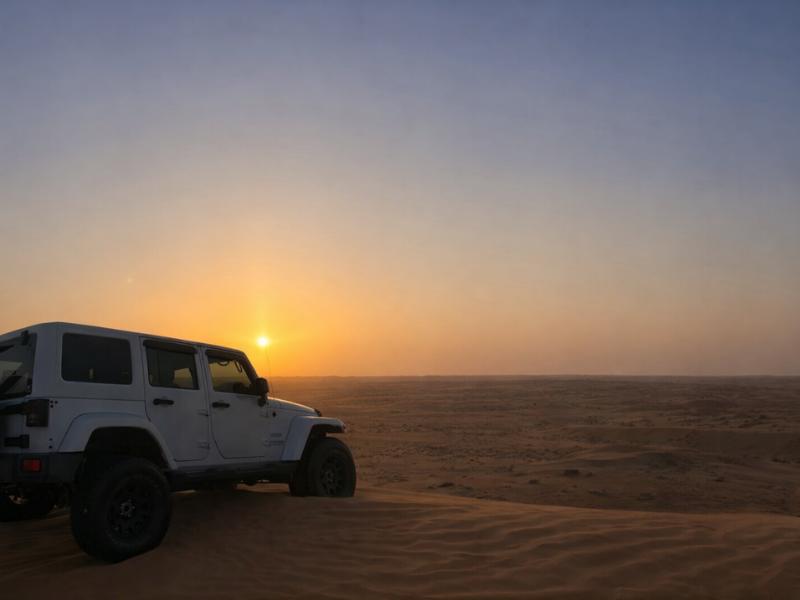
Curious about seeing the crests from the passenger seat? Discover dune driving, sandboarding and sunset in one local trip.
Discover The Bidiyah Sunset Trip4 hours · Bidiyah meeting point, return to start
Camel riding costs extra. No overnight accommodation. Not recommended during pregnancy. Agree the meeting point before arranging transport.
Why do people get stuck, and what does recovery involve?
Almost always the same reasons: tyres left too hard, too little momentum, or a stop on a soft slope. Recovery means digging out the wheels, laying boards or mats under the tyres, dropping pressure further, and easing out gently. Alone it is slow and exhausting. With a second vehicle and a tow rope it takes minutes.
The classic beginner mistake is treating the desert like a firm beach. Tyres at road pressure cut down into the sand, the car loses drive, and every push on the accelerator digs a deeper hole. The fix is patience: clear the sand from around and in front of the wheels, get pressure right, and use boards for traction rather than brute throttle.
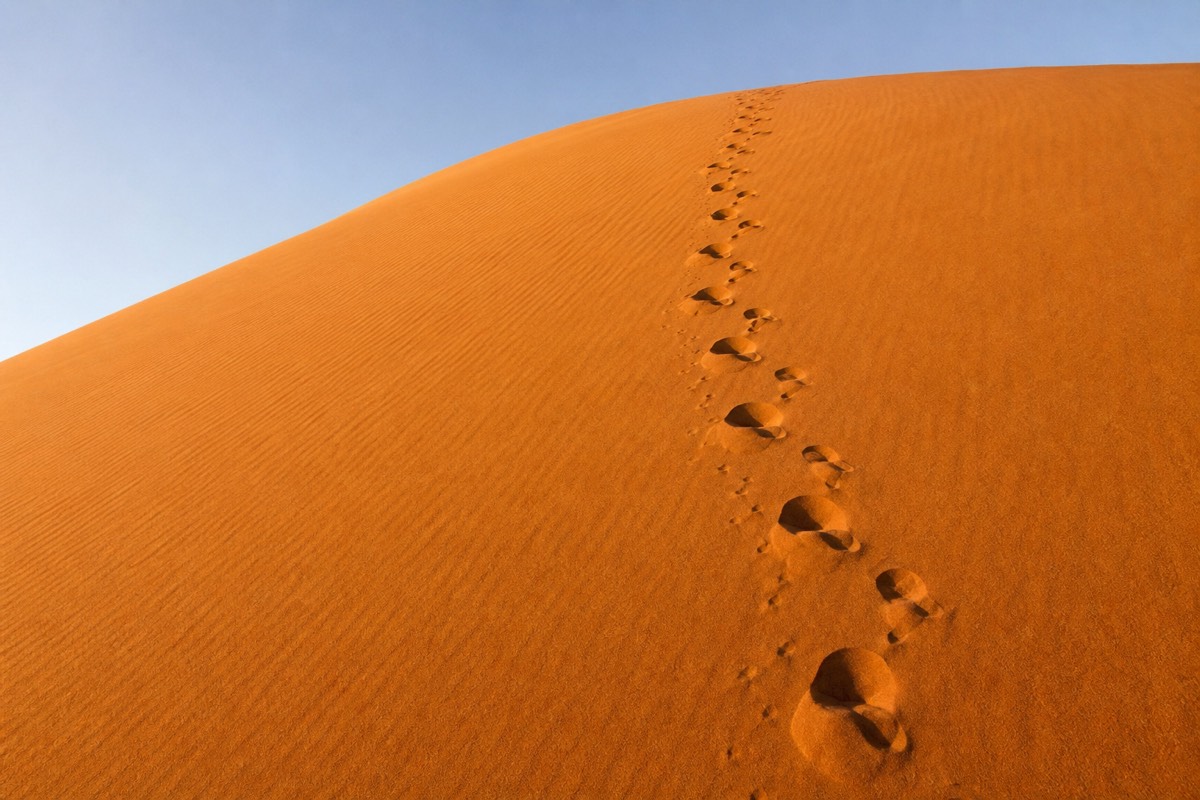
| Common mistake | What happens | The fix |
|---|---|---|
| Tyres left at road pressure | wheels cut in and bog | deflate to ~15 to 20 psi first |
| Stopping on a soft climb | no momentum, instant bury | keep smooth, steady speed |
| Spinning the wheels | digs deeper, fast | ease off, dig out, use boards |
| Driving alone | no one to tow you out | travel in a convoy |
| No recovery kit | stranded for hours | carry shovel, boards, rope |
This is the heart of the case for a guide. A driver who knows these dunes rarely gets stuck, and when it happens they are unbothered because they carry the kit and the know-how. On your own, a single buried vehicle can turn a fun afternoon into a real problem, especially as the day heats up and the light goes.
Recovery also gets harder the deeper you are. Near the edge, a stuck car is an inconvenience you might solve with a shovel and patience. A few kilometres in, with no signal and no other vehicle in sight, the same situation is a genuine hazard, because now the heat, your water supply and the fading light all start to matter. This is why the advice to travel in a convoy is not fussiness. A second vehicle turns a potential emergency into a ten-minute tow, and it is the single biggest safety margin any desert group can carry.
A tour is not roadside recovery cover. We have not verified an affiliate recovery service; arrange support for your own vehicle separately.
Is renting a 4x4 and self-driving worth it?
Only if you already drive on sand. Rental insurance often excludes off-road and dune damage, phone coverage drops fast, and a single buried vehicle with no backup can become serious. Plenty of visitors rent a 4x4 for the paved touring and still hand the actual dune driving to someone who does it every day.
Choosing to self-drive without a tour is a real option, but read your rental contract first. Many companies void cover the moment you leave a sealed road, which means one stuck axle or a cracked underbody is entirely on you. Add patchy signal and soft afternoon sand, and a solo attempt turns risky quickly.
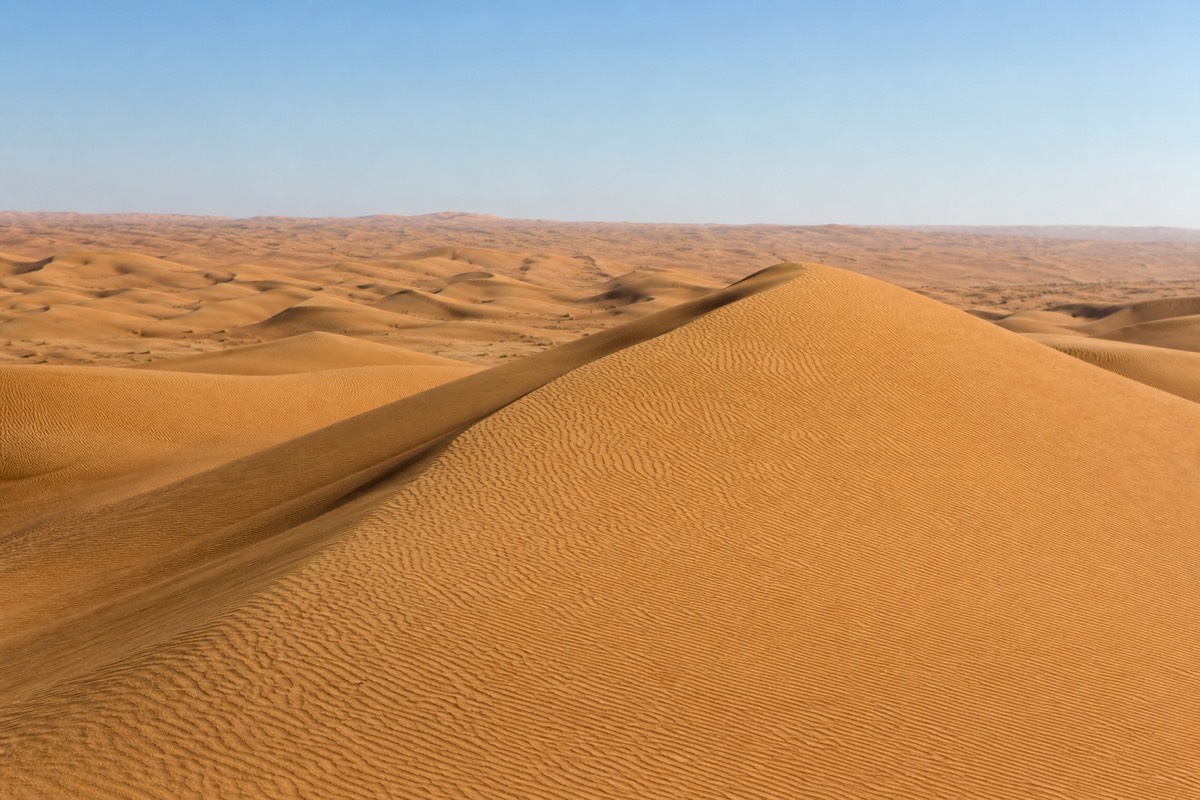
| Factor | Self-drive rental | Guided transfer |
|---|---|---|
| Off-road insurance | often excluded | operator's vehicle and cover |
| Recovery if stuck | your problem | handled, kit on board |
| Local knowledge | none | daily, dune by dune |
| Stress level | high for beginners | low, you just enjoy it |
| Best for | experienced sand drivers | almost everyone else |
If you are set on driving yourself, go with at least one other vehicle, carry recovery gear, and start early when the sand is firmer and cooler. Going in alone at midday is how people end up digging for hours. For most travellers, though, the maths favours letting an expert drive while you watch the dunes go by.
Time is part of that maths as well. Learning to read soft sand takes days you probably do not have on a short holiday, and the hours spent stuck or nervous are hours not spent enjoying the desert. A driver skips all of that. You arrive at the good dunes by the fastest safe line, at the right time of day, and you spend your energy on the views and the photos rather than on the vehicle. For a once-in-a-trip experience, handing over the wheel is often the choice that gets you the most desert for your day.
Plan for pricing the drive and bed together: check your date before arranging the rest of your trip. This option includes private Muscat transport, a standard Desert Rose Camp room and two meals.
Scheduled departures from Viator. Availability and final price are confirmed on Viator.
2 days, 1 night · Muscat pickup and return
Lunch and camel ride cost extra. Confirm your room and any mobility or child-seat requirements before booking.
What about quads, camels and other ways onto the sand?
A 4x4 is not the only way in. Guided quad and buggy rides put you on the dunes without owning the skill, camels reach places wheels never will, and a driver-led transfer covers the rest. Each option gets you onto the real sand safely; none of them relies on you piloting a car through soft dunes yourself.
Quad and buggy tours are popular for a reason: the operator handles the route and the recovery, and you get the thrill of moving across the dunes under your own control on a machine built for it. Camel rides are the slow, quiet counterpoint, a way to feel the desert at Bedouin pace, and they are woven into most camp stays.
| Way onto the dunes | Driving skill needed | Good for |
|---|---|---|
| Guided 4x4 transfer | none, a driver takes you | reaching camps and viewpoints |
| Quad or buggy tour | basic, briefed on site | hands-on dune fun |
| Camel ride | none | slow, cultural, photogenic |
| Self-drive 4x4 | real sand experience | confident off-roaders |
Many day tours also pair the dunes with the pools of Wadi Bani Khalid, so a single trip can cover dune bashing, a quad ride and an oasis swim without you ever touching a steering wheel in soft sand. It is a neat way to sample everything the sands offer in one outing.
Curious about trying the dunes at camel pace? Discover a camel ride included with a Bidiyah safari and Bedouin house visit.
Dates and booking provided by GetYourGuide. If the calendar cannot load, use the booking link below.
Discover The Bidiyah Camel Safari2 hours · Bidiyah meeting point
Food and tips excluded. Not suitable for back problems or mobility impairments. Confirm child restrictions and the exact meeting point.
What does a guided desert trip cost, and what do you get?
Compare the actual itinerary as well as the price. The local Bidiyah sunset trip includes sandboarding and dinner, with camel riding extra. A Muscat shared day has separate standard, sunset and quad choices. The selected option determines what your quote covers.
Set against the cost and risk of renting a capable 4x4, buying off-road cover, carrying recovery gear and hoping you never test it, a guided trip looks like good value rather than an extravagance. The price you see on the listing folds in the vehicle, the fuel, the deflating and reinflating, and a driver whose whole job is getting you onto the best dunes and back off them safely.
| Trip type | From (per the listing) | What you get |
|---|---|---|
| Sunset 4x4 dune run | Quote for your dates and party | driver, dune bashing, a sunset stop |
| Full day plus Wadi Bani Khalid | Quote for your dates and party | the dunes and an oasis swim |
| Quad plus Wadi Bani Khalid | Quote for your dates and party | hands-on quad time and the oasis |
Prices move with season, group size and whether you go private or join a shared trip, so treat these as starting points and confirm the current figure on the operator's listing. What does not change is the logic: for the price of a nervous solo attempt, you buy the same dunes with none of the recovery drama, and usually a better route than you would find on your own. If you are travelling as a small group, a private trip often works out at a sensible per-person figure while giving you control over the pace and the stops, which is worth weighing against the lower headline price of a shared departure.
Plan for understanding the activity-day quote: check your date before arranging the rest of your trip. This option includes a private Muscat vehicle and guide, with camel, quad, sandboarding and dune bashing priced separately.
Check Dates For The Private Activity DayThe simpler option: let someone else drive
For most visitors, a guided transfer is the smart call. A driver collects you, deflates the tyres, handles the dune bashing, and gets you to camp in time for sunset. You keep the thrill and skip the recovery drama. Group and private trips both run this way daily from Muscat and the edge towns.
The drivers Wahiba Sands Tours works with run this route every day, deflating tyres at the same spot and reading dunes they know by heart. That local knowledge is the whole product: you get the ridgelines and the sunset without the risk of a lone vehicle in soft sand, and you arrive at camp relaxed rather than rattled.
So, do you need a 4x4 for Wahiba Sands? To touch the real dunes, yes, without question. To do the driving yourself, no. Whether you want a quick sunset dune run or a full day out with an oasis stop, letting an experienced hand take the wheel is the easiest and safest way to say yes to the sand.
Curious about leaving the entire round trip to a driver? Discover a shared Muscat day combining Wahiba Sands and Wadi Bani Khalid.
Discover The Muscat Desert Day