Can You Visit Wahiba Sands Without a Tour?
The self-drive reality, the skills and gear it takes, and where a guided trip quietly wins.
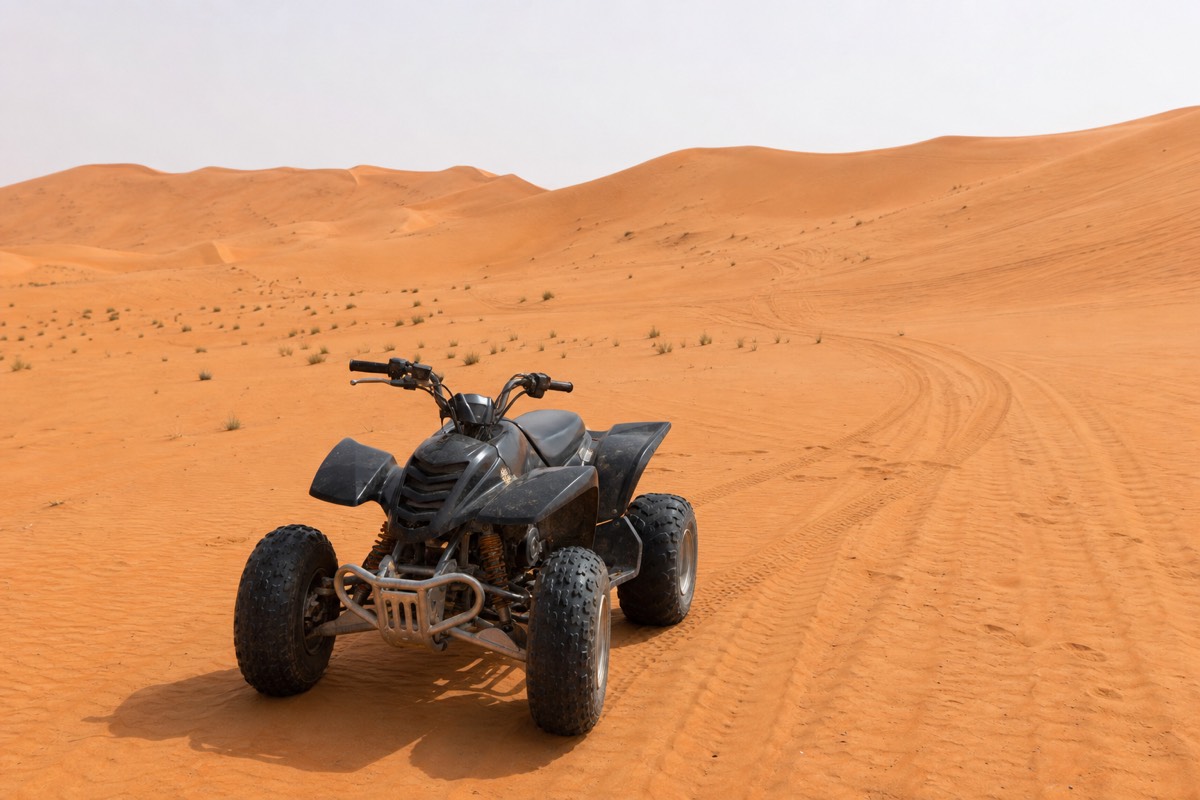
Self-drive vs guided: the trade-off
Where each option wins, from gear and skill to cost and who it really suits.
Can you actually visit on your own?
Technically yes, but it is not casual. You can reach the edge of Wahiba Sands in a rental car and even camp near it, but driving onto the dunes safely needs a proper 4x4, deflated tyres, genuine sand-driving skill, and ideally a second vehicle. Without those, a self-drive attempt can end stuck, expensive, or dangerous.
Match the departure point, trip length and included activities to the plan above.
At A Glance: Private guided dune drive, sunset, sandboarding, Bedouin house visit and dinner at a desert camp.
Explore The Bidiyah Sunset TripPlenty of independent travellers do make it to the sands under their own steam. The tarmac from Muscat runs all the way to gateway towns like Al Wasil and Bidiyah, roughly two and a half to three hours out, and from there the dunes begin. The gap between reaching the desert and driving it, though, is wide. Getting to the edge is a normal road trip. Going in is off-roading on one of the more unforgiving surfaces there is, and that is where a self-drive plan needs honest scrutiny.
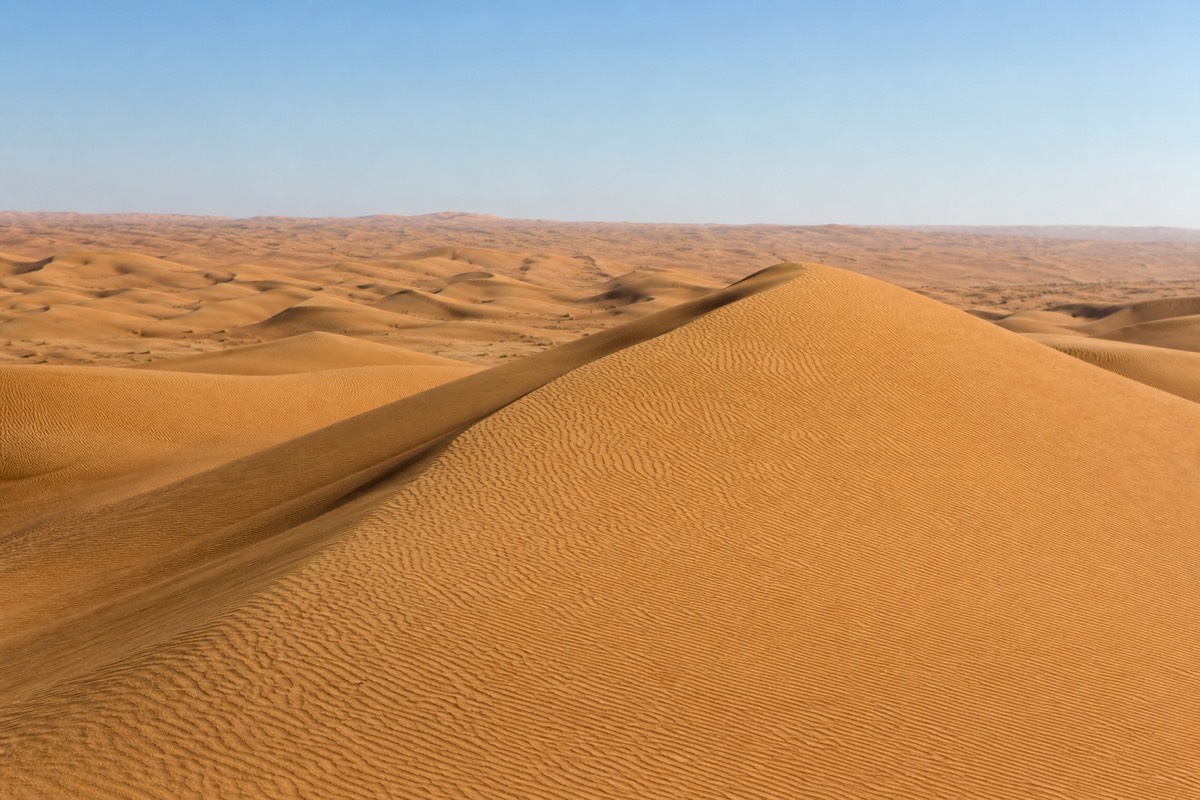
The honest framing is this: reaching Wahiba without a booked tour is realistic; driving its dunes without preparation is not. Where you land on that spectrum decides whether a solo trip becomes an adventure or a rescue call. The rest of this piece lays out the vehicle, the gear, the skill and the risks, then compares self-drive against a guided trip so you can choose with your eyes open.
It also helps to be clear about what you actually want from the day. If the goal is to stand on a dune, ride a camel and sleep under the stars, you do not need to be the one behind the wheel at all. Self-driving is a project in its own right, appealing to people who enjoy the off-road challenge as much as the scenery. Separate those two motives honestly and the right choice usually becomes obvious.
There is also a spectrum between fully independent and fully guided that many travellers miss. You can drive yourself to the gateway and join a short guided dune session from there, camp near the sands and book a sunrise transfer into the deep dunes, or convoy with friends who have off-road experience. Visiting without a tour does not have to mean doing every risky part alone.
Curious about keeping the road trip independent? Discover a local Bidiyah meeting point for just the sunset excursion.
Discover The Bidiyah Sunset TripDo you really need a 4x4?
For the dunes, absolutely. A normal car will bog down within minutes on soft sand. You need a high-clearance 4x4 with low-range gearing, and before leaving the tarmac you must drop tyre pressure to roughly 15 to 18 psi so the tyres float rather than dig in. A compressor to reinflate afterwards is essential, not optional.
There is no workaround here: a two-wheel-drive hire car is the wrong tool, and driving it into the sand is how people get stranded. If you do decide to self-drive, you will hear that many drivers stop at the fuel station in Bidiyah to let their tyres down before heading in, then reinflate at the same spot on the way out. Renting a capable 4x4 in Oman is straightforward, but read the hire agreement closely, since some companies restrict off-road or dune use and void the insurance the moment you leave the tarmac.

Deflation is not a nice-to-have, it is the physics of driving on sand. Lower pressure lengthens the tyre's contact patch so the vehicle floats across the surface instead of ploughing into it. Go too low, though, below about 10 to 12 psi, and you risk the tyre rolling off the rim on a hard turn. That narrow window is one more reason experienced drivers carry a gauge and a compressor rather than guessing.
What your vehicle can do depends entirely on where you point it. This table sorts the common options by how far they will safely take you.
| Vehicle | Reach the gateway towns? | Drive the dunes? |
|---|---|---|
| Standard 2WD car | Yes, on tarmac | No, bogs in soft sand |
| Crossover or soft-roader | Yes | Risky, not built for it |
| Proper 4x4, low range | Yes | Yes, with deflated tyres and skill |
| Guided operator 4x4 | Yes | Yes, driver trained for it |
One more vehicle note that trips people up: four-wheel drive is not the same as dune-ready. Plenty of soft-roaders wear a 4x4 badge but lack the low-range gearing, ground clearance and cooling that real sand work demands. If you are renting specifically to drive the dunes, confirm the model is a genuine off-road 4x4, not a raised hatchback, before you count on it leaving the tarmac.
Plan for leaving the hired saloon at the gateway: check your date before arranging the rest of your trip. This option includes a driver-led 4x4 trip that returns to Bidiyah.
Scheduled departures from Viator. Availability and final price are confirmed on Viator.
4 hours · Bidiyah meeting point, return to start
Camel riding costs extra. No overnight accommodation. Not recommended during pregnancy. Agree the meeting point before arranging transport.
What gear and prep does self-driving require?
More than most road trips. Beyond the 4x4 itself you want a tyre deflator and gauge, a portable compressor, a shovel and recovery boards, plenty of water, a full fuel tank, and offline maps. Missing any one of these can turn a small problem into a stranding, because there is no roadside help among the dunes.
The kit is not glamorous, but each item earns its place the moment something goes wrong. A compressor without a deflator is useless, and a deflator without recovery boards leaves you digging with your hands. Independent desert travellers treat this list as non-negotiable, and the fact that a guided trip supplies all of it is a fair part of what you pay for.

Prep is as much about timing and information as hardware. Fuel up fully before Bidiyah, because sand driving drinks far more than tarmac. Download an offline map and mark your entry point, since signal disappears within a few dunes. Check the forecast for any chance of rain upstream that could flood a wadi on your route. None of this is difficult, but skipping it is how a pleasant plan unravels.
Borrowing versus buying is worth thinking through too. If this is a one-off desert day, renting recovery gear or joining friends who already own it makes more sense than buying a full kit you will use once. If you are touring Oman for weeks and plan several off-road days, owning the basics pays off. Either way, do not treat the gear as optional; treat only the source of it as a choice.
| Item | Why you need it |
|---|---|
| Tyre deflator and gauge | Drop to ~15 to 18 psi for grip on sand |
| Portable air compressor | Reinflate before returning to tarmac |
| Shovel and recovery boards | Dig and drive out of a bogging |
| Extra water and food | No shops or help among the dunes |
| Full fuel tank | Sand driving burns fuel fast |
| Offline maps and a charged phone | Signal fades quickly off the road |
This shortlist does not include equipment hire, convoy support or vehicle recovery. A passenger tour does not cover your independent driving preparations.
Can you legally camp in the sands on your own?
Yes. Oman is famously relaxed about wild camping, and pitching a tent near the dunes is both legal and common. There are no permits for casual desert camping, but you carry full responsibility: bring all your water, food and fuel, take every scrap of rubbish out, and set up with respect for Bedouin land and privacy.
The freedom to camp almost anywhere is one of the real joys of independent travel in Oman, and the sands are no exception. What the freedom assumes is self-sufficiency. There are no facilities out among the dunes, no water points and no bins, so everything you need comes in with you and everything you produce goes out. Treat the desert as you found it and the tradition of open camping stays open for the next traveller.
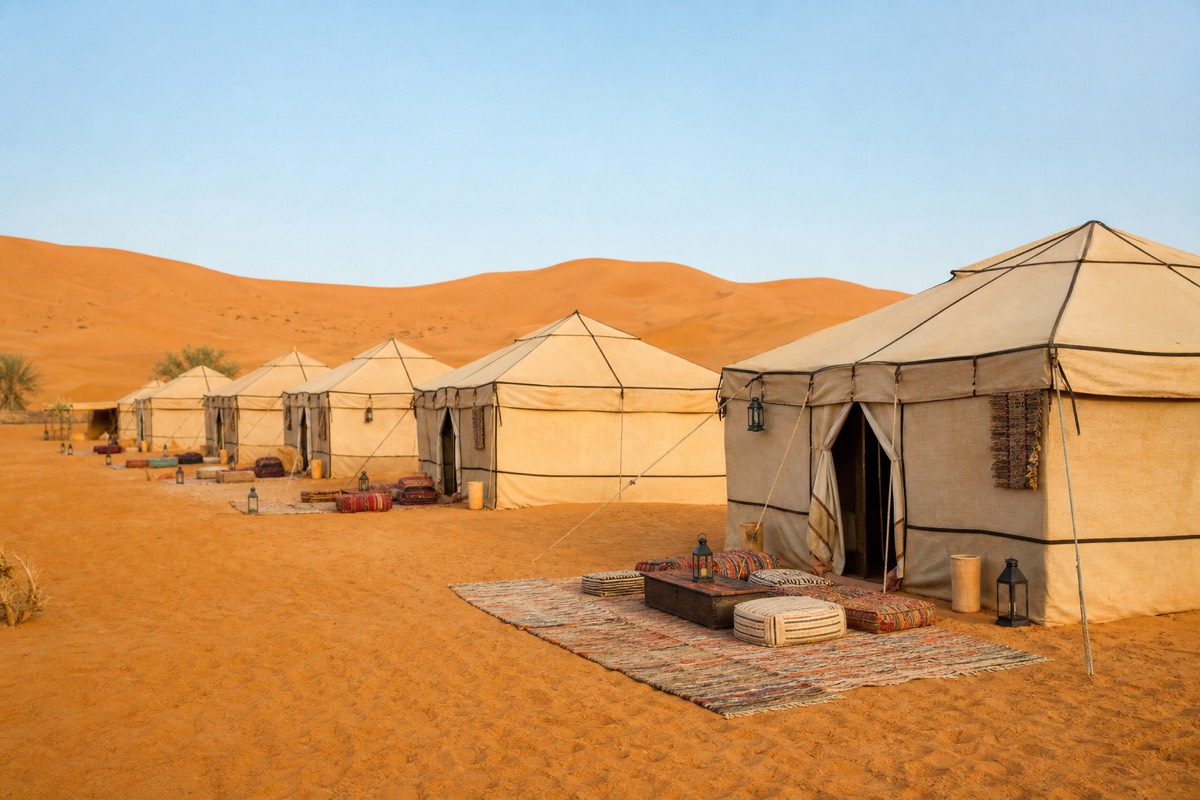
A few sensible limits keep it safe as well as courteous. Camp on firm ground rather than a soft slope you might get stuck leaving, never pitch in a wadi bed that could flash-flood, and keep a polite distance from Bedouin homes and animals. Tell someone where you are, and do not rely on a fire for warmth on a cold night when a proper sleeping bag is far more reliable.
Camping alone also puts every earlier point in this article to the test at once, since you now handle the driving, the navigation and a night in the open with no backup. Plenty of prepared travellers do it happily. If any part of that list makes you uneasy, it is a strong sign to book a camp with staff on site instead.
| Do | Do not |
|---|---|
| Carry all your own water and fuel | Assume any facilities exist |
| Take every piece of rubbish out | Leave food, plastic or fire scars |
| Camp on firm, level ground | Pitch in a wadi bed or on soft sand |
| Respect Bedouin land and privacy | Camp right beside homes or animals |
| Tell someone your location | Head in without sharing a plan |
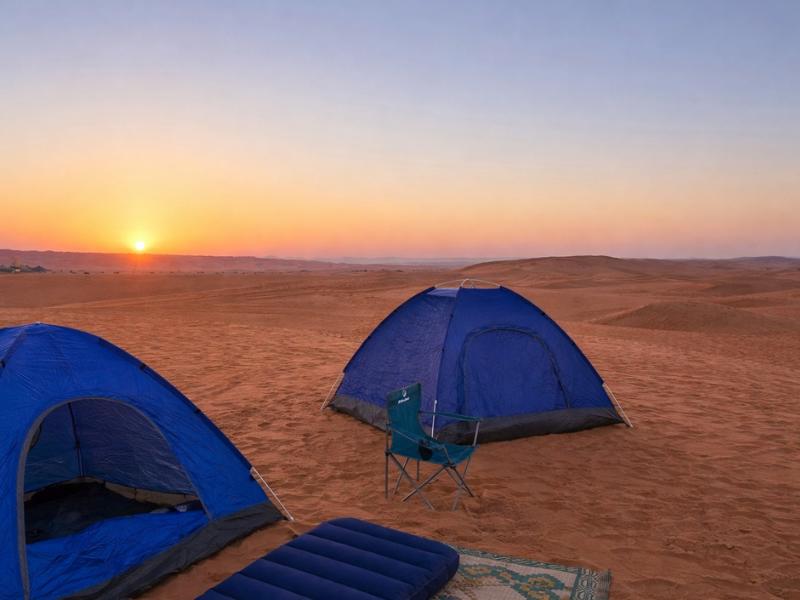
Curious about camping without carrying the shelter? Discover normal camping tents, dinner and breakfast on a private two-wadi trip.
Discover The Two-Wadi Tent Trip2 days, 1 night · Muscat pickup and return
Normal camping tents, not hotel-camp rooms. Lunch excluded. Not recommended during pregnancy or for spinal or cardiovascular conditions; confirm hiking and swimming requirements.
What sand-driving skill does it take?
More than most first-timers have. Reading a dune's firm and soft sides, holding momentum without over-revving, cresting a ridge without launching over a hidden drop, and recovering a bogged vehicle are all learned skills. Local guidance is blunt: never drive the sands as a single car, because a stuck vehicle far from help is a genuine emergency.
Sand driving punishes hesitation and rewards judgement, and both take practice. The classic beginner mistakes are stopping on soft sand, turning too sharply and rolling a wheel off the rim, or coming over a crest blind. Experienced desert drivers manage risk by travelling in convoys of two or more vehicles, so one can always pull the other out. A lone driver has no such backup.
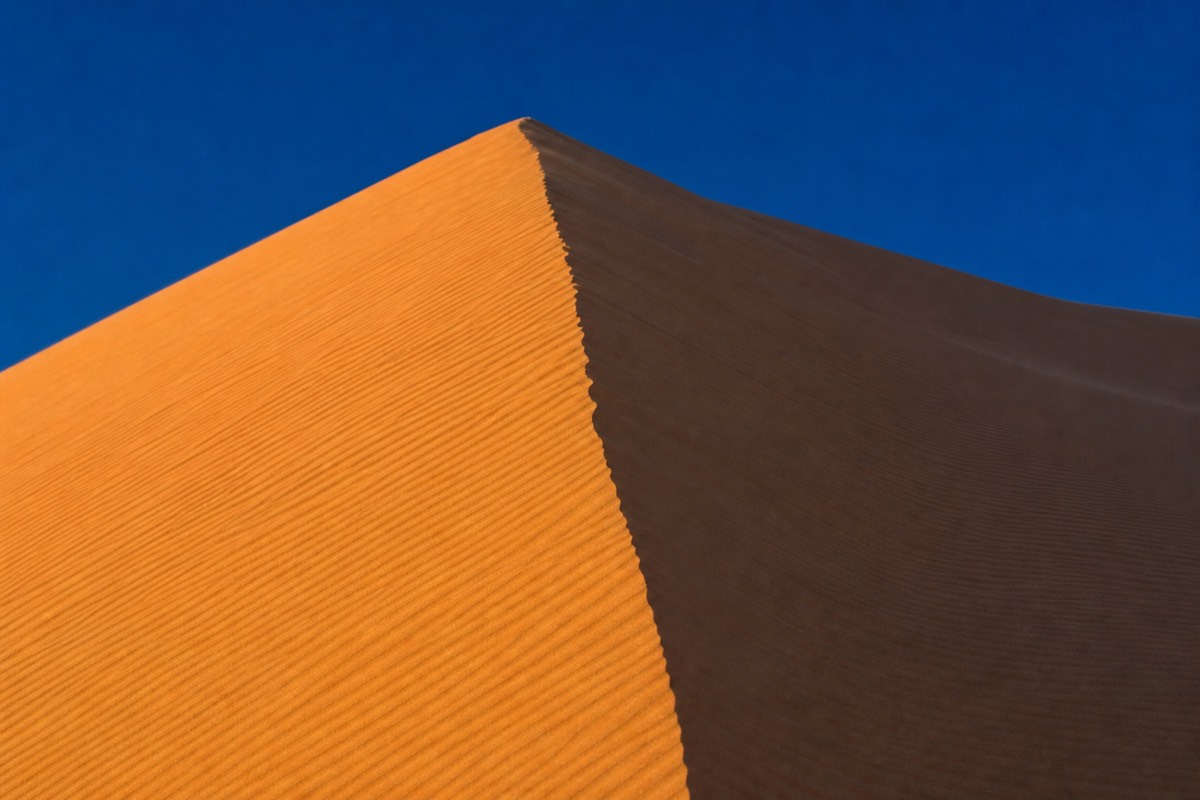
Recovery itself is a skill. Digging out, laying boards under the tyres, and easing forward without spinning the wheels deeper all take a calm hand. Do it wrong and you bury the vehicle to its axles in minutes, in full sun, with no shade for miles. If your off-road experience is thin, the dunes are not the place to learn on your own.
Reading the sand is the part no checklist can hand you. The firm, wind-packed face of a dune will hold a vehicle while the soft leeward side swallows it, and telling them apart at a glance comes only with hours behind the wheel. This is precisely the judgement a local driver has built over years, and precisely what a first-timer cannot fake, however careful they are.
This is why even capable drivers from other terrains often underestimate the sands. Mud, snow and gravel each reward different instincts, and some of those instincts are actively wrong on a dune, where lifting off at the crest or braking on a soft face can bog or roll you. Transferring off-road confidence from home does not automatically transfer off-road judgement here.
Plan for experiencing dune driving without learning it on holiday: check your date before arranging the rest of your trip. This option includes a local driver for the sunset dunes and sandboarding.
Check Dates For The Bidiyah Sunset TripWhat are the real risks of going without a guide?
Getting stuck is the common one; the serious ones are heat and isolation. Phone signal fades quickly among the dunes, midday summer heat can top 45°C, and a wrong turn in a featureless sand sea disorients fast. Camels wander onto approach roads at night. None of this is meant to scare, only to set expectations honestly.
The desert is beautiful and indifferent in equal measure. Once you are a few ridges in, landmarks vanish and a GPS track becomes your lifeline, so download offline maps before you lose signal. Summer amplifies everything: a breakdown that is a nuisance in January can be dangerous in July. Tell someone your route and expected return time before you go, and do not rely on a single phone for navigation.
The drive itself carries a quieter hazard, since camels crossing unlit roads after dark cause real accidents. Prepared, cautious travellers manage these risks; unprepared ones are exactly who local rescue teams end up recovering. The table below ranks what actually goes wrong for self-drivers, so you can weigh it honestly.
| Risk | How likely for self-drivers | What reduces it |
|---|---|---|
| Getting bogged in soft sand | Common | Deflated tyres, momentum, recovery kit |
| Heat and dehydration | High in summer | Cooler months, water, early starts |
| Losing signal and orientation | Likely off-road | Offline maps, a second vehicle |
| Night road hazards | Medium | Avoid driving after dark |
| Vehicle damage or breakdown | Medium | Right vehicle, travel in convoy |
Read that table as a to-do list rather than a warning. Every risk on it has a matching fix that experienced desert travellers apply as routine, and a guided operator applies for you. The danger is never that the desert is out to get you; it is that a first-timer may not know which precaution goes with which hazard until it is too late to take it.
A guide does not remove every desert risk. No tour in this shortlist is verified as suitable for every medical, mobility or age requirement.
How much does self-driving really cost?
Often more than people expect. Once you add a 4x4 hire, off-road insurance, fuel, and either buying or renting recovery gear, a self-drive day can rival the price of a guided trip that includes all of it. The freedom is real, but the idea that going alone is always cheaper does not survive a proper tally.
The costs that catch people out are the ones a tour quietly absorbs. A capable 4x4 rents for a good deal more than a small car, off-road cover is an extra where it is offered at all, and sand driving burns fuel fast. Add a deflator, a compressor and recovery boards, and the gap between doing it yourself and booking a seat narrows quickly, especially for one or two travellers rather than a full carload.
Request a quote for the same travelers and dates before comparing shared and private trips. Include transport, meals and any paid activities in both totals. A private vehicle buys exclusivity for the journey; changes to the route still need the operator’s agreement. Related reading: Wadi Bani Khalid.
| What you pay for | Self-drive | Guided day trip |
|---|---|---|
| Vehicle | 4x4 hire, higher rate | Included |
| Off-road insurance | Extra, if offered | Operator carries it |
| Fuel | Yours, sand burns more | Included |
| Recovery gear | Buy or rent | Provided |
| Driver and route | You, unpaid but on the hook | Quote for your dates and party |
The tally also ignores the value of your own time and stress. Sourcing a compliant vehicle, buying or renting gear, planning a route and carrying the full weight of any mishap is a real cost even when it does not show on a receipt. For travellers with limited days in Oman, handing all of that to an operator for a single fair price is often the better deal by far.
Curious about comparing hire costs against a shared seat? Discover a Muscat day with desert and wadi transport included.
Scheduled departures from Viator. Availability and final price are confirmed on Viator.
9 hours · Muscat pickup and return
Ages 5+. Child seats and life jackets excluded. Camel rides cost extra; quad only in the quad option. Lunch not provided during Ramadan. Not recommended during pregnancy or for cardiovascular conditions.
When does a guided trip make more sense?
Whenever you want the desert without the driving risk. A guided day tour or overnight handles the 4x4 work, the tyre pressure, the water and the route, so you focus on the dunes, a camel ride, or a quad run. It also reaches spots like Wadi Bani Khalid that are awkward to visit solo.
This is the practical bottom line for a first trip. A guided quad or ATV adventure, for instance, lets you ride the sand yourself with a lead rider setting a safe line, no recovery gear or navigation stress required. The drivers Wahiba Sands Tours works with handle the tyre pressure, the recovery equipment and the route, which is the whole reason most first-timers book rather than self-drive.
Weighing the cost of the right vehicle, gear and a second car against a booked seat, the guided option usually comes out ahead on both price and peace of mind. If you are set on self-drive, at least go in a convoy with experienced friends. If you are not, a guided trip lets you enjoy the sands without inheriting the risks.
There is a middle path worth knowing about, too. Guided trips are not only for people who want to be passengers. A quad or ATV outing puts you in control of your own machine while an experienced lead handles the route and the recovery, so you get the hands-on thrill without the exposure of going truly alone. For most visitors that blend of freedom and backup is the sweet spot. Check the live prices on the listing and compare honestly before you decide.
So, can you visit Wahiba Sands without a tour? Genuinely, yes, and for a prepared, experienced off-roader travelling in company it can be a highlight. For everyone else, the honest answer is that the desert is more enjoyable, and a good deal safer, when someone who knows the sand is doing the driving. Match the choice to your real experience, not your enthusiasm, and you will get the day you actually wanted.
Plan for handing over the whole overnight route: check your date before arranging the rest of your trip. This option includes a Muscat camp-and-two-wadi itinerary with duration chosen at booking.
Dates and booking provided by GetYourGuide. If the calendar cannot load, use the booking link below.
Check Dates For The Camp-And-Two-Wadi Trip2 to 3 days, depending on option · Muscat pickup and return
Confirm the selected option’s camp, meals and extras. Wadi Shab involves hiking and swimming; do not assume accessible trails.