Day Trip vs Overnight Desert Camp: Which Wahiba Sands Trip to Pick
A day trip shows you the dunes; an overnight lets the desert do the thing it does best, which happens after the day-trippers have driven home.
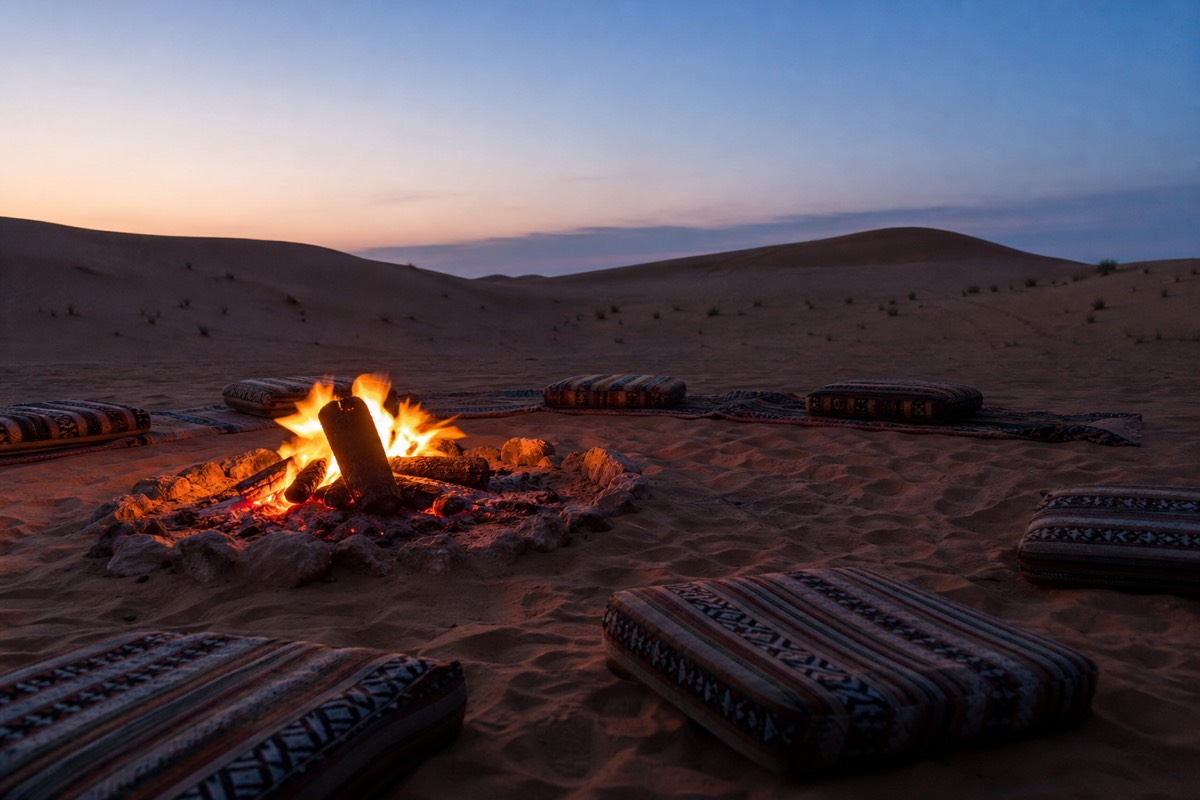
What you get: day trip vs overnight
The overnight adds the desert's best hours: sunset, stargazing, a camp dinner and sunrise are the experiences a day trip drives away from.
Day trip or overnight: the quick answer
Pick a day trip if time or budget is tight and you mainly want to see the dunes, ride a camel and try dune bashing. Pick an overnight if you want the desert's real payoff: sunset, a dark sky full of stars, and sunrise over empty sand. The day trip is cheaper and faster; the overnight is the fuller, quieter experience most people remember.
Match the departure point, trip length and included activities to the plan above.
At A Glance: Private 4WD trip with an English-speaking guide, Desert Rose Camp standard-room accommodation, dinner and breakfast.
Explore The One-Night Camp StayBoth trips start the same way, with a drive to the sand and a 4x4 climb into the dunes. They part ways in the late afternoon. A day trip turns around and heads home before the light softens. An overnight stays, and everything that makes the desert special happens in the hours after that. The choice comes down to how much of the desert you actually want.
Neither is a wrong answer. Short on days, or travelling with restless little kids, a day trip delivers the highlights without a night in a tent. But if this is a bucket-list stop, cutting it to a day means driving away just as the dunes turn gold and the stars come out. The rest of this guide breaks down exactly what each option gives and costs.
One more thing worth saying up front: the two are not equally reversible. Book a day trip and later wish you had stayed, and you are driving home under the very sky you wanted to see. Book an overnight and find you are tired, and you still got the day's activities plus a bed in the dunes. The overnight simply contains the day trip inside it, which tilts most close calls its way.
| Factor | Day trip | Overnight camp |
|---|---|---|
| Time in the desert | A few daylight hours | Afternoon to next morning |
| Sunset in the dunes | Usually missed | Yes, the highlight |
| Stargazing | No | Yes, the dark-sky payoff |
| Sunrise | No | Yes, cool and empty |
| Cost | Quote for your dates and party | Quote for your dates and party |
| Best for | Tight schedules, families with toddlers | First real desert trip, couples, photographers |
Curious about seeing what staying changes? Discover a camp night, sunset and sunrise on the two-day Muscat route.
Discover The One-Night Camp StayWhat a day trip actually gets you
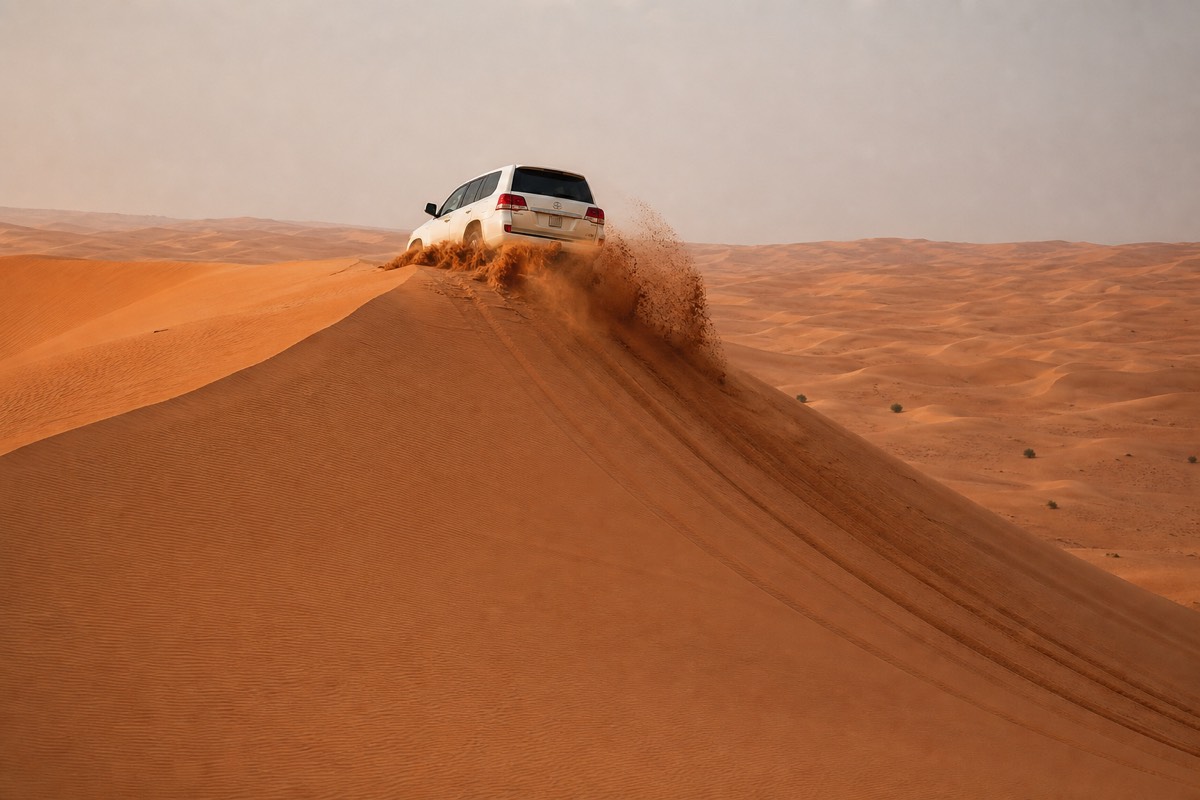
A Wahiba Sands day trip packs the visual highlights into a few hours: a thrilling 4x4 dune bashing run, a short camel ride, and time to stand on a high ridge and take in the sand. Many day tours pair the dunes with the Wadi Bani Khalid oasis on the same loop. You are back at your hotel by evening, tired but having seen the headline sights.
A day trip is built for efficiency. Your driver collects you, deflates the tyres at the edge, and runs the 4x4 up and over the ridges, the dune bashing being the part that gets the loudest reaction. There is usually time for a camel ride, a scramble up a big dune, and photos in every direction. It is a genuine taste of the desert, squeezed into daylight.
Request a quote for the same travelers and dates before comparing shared and private trips. Include transport, meals and any paid activities in both totals. A private vehicle buys exclusivity for the journey; changes to the route still need the operator’s agreement.
Pacing is the thing to watch on a day trip. Because the clock is tight, stops can feel brief, and a group that lingers over lunch may lose time in the dunes. If a day trip is your only option, a slightly pricier tour with fewer people usually means more minutes where they count, out on the sand rather than waiting for stragglers at the vehicle.
| Time | Day-trip activity |
|---|---|
| Morning | Pickup and drive from Muscat or the gateway town |
| Midday | Wadi Bani Khalid oasis, pools and lunch on combo tours |
| Afternoon | Dune bashing, camel ride, ridge-top photos |
| Late afternoon | Drive back, home by evening |
Plan for fitting dunes and the oasis into one day: check your date before arranging the rest of your trip. This option includes a shared nine-hour Muscat outing with separate sunset and quad options.
Scheduled departures from Viator. Availability and final price are confirmed on Viator.
9 hours · Muscat pickup and return
Ages 5+. Child seats and life jackets excluded. Camel rides cost extra; quad only in the quad option. Lunch not provided during Ramadan. Not recommended during pregnancy or for cardiovascular conditions.
What you miss on a day trip: sunset, stars and sunrise
A day trip drives you out of the dunes right before their best hours. You miss sunset, when low light sets the sand glowing, the dark-sky stargazing after dinner, and sunrise over ridges with no other footprints. Those three moments are the difference between seeing the desert and experiencing it, and only an overnight includes all three.
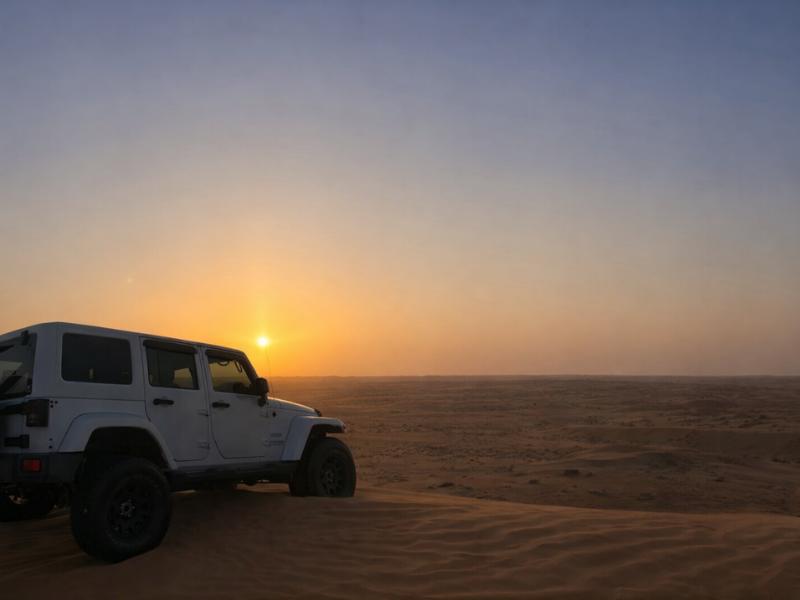
Sunset is the first casualty. As the sun drops, the dunes shift from pale yellow to deep orange and the shadows stretch long across the sand. Day-trippers are usually back on the highway by then. Stay, and you get the single best light of the day from a quiet ridge, with a coffee in hand and almost nobody around.
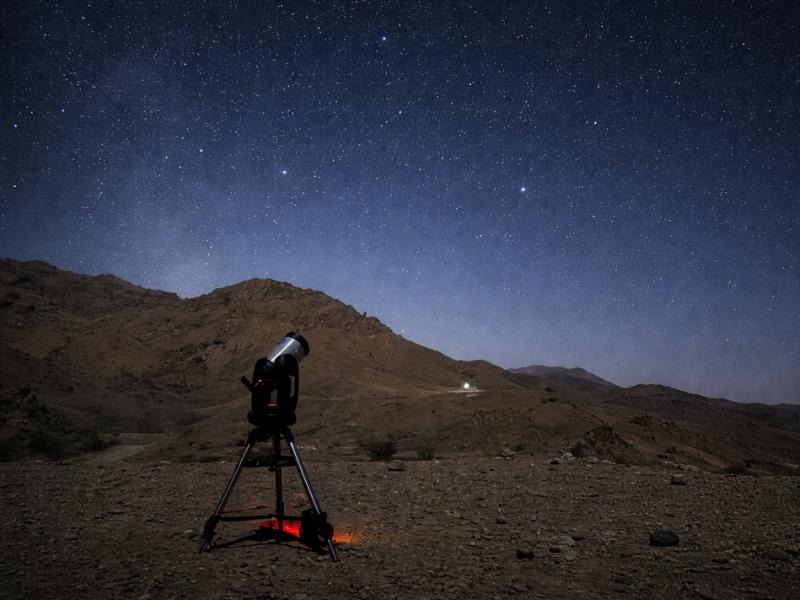
After dark comes the payoff the desert is genuinely famous for. Away from town lights the sky opens up, the Milky Way reads clearly on a moonless night, and the silence is total. Then sunrise closes the loop: cool air, soft gold light, and dunes wiped clean by the overnight wind. Miss all three and you have seen the desert's surface but not its heart.
None of this is exaggeration for effect. Ask anyone who has done both, and the day-trippers talk about the dunes while the overnight guests talk about the night. The sand looks much the same at noon whether you stay or go; it is the light and the dark that separate a nice outing from a trip you keep describing months later.
| Moment | Why it matters | Day trip | Overnight |
|---|---|---|---|
| Sunset | Best light, glowing dunes, long shadows | Missed | Included |
| Stargazing | Dark sky, clear Milky Way, silence | Missed | Included |
| Sunrise | Cool light, empty ridges, fresh sand | Missed | Included |
| Evening meal in camp | Omani dinner, coffee and dates | Missed | Included |
Curious about catching sunset without a camp night? Discover a local Bidiyah trip with sandboarding and dinner.
Discover The Bidiyah Sunset Trip4 hours · Bidiyah meeting point, return to start
Camel riding costs extra. No overnight accommodation. Not recommended during pregnancy. Agree the meeting point before arranging transport.
Stargazing and the Milky Way: the overnight's biggest payoff
Compare the total for your actual dates and party. The verified room-based overnight includes private Muscat transport, a standard Desert Rose Camp room, dinner and breakfast. Lunch and camel riding are extra. A private vehicle does not mean an exclusive or luxury camp.
The dark sky is the desert's quiet superpower. With no light pollution for miles, a clear moonless night shows depth in the sky most travellers rarely see: the band of the Milky Way, the occasional shooting star, and constellations sharp enough to actually trace. Lie back on the cooling sand after dinner and the show runs for free, straight overhead.
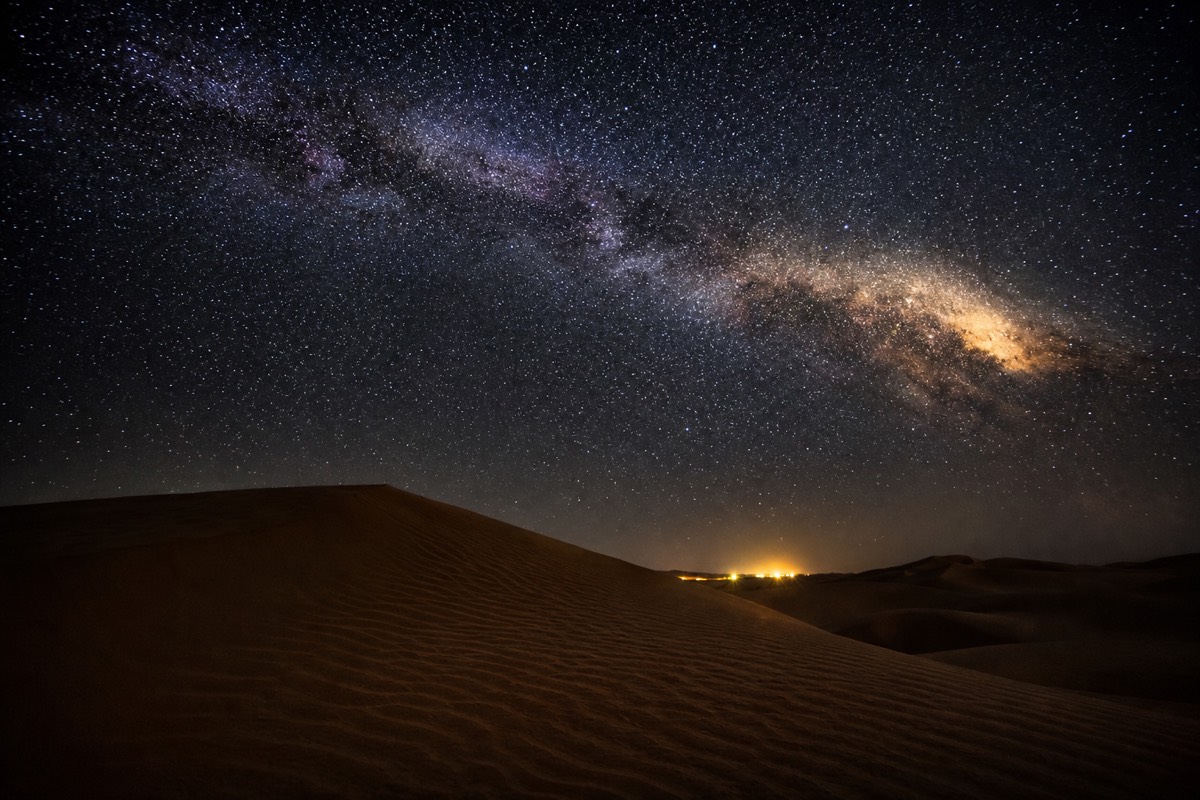
For anyone who wants more than a glance, a dedicated stargazing experience with a telescope and a guide turns the sky into a lesson, picking out planets and clusters you would otherwise miss. That is the kind of hour a day trip simply cannot deliver, since it depends on being deep in the dunes long after dark. It is often the memory guests talk about most.
Timing and the moon matter more than most people realise. A full moon washes out the faintest stars, so if the night sky is your priority, check the lunar calendar and aim for the darker half of the month. Cool, dry desert air helps too, which is another quiet argument for the cooler season, when the sky tends to sit clear overhead.
Plan for adding astronomy expertise to the night: check your date before arranging the rest of your trip. This option includes a telescope session with a guide, booked separately from accommodation.
Dates and booking provided by GetYourGuide. If the calendar cannot load, use the booking link below.
Check Dates For The Guided Telescope Session1 to 2 hours observing · Observation location agreed with operator
Transport and food excluded. The itinerary names Wahiba Sands but the meeting map points to Muscat: agree the actual observation location before arranging transport. No camp night included.
Sunrise over the dunes: why the morning matters
Sunrise is the overnight's underrated reward. The desert at dawn is cool, quiet and completely yours, with low gold light carving every ridge and the overnight wind having smoothed the sand clean. It is the best window for photos and a gentle camel ride before the heat builds. A day trip, arriving hours later, never sees the dunes look this way.
Set an alarm and step out at first light, and the desert feels like a different place from the busy afternoon. The air is crisp, the colours are soft, and the ridges throw long clean shadows that photographers travel a long way for. Because the wind resets the surface overnight, the sand is unmarked, which is impossible to find once the day's traffic arrives.
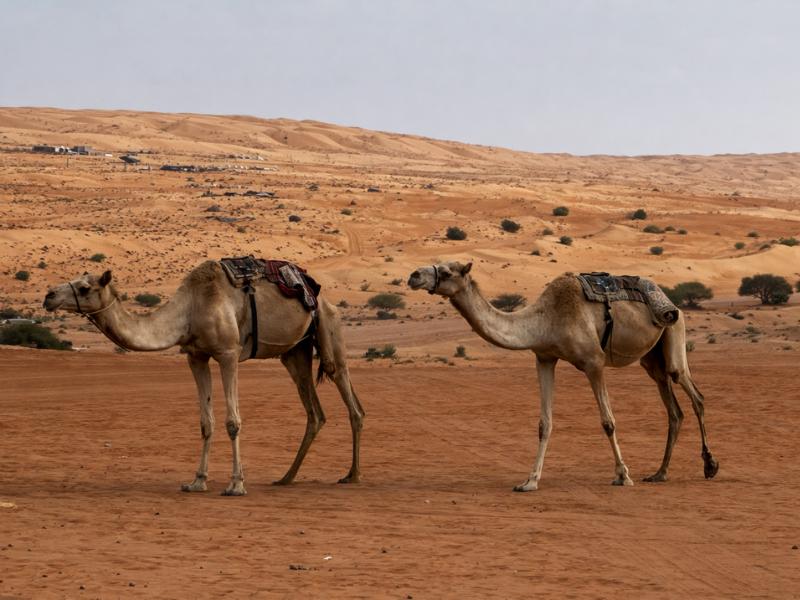
Mornings are also the kindest time for activity. A dawn camel ride or a short walk over the ridges happens before the sun turns fierce, so it is comfortable rather than draining. If you are weighing how many days to give the desert, know that the sunrise alone often convinces day-trip doubters that the overnight was worth it after all.
Sunrise also solves a practical problem: heat. By mid-morning the sun is already strong, so the gentlest, most photogenic hours are the ones a day trip cannot reach. Waking in the dunes means you are already there for them, coffee in hand, rather than still on the highway. For photographers especially, that early window alone can justify the whole overnight.
Curious about being there before the morning drive arrives? Discover a camp-room itinerary with sunrise already in the plan.
Scheduled departures from Viator. Availability and final price are confirmed on Viator.
2 days, 1 night · Muscat pickup and return
Lunch and camel ride cost extra. Confirm your room and any mobility or child-seat requirements before booking.
Time budget compared: hours in the desert
A day trip from Muscat spends much of its clock on the road: the drive is just under 200 kilometres each way, leaving only a few hours in the dunes. An overnight flips that ratio, giving you the afternoon, the whole evening and the next morning in the sand. If travel time frustrates you, the overnight makes the long drive from Muscat pay off far better.
The drive is the hidden cost of a day trip. From Muscat it is roughly two to three hours each way to the sand, so a single-day outing can burn five or six hours in transit for a handful of hours among the dunes. That is fine if the desert is a quick tick on a busy Oman loop, less satisfying if you came specifically for it.
An overnight uses the same drive far more efficiently. You arrive in the afternoon and stay put, so the road time buys you sunset, a full evening, a night's sleep in the sand and sunrise, rather than a rushed few hours. The table shows how differently the two options spend the same journey.
Frequent travellers learn to protect their best hours. Spending five or six hours in a car to catch three in the dunes, then missing the light entirely, is the kind of trade that stings on reflection. The overnight turns that same drive into a two-day payoff, which is why repeat visitors to Oman so rarely bother with the desert as a day trip.
| Segment | Day trip | Overnight |
|---|---|---|
| Driving from Muscat | 4 to 6 hours round trip | Same drive, spread over two days |
| Hours actually in the dunes | Roughly 3 to 5 | Afternoon, evening and morning |
| Sunset, stars, sunrise | None | All three |
| Feeling on the drive home | Rushed, long day | Unhurried, fully seen |
Plan for using two days for more than one wadi: check your date before arranging the rest of your trip. This option includes Wadi Shab, Wadi Bani Khalid and one night in normal camping tents.
Check Dates For The Two-Wadi Tent TripCost compared: day trip vs overnight
Compare the total for your actual dates and party. The verified room-based overnight includes private Muscat transport, a standard Desert Rose Camp room, dinner and breakfast. Lunch and camel riding are extra. A private vehicle does not mean an exclusive or luxury camp.
Compare the actual itinerary as well as the price. The local Bidiyah sunset trip includes sandboarding and dinner, with camel riding extra. A Muscat shared day has separate standard, sunset and quad choices. The selected option determines what your quote covers. Related reading: accommodation.
Compare the total for your actual dates and party. The verified room-based overnight includes private Muscat transport, a standard Desert Rose Camp room, dinner and breakfast. Lunch and camel riding are extra. A private vehicle does not mean an exclusive or luxury camp. Related reading: animal.
Do the maths per hour and the picture sharpens. A day trip buys perhaps three to five hours in the dunes for its price; an overnight buys an afternoon, a whole evening, a night and a morning for not much more. Spread across all those hours, the overnight's cost per hour of real desert time can undercut the day trip, even though its headline number is bigger.
| Trip | Type | From price | Covers |
|---|---|---|---|
| Shared full-day | Group day trip | Quote for your dates and party | Dunes, camel, often Wadi Bani Khalid |
| Sunset group day | Group day trip | Quote for your dates and party | Dunes, sunset, camel, entertainment |
| Value overnight | Shared camp | Quote for your dates and party | Transfer, meals, camp, sunset to sunrise |
| Private overnight | Private camp | Quote for your dates and party | Private guide, vehicle and camp |
Curious about understanding the overnight premium? Discover private transport, a standard camp room, dinner and breakfast.
Discover The One-Night Camp StayWho should pick a day trip, and who should stay overnight?
Choose a day trip if your schedule is packed, your budget is tight, or you are travelling with very young children who struggle with a night in a tent. Choose an overnight if this is your first proper desert, if you are a couple or photographer, or if stargazing and sunrise are on your list. When in doubt, one night in the sand rarely disappoints.
The honest split comes down to time, money and company. Travellers on a fast Oman highlights loop, or families whose toddlers will not settle in a tent, get real value from a day trip that shows the dunes and gets everyone home to a familiar bed. It is the practical pick, and there is no shame in it.
Everyone else tends to be happier overnight. A couple wants the private sunset and the stars. A photographer needs the dawn light. A first-time desert visitor came precisely for the experience a day trip trims away. The desert tours Wahiba Sands Tours books with local operators cover both, so match the row below to your trip and book with clear eyes about what each includes.
Budget rarely decides this on its own. The price gap between a day trip and a value overnight is real but not huge, and travellers who frame it as cost per memory usually lean toward staying. The bigger deciders are time and sleep: whether your itinerary can spare the night, and whether everyone in your party will actually rest in a tent.
| Traveller | Better pick | Why |
|---|---|---|
| Tight schedule | Day trip | Highlights without a night away |
| Family with toddlers | Day trip | Home to a real bed by evening |
| Couple | Overnight | Sunset, stars and a private morning |
| Photographer | Overnight | Golden hour, dark sky, dawn ridges |
| First proper desert trip | Overnight | The full experience, not just the view |
Trip length alone does not establish suitability for toddlers or access needs. Confirm the youngest traveler's age, restraints and the actual ride before choosing.
How to decide, and can you combine both?
Decide by working backward from your priorities and your calendar. If sunset, stargazing or sunrise made your list, book an overnight. If not, a day trip is enough. You can also blend the two: a day of dune bashing and the Wadi Bani Khalid oasis, then one night in camp, is a common two-day plan that captures the highlights and the magic hours together.
Start with the moments you would regret missing. If reading about the stars or the golden sunrise gave you a pang, that is your answer, and no daytime run will scratch that itch. If you mainly want to see and photograph the dunes and try a camel, the day trip covers it without the extra night or cost.
The best of both worlds is a short two-day plan. Spend the first day on the highlights, the oasis pools and an afternoon of dune bashing, then roll into camp for sunset, dinner and stars, and finish with sunrise before driving out. It answers the how many days question neatly for most first visits and leaves very little of the desert unseen.
If you only have one full day and one night to give the region, the combined plan is the highest-value way to spend it. You are not choosing between the activities and the magic hours; you are stacking them back to back. That is why so many first-time visitors, once they see the options laid out, quietly upgrade from a day trip to a single overnight and never look back.
| Plan | Shape | Best for |
|---|---|---|
| Day trip only | One long day, home by night | Tight schedules, quick highlights |
| Overnight only | Afternoon in, sunrise out | Sunset, stars and sunrise focus |
| Combined two-day | Activities by day, camp by night | Seeing almost everything in one trip |
Plan for combining the oasis and an overnight: check your date before arranging the rest of your trip. This option includes Wadi Bani Khalid on the way to a one-night Wahiba stay.
Check Dates For The One-Night Camp Stay