Where to Stay near Wahiba Sands: Desert Camps & Hotels
You can sleep in the sand itself, in a gateway-town hotel, or on the coast at Sur, and the right base depends on your budget, your pace and who you are travelling with.
Three bases compared
In-dune camp, gateway hotel or a Sur day-base, side by side on cost, access and who each suits. A filled dot means you sleep in the sand.
Where should you actually base yourself?
Three bases cover almost everyone. Sleep inside the dunes at a desert camp for the full experience, book a hotel in Bidiyah or Al Wasil to stay near the sand without camping, or use coastal Sur as a day-base and drive in and out. Camps win on atmosphere, gateway hotels on comfort and price, and Sur on combining desert with sea.
Match the departure point, trip length and included activities to the plan above.
At A Glance: Private 4WD trip with an English-speaking guide, Desert Rose Camp standard-room accommodation, dinner and breakfast.
Explore The One-Night Camp StayDeciding where to stay near the sands is really a choice about how close you want to sleep to the dunes. A camp puts you inside them. A gateway hotel keeps you a short drive away with a solid room and a pool. Sur, on the coast, lets you fold a beach and a turtle reserve into the same trip, at the cost of a longer daily drive to the sand.
None of these is wrong; they suit different trips. The overnight camp is the reason most people come, so if you only pick one night in the region, spend it in the dunes. If you want a firmer bed, air conditioning and a buffet breakfast every morning, a hotel base makes more sense. The table lays out the trade at a glance.
Think about your trip's centre of gravity too. If the desert is the whole reason you flew to Oman, sleep in it and build the rest around that night. If the dunes are one stop on a broader loop through Muscat, Nizwa and the coast, a comfortable hotel base keeps you rested for the driving. The base you pick quietly sets the tone for how the region feels.
| Base | What it is | Best for | Trade-off |
|---|---|---|---|
| In-dune camp | Tent or suite among the dunes | Atmosphere, stargazing, sunrise | Fewer comforts at the basic end |
| Bidiyah or Al Wasil hotel | Hotel near the sand's edge | Comfort, families, short visits | You miss the night in the sand |
| Sur day-base | Coastal town, drive in and out | Beach plus desert in one trip | Longer daily drive to the dunes |
Curious about using a desert room as your base? Discover a standard Desert Rose Camp night with private Muscat transport.
Discover The One-Night Camp StayIn-dune desert camps: sleeping among the dunes
Compare the total for your actual dates and party. The verified room-based overnight includes private Muscat transport, a standard Desert Rose Camp room, dinner and breakfast. Lunch and camel riding are extra. A private vehicle does not mean an exclusive or luxury camp. Related reading: dark sky Bedouin.
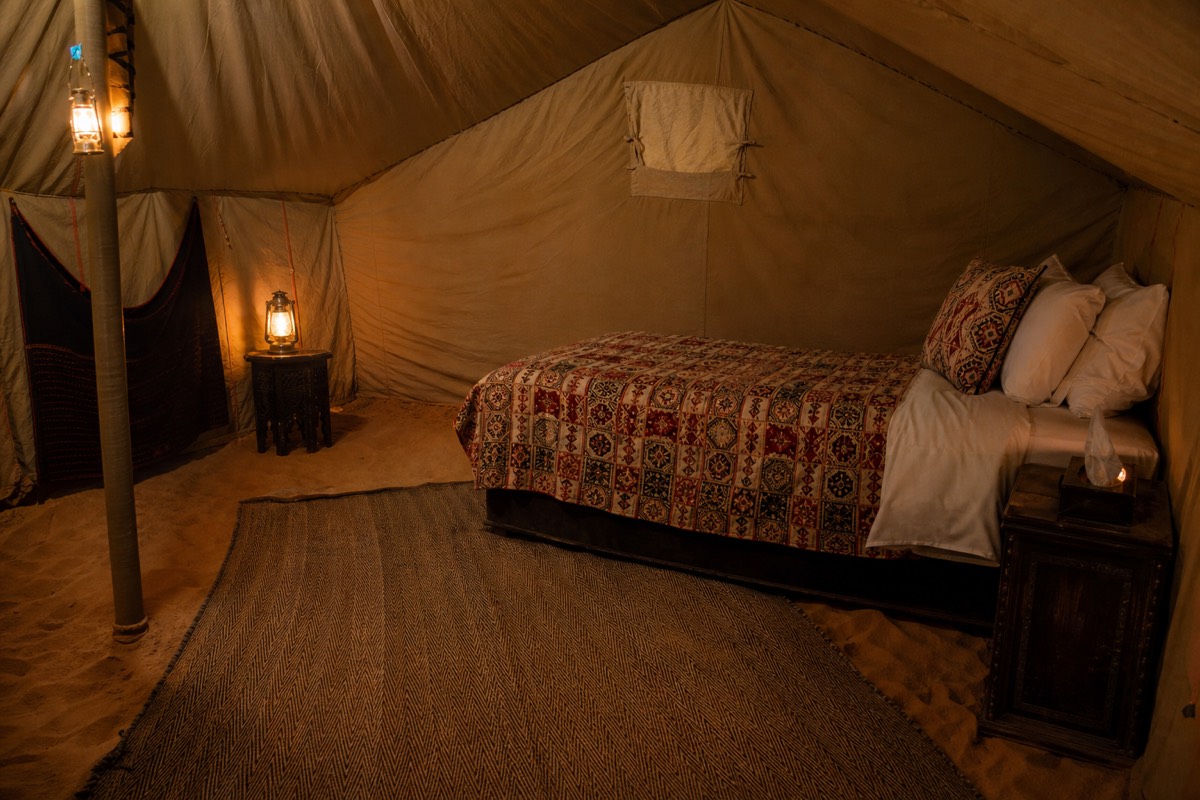
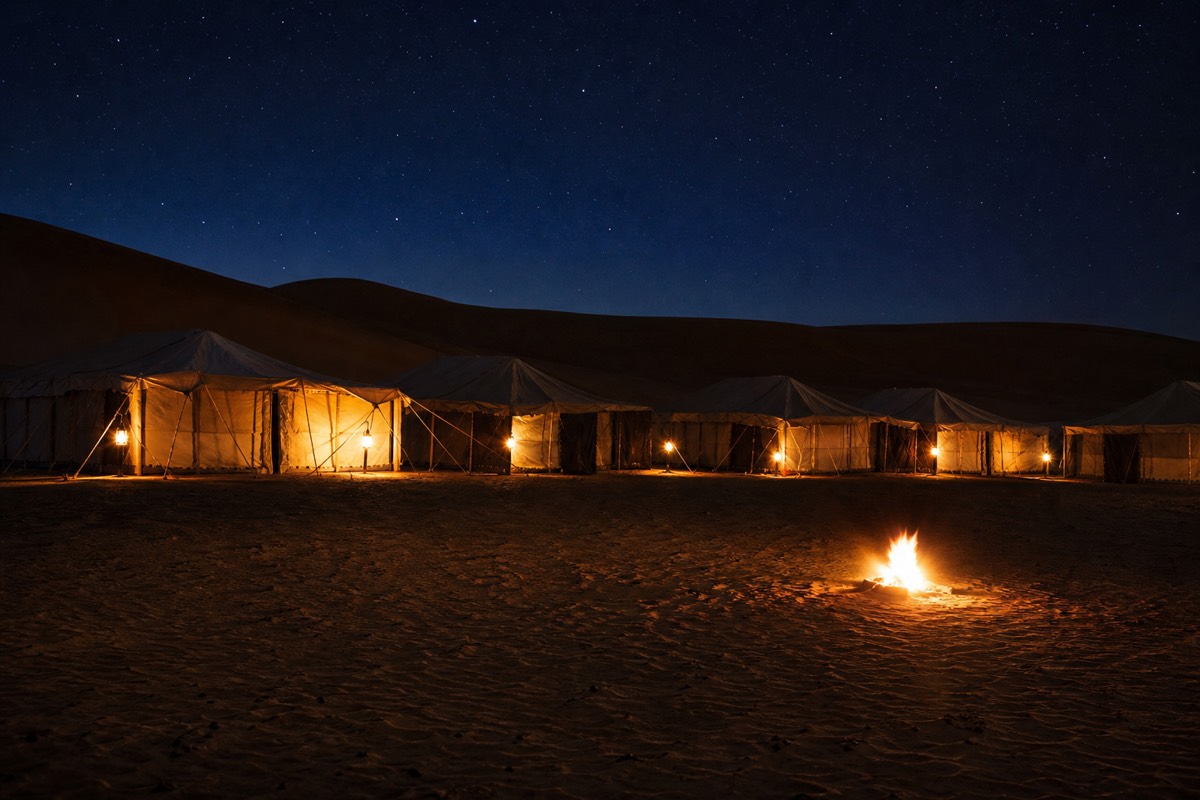
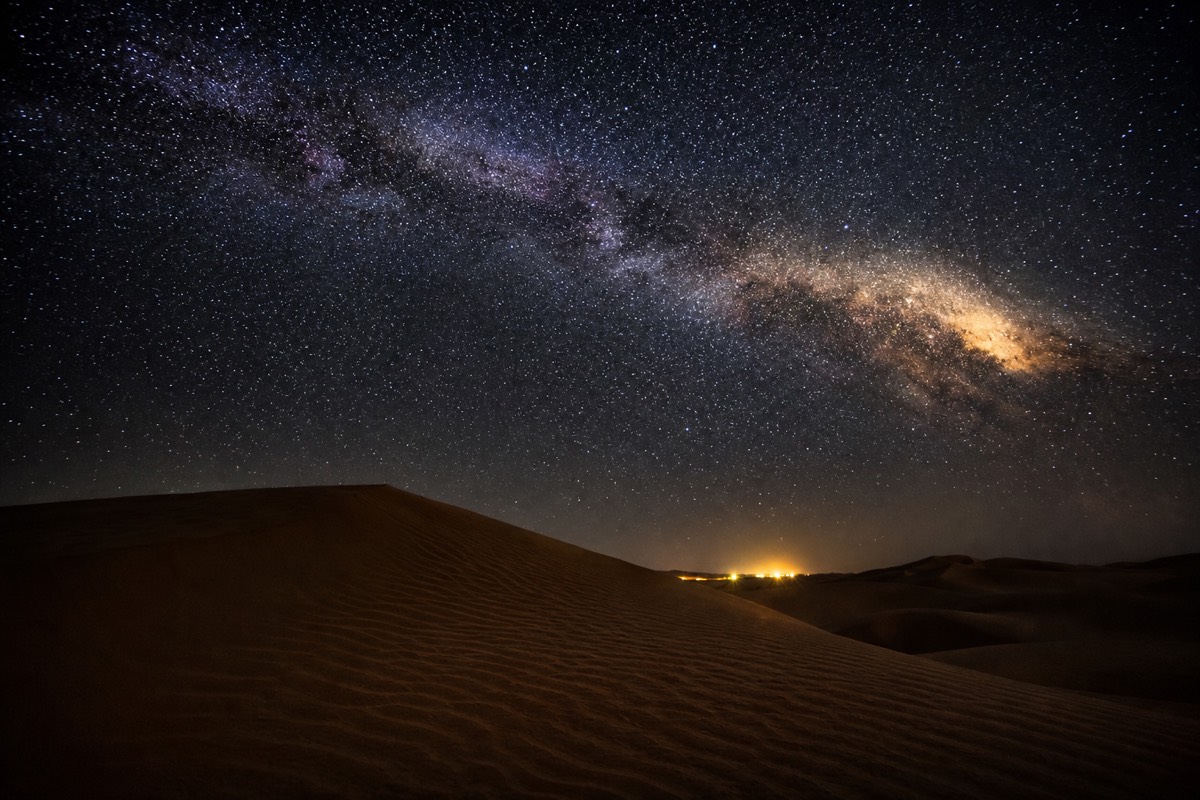
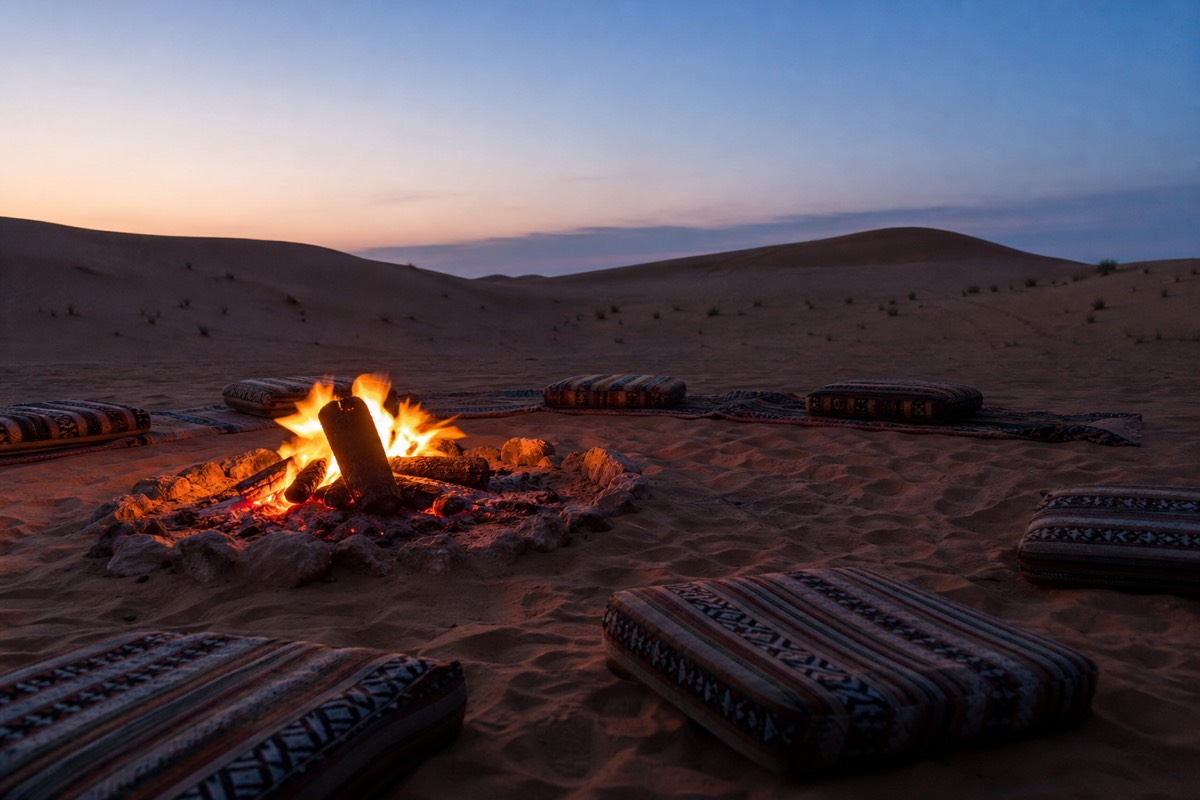
Nothing else in the region matches waking inside the dunes. The camp handles the hard parts: a driver collects you, drops tyre pressure at the edge, and climbs into the sand to a camp you would struggle to reach alone. Evenings turn on Omani coffee, a shared dinner and stargazing, and mornings on cool light before the heat. This is the desert camp most visitors picture when they plan the trip.
Compare the total for your actual dates and party. The verified room-based overnight includes private Muscat transport, a standard Desert Rose Camp room, dinner and breakfast. Lunch and camel riding are extra. A private vehicle does not mean an exclusive or luxury camp.
Booking an in-dune camp almost always means booking a package rather than a room, because you cannot simply drive up to a reception desk in the sand. That package handles the transfer, the meals and the activities as one, which is why the prices read higher than a hotel line-item. It also means you rarely have to organise anything yourself beyond choosing the tier and the date.
| Camp style | Sleeping | From price | Suits |
|---|---|---|---|
| Basic Bedouin | Shared-facility tent | Quote for your dates and party | Budget travellers, one hardy night |
| Private overnight | Private tent or suite | Quote for your dates and party | Couples wanting privacy |
| Luxury dune camp | En-suite suite, deep dune | Quote for your dates and party | Photographers, milestone trips |
Plan for waking inside the desert itinerary: check your date before arranging the rest of your trip. This option includes a camp night with sunset, breakfast and sunrise.
Scheduled departures from Viator. Availability and final price are confirmed on Viator.
2 days, 1 night · Muscat pickup and return
Lunch and camel ride cost extra. Confirm your room and any mobility or child-seat requirements before booking.
Bidiyah and Al Wasil hotels: the gateway towns
Bidiyah and Al Wasil are the two small towns at the edge of the sand, each with simple hotels and rest houses. They suit travellers who want a firm bed, air conditioning and a private bathroom every night without camping. You still reach the dunes in minutes by 4x4, and you keep an easy fallback if the weather turns or the kids need a real room.
These gateway towns sit right where the paved road meets the sand, so a hotel here trades the in-dune atmosphere for reliable comfort. Rooms are modest rather than lavish, but they come with the things a basic camp lacks: consistent air conditioning, a private bathroom, and a quiet, stable night. For older travellers or families mid-way through a longer Oman loop, that reliability is worth a lot.
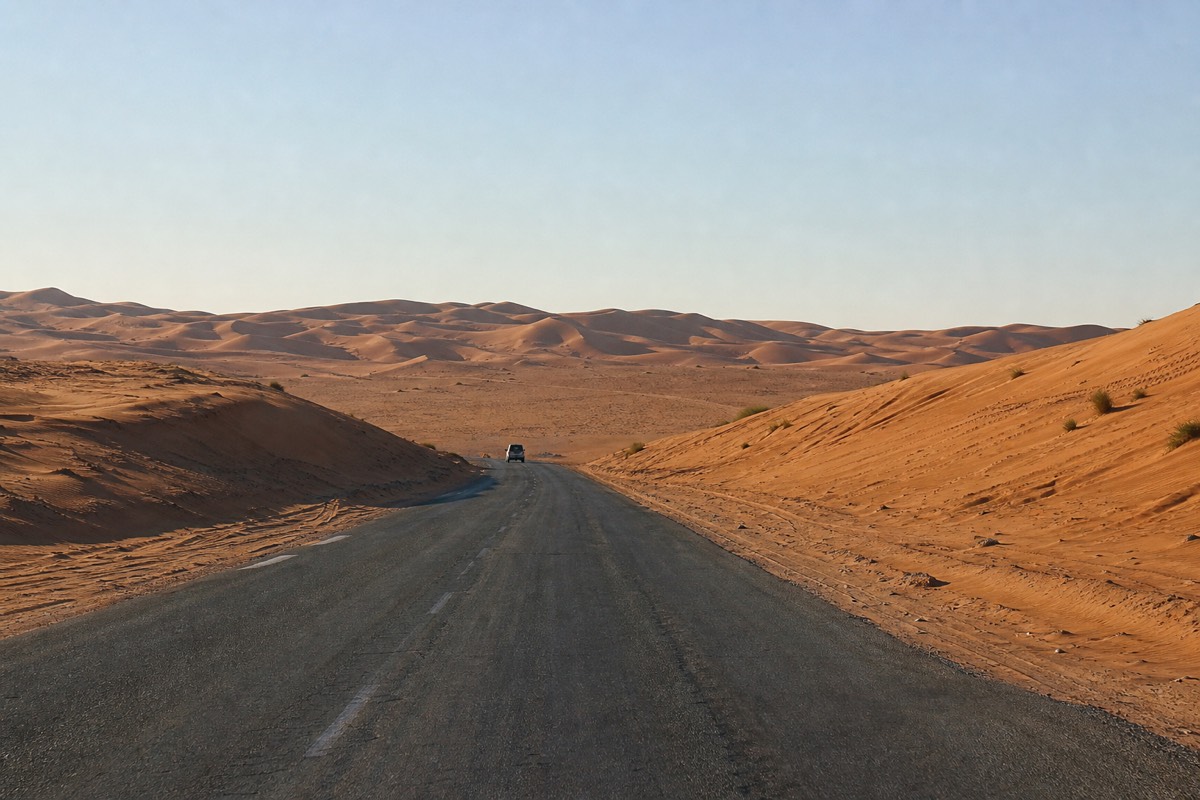
Al Wasil and Bidiyah also make handy launch points for day activity. You can sleep in town, then drive out for a morning of dune bashing or a camel ride, and still make Wadi Bani Khalid on the way onward. The nearby oasis and the sands are both within easy reach, which is why so many self-drive itineraries pause here for a night.
Do not expect resort polish in these towns. The appeal is practical: fuel, a handful of shops, a mosque, a simple restaurant, and a clean room with working air conditioning. For a self-drive traveller crossing Oman, that mix is exactly what a mid-trip night needs, and it leaves the dunes a short hop away for a dawn start the next morning.
| Gateway option | Comfort level | Price feel | Best for |
|---|---|---|---|
| Town rest house | Simple, clean, air-conditioned | Lower | Self-drivers, one-night stops |
| Edge desert lodge | Hotel comfort near the sand | Moderate | Families wanting dunes plus a real room |
| Camp day-visit from town | Sleep in town, play in the dunes | Flexible | Those who want activity, not a tent |
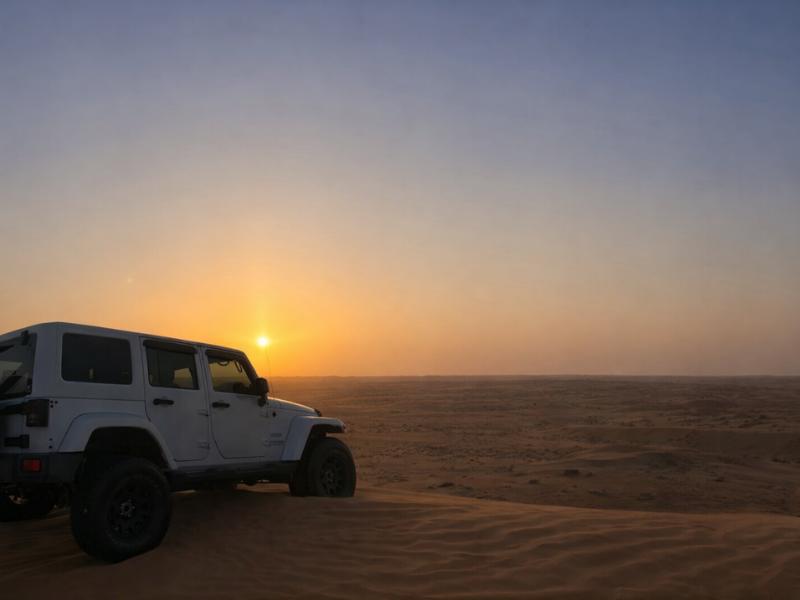
Curious about keeping a gateway hotel and adding the dunes? Discover a Bidiyah-start sunset outing that returns to the meeting point.
Discover The Bidiyah Sunset Trip4 hours · Bidiyah meeting point, return to start
Camel riding costs extra. No overnight accommodation. Not recommended during pregnancy. Agree the meeting point before arranging transport.
Sur as a coastal day-base: desert plus sea
Sur, on the coast about ninety minutes from the sand, works as a day-base for travellers who want beach and desert in one trip. Sleep in a proper seaside hotel, drive in for a dune session or a guided day tour, and pair it with the Ras al Jinz turtle reserve nearby. The trade is a longer daily drive and no night in the dunes.
Sur suits a certain kind of traveller: someone who wants the desert as one chapter of a wider east-coast route, not the whole story. From a Sur hotel you can drive to the sand for a half-day or full-day guided trip, then return to the coast for dinner by the water. It keeps you in a comfortable hotel every night and adds the sea to the itinerary.
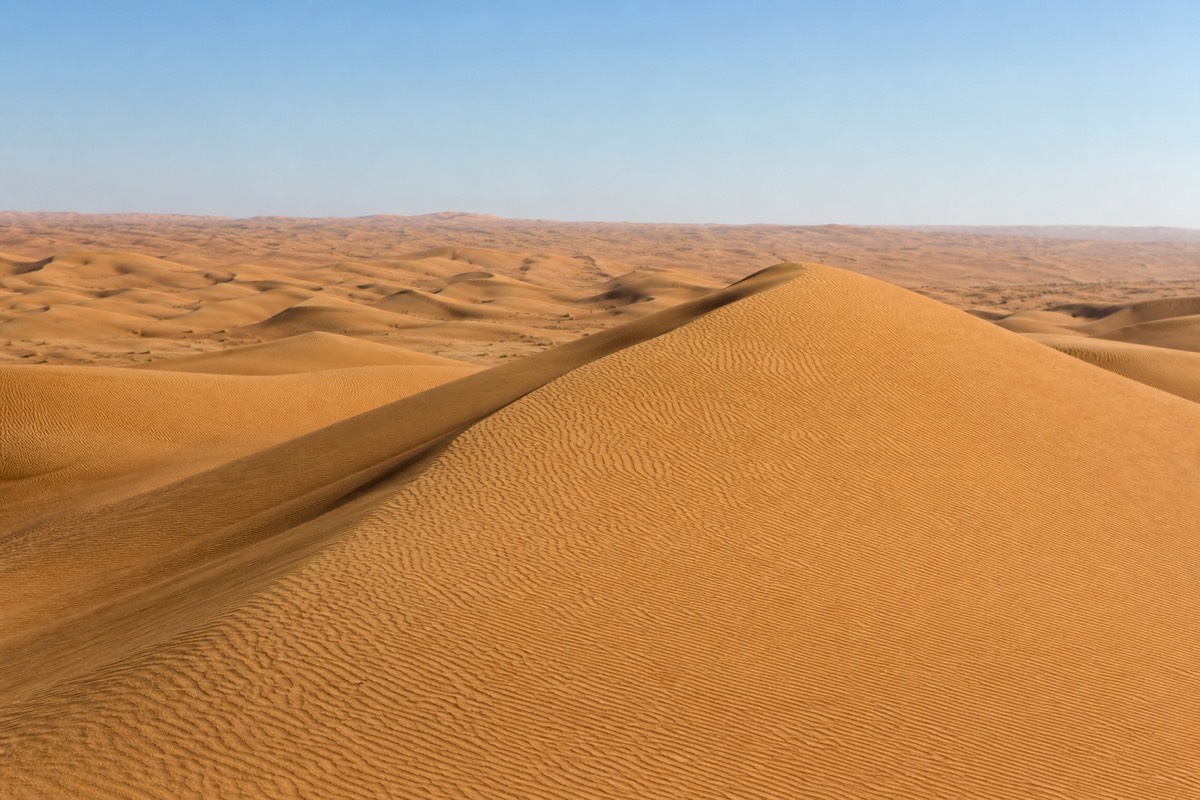
The cost is time and atmosphere. You spend more hours in the car, and you swap the desert night, with its stars and silence, for a coastal room. If stargazing and sunrise over the dunes are high on your list, Sur is the wrong base. If you value variety and a firm bed, it is a smart one, especially paired with the turtles at Ras al Jinz.
Sur itself rewards a wander. It is an old dhow-building town with a working harbour, a lighthouse across the lagoon, and a slower coastal rhythm than Muscat. Using it as a base means your evenings look nothing like a desert night, which is either the appeal or the drawback depending on what you came to Oman for.
These verified departures do not include a Sur hotel pickup or onward Sur drop-off. A Muscat-return tour would not solve that route.
Price bands compared: what each option costs
Compare the total for your actual dates and party. The verified room-based overnight includes private Muscat transport, a standard Desert Rose Camp room, dinner and breakfast. Lunch and camel riding are extra. A private vehicle does not mean an exclusive or luxury camp.
Money maps neatly onto the three bases. The cheapest way to sleep near the sands is a simple town room, then drive in for a paid activity. The middle ground is a bundled overnight camp, which folds transport, meals and the desert night into one figure. The top end is a private luxury camp reserved for your party. Each has a clear audience.
Compare the total for your actual dates and party. The verified room-based overnight includes private Muscat transport, a standard Desert Rose Camp room, dinner and breakfast. Lunch and camel riding are extra. A private vehicle does not mean an exclusive or luxury camp.
Watch for what a low nightly rate hides. A cheap town room looks like a bargain until you add the day tour, the fuel and the meals you would otherwise get in camp. Tally the full day, transport, food and activity together, and a bundled overnight often lands closer to a hotel-plus-tour combination than the sticker prices suggest. Compare the totals, not just the headline room rate.
| Option | What the price covers | Band |
|---|---|---|
| Town rest house | Room only, activity extra | Lowest nightly rate |
| Value in-dune camp | Quote for your dates and party | Moderate, all-in |
| Private overnight | Quote for your dates and party | Higher, all-in |
| Luxury dune camp | Quote for your dates and party | Premium, all-in |
| Sur coastal hotel | Seaside room, day tour extra | Hotel rate plus tour |
Plan for comparing accommodation and transport as one quote: check your date before arranging the rest of your trip. This option includes a standard room, private vehicle, dinner and breakfast.
Check Dates For The One-Night Camp StayWho does each base suit best?
Match the base to the traveller. Couples and photographers should sleep in the dunes. Families with young kids often prefer a gateway hotel with a real bathroom and a short transfer. Budget and self-drive travellers do well in town rest houses. Anyone combining desert with the coast should base in Sur and drive in for a guided day in the sand.
The clearest way to choose is by who is in your party and what they will remember. A couple will treasure the private overnight far more than a saved dollar. Parents of toddlers will treasure the air conditioning and the flush toilet, and will not miss the long transfer. A backpacker on a tight loop wants the cheapest bed that still puts the dunes within reach the next morning.
Trip length matters too. If you are wondering how many days the region deserves, one night in the sand plus a day of activity covers most first visits, and a gateway hotel or camp handles that neatly. Add a second night and Sur becomes tempting, since you can split time between dunes and coast. The matrix below turns all of this into a quick lookup.
Group composition often overrides everything else. A multigenerational family with grandparents and toddlers rarely wants the same thing, so a gateway hotel with a real bathroom and an optional dune day keeps everyone happy. A couple with no such constraints should almost always choose the sand. Solo travellers get the best social value from a shared camp, where dinner naturally becomes a table of new faces.
| Traveller | Best base | Why |
|---|---|---|
| Couple | In-dune camp | Stargazing, privacy, sunrise |
| Family with kids | Gateway hotel | Real bathroom, short transfer, easy night |
| Budget or self-drive | Town rest house | Lowest rate, dunes still close |
| Photographer | Luxury dune camp | Darkest sky, isolation |
| Coast-and-desert trip | Sur day-base | Beach, turtles and dunes in one loop |
Curious about weighing a camp stay against a longer route? Discover a Muscat overnight option with two wadis.
Dates and booking provided by GetYourGuide. If the calendar cannot load, use the booking link below.
Discover The Camp-And-Two-Wadi Trip2 to 3 days, depending on option · Muscat pickup and return
Confirm the selected option’s camp, meals and extras. Wadi Shab involves hiking and swimming; do not assume accessible trails.
How far is each base from the dunes?
Bidiyah and Al Wasil sit at the sand's edge, minutes by 4x4 from the dunes. Both lie just under 200 kilometres and roughly two to three hours from Muscat by paved road. Sur is about ninety minutes from the sand on the coast. Most visitors arrive on a tourist visa and drive or transfer to a gateway town before switching to a 4x4 for the soft sand.
Distances shape the plan. From Muscat, the drive to Bidiyah runs just under 200 kilometres on good highway, usually two to three hours depending on stops. That paved leg is fine in any car; only the final push into soft dunes needs a 4x4, which every overnight package provides. If you self-drive, the gateway towns are where the sealed road ends and the sand begins.
The camps and drivers Wahiba Sands Tours works with all run these routes daily, so the transfer from town into the dunes is routine rather than an adventure to plan yourself. Sur adds a coastal leg: roughly ninety minutes from the sand, which is why it works as a day-base rather than a sleep-in-the-dunes option. The route table below sums up the legs.
Fuel and timing are easy to underestimate. Petrol is cheap in Oman and stations are frequent on the main routes, but they thin out near the sand, so top up in Bidiyah before you head in. Aim to reach a gateway town with daylight to spare, since the soft-sand transfer is far more pleasant, and safer, before dark settles over the dunes.
| Leg | Rough distance | Rough time | Vehicle |
|---|---|---|---|
| Muscat to Bidiyah | Just under 200 km | 2 to 3 hours | Any car on paved road |
| Bidiyah to Al Wasil | Short local hop | Minutes | Any car |
| Gateway town into the dunes | Short soft-sand transfer | 15 to 30 minutes | 4x4 with a driver |
| Sur to the sand | Coastal route | About 90 minutes | Any car to the edge |
Plan for starting near the sand rather than in the capital: check your date before arranging the rest of your trip. This option includes a four-hour Bidiyah outing without Muscat transfers.
Scheduled departures from Viator. Availability and final price are confirmed on Viator.
4 hours · Bidiyah meeting point, return to start
Camel riding costs extra. No overnight accommodation. Not recommended during pregnancy. Agree the meeting point before arranging transport.
What does a night in the dunes include that a hotel cannot?
A desert camp night bundles things a hotel simply cannot: a 4x4 ride into the sand, sunset from a ridge, Omani coffee and dates, dinner under the stars, a dark sky for stargazing, and sunrise over empty dunes. A town hotel gives you a firm bed and a pool, but the desert itself stays outside the window until you book a separate tour.
This is the honest case for spending at least one night in the sand. A hotel room in Bidiyah is comfortable and cheap, yet it keeps the desert at arm's length; you visit on a day tour and then retreat. A camp puts the whole experience on your doorstep, from the fire at night to the first light on the ridges, with no drive between you and the dunes.
There is a middle path if a tent is not for you. Sleep in a gateway hotel, then book an evening dune session with stargazing and a dawn return, and you capture much of the magic without committing to a night under canvas. It costs more in total than a single overnight package, but for light sleepers or nervous first-timers it is a fair compromise.
Curious about seeing what a camp night adds to the hotel plan? Discover sunset and sunrise with dinner and breakfast included.
Discover The One-Night Camp StayWhen should you book, and does the season change the choice?
Book the cool season early. From November to February the desert is comfortable and the in-dune camps fill fast around holidays. In peak summer, when days can top 45 degrees, basic camps lose their appeal and a gateway hotel or an air-conditioned suite becomes the smarter base. Match your base to the month, not just to your budget.
The best time to visit the sands is October to April, and the base you pick should follow the weather. In the cool months, sleeping in the dunes is a joy, so lock in a camp early before the popular nights sell out. Shoulder weeks in October and March stay comfortable and are easier to book, which makes them a quiet-season favourite for camping.
Holidays are the exception to watch. Omani weekends, National Day in November and the winter school breaks in Europe all push demand up, so the best camps can fill weeks ahead. If your dates fall near one of those peaks, treat booking as urgent rather than optional, and keep a gateway hotel in mind as a comfortable fallback if the sand sells out.
Summer flips the logic. When afternoons run past 45 degrees, a basic tent without cooling is hard work, and a town hotel or a luxury air-conditioned suite makes far more sense. If summer is your only window, base in comfort and keep your desert activity to dawn and dusk. The seasonal table shows which base to lean toward through the year.
| Season | Months | Best base |
|---|---|---|
| Peak cool | November to February | In-dune camp, booked early |
| Shoulder | October, March | Camp or gateway hotel |
| Warm edge | April | Air-conditioned camp or hotel |
| Hot season | May to September | Gateway hotel or cooled suite |
The shortlist does not establish room cooling or dates for every season. Confirm the named room and travel date before choosing your base.