What Wildlife Lives in Wahiba Sands?
The dunes look empty at noon, yet Sharqiya Sands hides one of Arabia's more surprising desert ecosystems.
What you might realistically see
Our own honest read of a typical Sharqiya tour: daytime reptiles and insects are near-certain, the big mammals are not.
What animals will you actually see on a desert visit?
A trip to Wahiba Sands is not a big-game safari. On a normal tour you are most likely to notice reptiles skittering across the sand, small birds at dawn, beetles and other insects, and the looping tracks of a fox or gazelle near camp. The larger mammals are shy, mostly nocturnal, and rarely seen in daylight.
Match the departure point, trip length and included activities to the plan above.
At A Glance: Private 4WD trip with an English-speaking guide, Desert Rose Camp standard-room accommodation, dinner and breakfast.
Explore The One-Night Camp StaySet your expectations before you go and the desert rewards you. This sand sea covers roughly 12,500 square kilometres, and the tallest northern dunes rise to about 100 metres, according to the Sharqiya Sands record. That is a lot of room for wildlife to keep its distance. Most species here endure the heat by staying still, then move once the sun drops.
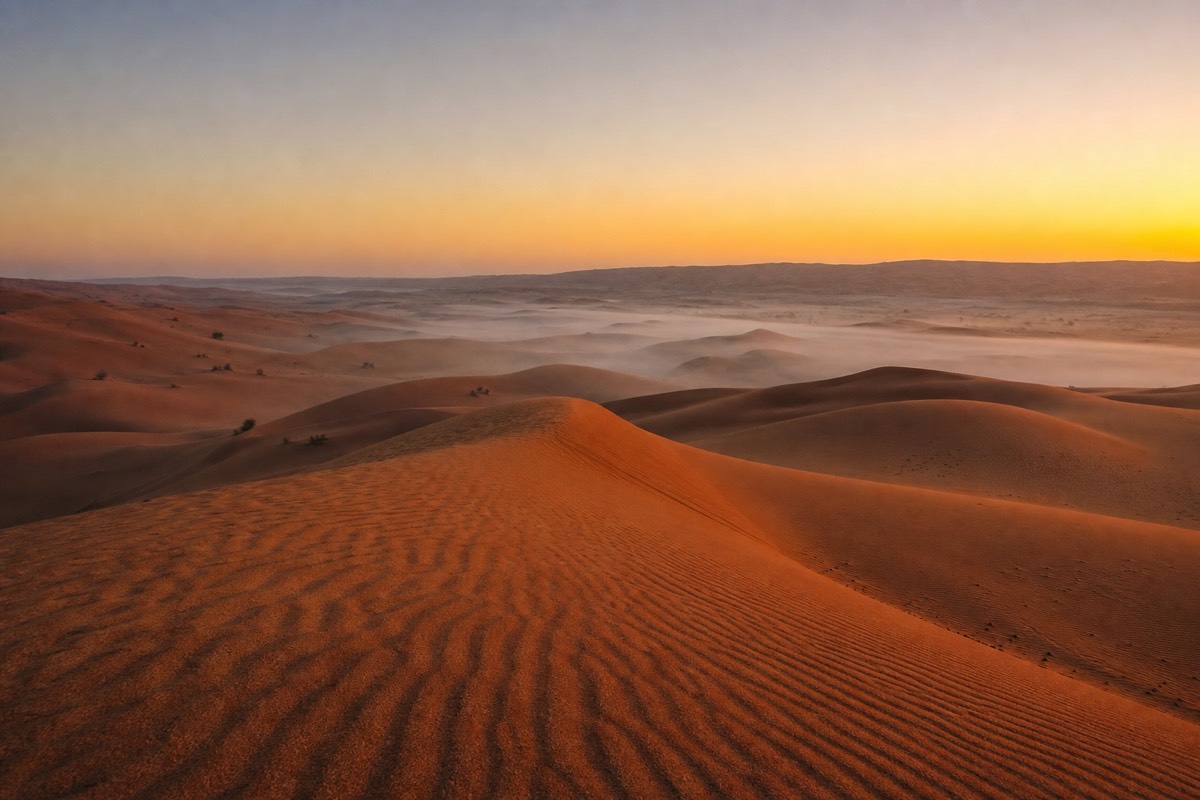
So the sightings that reward a patient visitor tend to be small. A gecko clinging to a tent pole. A lizard's trail winding over a ridge. Sandgrouse cutting across the sky toward water at first light. None of it arrives on cue, which is exactly why it feels earned. The table below is our honest ranking of what a normal day or overnight trip actually turns up.
Part of the pleasure is letting go of the safari fantasy. There is no herd cresting a dune on cue, no big cat at a waterhole, because this is a sand sea and not a game park. What it offers instead is intimacy: the exact spot where a beetle crossed a ripple, the moment a lizard freezes and then bolts, the shadow of a bird against a pale dawn. Come with a naturalist's patience rather than a checklist, and a quiet desert reads as full rather than empty.
Season shapes the odds as much as the time of day. Through the cooler months the animals are simply more active, out earlier and for longer, and the milder ground tempts you to walk further from the vehicle. High summer flips that, since the heat pins most life down to the deep night and even the reptiles keep to shade until late. If wildlife is a real priority, weight your visit toward the cooler half of the year, and toward an overnight rather than a rushed afternoon.
| Wildlife | Chance on a typical tour | Where and when |
|---|---|---|
| Insects, beetles, ants | Very likely | Around camp, all day and at the lantern |
| Reptiles, geckos, lizards | Very likely | Warm sand and scrub, daytime |
| Small desert birds | Likely | Scrub edges, dawn and dusk |
| Fox or gazelle tracks | Likely | Fresh in the morning sand |
| Desert fox (live) | Possible | Near camp after dark |
| Gazelle (live, distant) | Rare | Open gravel flats, early or late |
| Sand cat or mongoose | Very rare | After dark, deep desert |
| Wild Arabian oryx | Very rare | Not here; central Oman plains |
Curious about being in the dunes at both ends of the day? Discover a camp night with sunset and sunrise in the itinerary.
Discover The One-Night Camp StayDoes the Arabian oryx really live in Wahiba Sands?
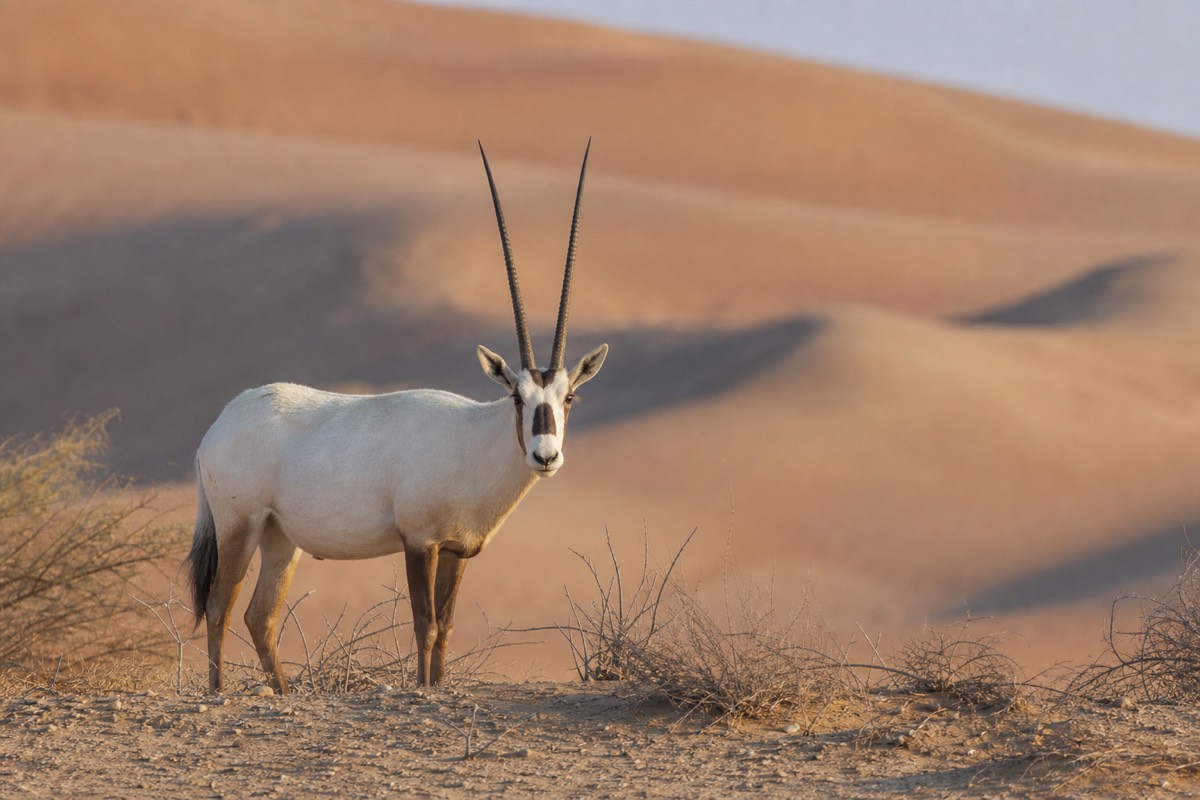
The Arabian oryx is Oman's emblem, but the free-ranging wild herds live mainly on the Jiddat al-Harasis plains of central Oman, not in the Wahiba dunes. Seeing a genuinely wild oryx here on a short tour is very unlikely. The white antelope on our hero image belongs to a famous conservation story further south.
The oryx was hunted to extinction in the wild by 1972, when poachers killed the last herd at Jiddat al-Harasis. A reintroduction programme released captive-bred animals back into central Oman from 1982, and the wild population has since climbed back into the hundreds, with a much larger managed population alongside it. The full recovery is documented in the Arabian oryx reintroduction account.
Those herds roam a stony central plateau, not the soft red sand of the Sharqiya. You can still meet oryx in Oman at protected reserves and managed estates, where the species stands as an honest symbol of what desert conservation can pull off. Here is the short version of how it came back.
If seeing an oryx is high on your list, plan it as a separate trip rather than expecting one in the dunes. Managed reserves elsewhere in Oman keep free-ranging herds that visitors can look for with a ranger, and some desert lodges have resident groups. The confusion is understandable, since tourism images pair the white antelope with rolling sand because it photographs beautifully, even though the real animals favour flatter, stonier ground. Knowing the difference keeps your expectations honest and points you to the right place if the oryx is the animal you truly want.
| Year | What happened to Oman's oryx |
|---|---|
| 1972 | Last wild herd killed; declared extinct in the wild |
| 1982 | Captive-bred animals released in central Oman |
| 1990s | Free-ranging wild population grows past 300 |
| 2011 | Global status improved from Endangered to Vulnerable |
| Today | Wild herds in the hundreds, mostly Jiddat al-Harasis |
An ordinary Wahiba camp tour is not an oryx excursion. The provider searches did not establish a suitable wild-oryx visit in Wahiba; do not book a dune tour for that promise.
Which mammals roam the dunes?
The mammals tied to these sands are Arabian and sand gazelle, small desert foxes such as Ruppell's fox and the Arabian red fox, the Cape hare, and, far more rarely, the sand cat and white-tailed mongoose. Nearly all of them are nocturnal, so the crisp tracks in the morning sand are usually your only proof they passed by.
Gazelle keep to the gravel fringes and open flats where they can spot a threat early and run. A distant, heat-shimmered silhouette is a realistic reward; a close encounter is luck. Foxes are more forward. They learn that a desert camp means scraps, and their neat paw prints often ring the tents by breakfast even when nobody saw them arrive.
The sand cat and mongoose sit at the far end of the odds. Guides who have driven the dunes for years count their own sightings on one hand, so treat any glimpse as a genuine bonus rather than an expectation. Knowing when each animal moves helps you point your eyes at the right hour.
Learning to read tracks turns a blank morning into a story. A fox leaves a neat, direct line of small prints; a gazelle's cloven marks splay where it paused and bunch where it ran; a beetle draws a faint zip across a fresh ripple. Guides who grew up here can tell how old a trail is from how sharp its edges are, since wind softens every print within hours. Ask yours to walk you through the sand around camp at first light, before the day's feet and tyres erase the night's traffic.
Foxes provide most people's one real mammal encounter, and it usually happens at camp rather than out on a drive. Sit quietly by a low fire after dinner and a pale shape may slip along the edge of the light, testing whether anyone left food unguarded. Keep your scraps sealed and your boots inside the tent, admire the visitor from where you are, and let it move on. That glimpse of a wild fox, brief and unbidden, tends to outlast every posed photo from the day.
| Mammal | Rough size | Active when | Realistic chance |
|---|---|---|---|
| Arabian / sand gazelle | Small antelope, waist-high | Dawn and dusk | Rare, at distance |
| Ruppell's / red fox | Small dog size | Night | Possible near camp |
| Cape hare | Large hare | Dawn, dusk, night | Possible |
| Sand cat | House-cat size | Deep night | Very rare |
| White-tailed mongoose | Small, low-slung | Night | Very rare |
No specialist mammal-tracking itinerary was verified in the checked listings. A camp night offers time in the desert, not a promised fox, gazelle or sand-cat sighting.
What reptiles and lizards live in the sand?
Reptiles are the desert's daytime life. Expect geckos on shaded surfaces, agamas basking on rocks, skinks and the sandfish that seems to swim through loose dunes, plus several snakes that mostly keep out of sight. They are the animals a normal visitor is most sure to see, especially in the warm hours around a rest stop.
Watch the sand itself and it starts to move. A sandfish, really a smooth-scaled skink, dives under the surface and glides beneath it to escape the heat. Agamas perch on any raised rock, turning to face the sun, while small geckos appear on tent canvas once the lanterns draw insects. It is theatre in miniature, and it plays out most days.
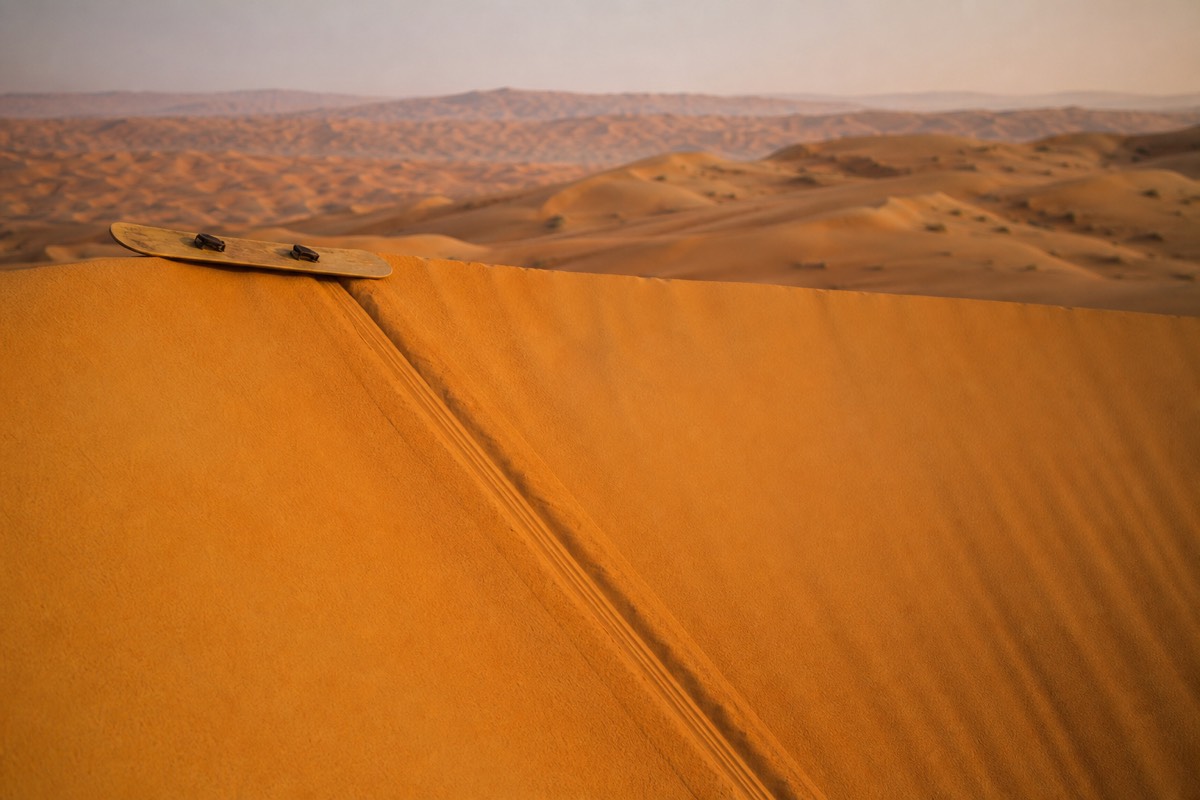
Snakes exist, including sand vipers, but they avoid people and move mainly at night. Sensible habits keep the odds of any trouble tiny: shake out your shoes, use a torch after dark, and do not reach blindly under rocks or ledges. Take those small precautions and reptile-watching is one of the easiest desert pleasures.
Each reptile has its own tell. Toad-headed and spiny-tailed agamas claim a high rock and bob their heads at rivals; skinks vanish into the sand with a shimmy the moment a shadow falls; geckos wait, motionless, until an insect strays too close. In the cooler morning they move slowly and let you approach, which is the best window for a photo. By midday most have retreated into shade or burrows, so the reptile show, like everything else out here, runs on the temperature rather than the clock.
The checked tours do not provide a verified reptile-watching session. Observe without handling animals, and treat any sighting as incidental.
What insects and invertebrates fill the dunes?
The invertebrates are the real biomass of Wahiba Sands. A single scientific survey recorded around 16,000 invertebrate specimens across the sand sea, from dung beetles and darkling beetles to ants, moths and spiders. They are easy to overlook and impossible to avoid, and they feed nearly everything else living out here.
Those numbers come from real fieldwork. A 1986 Royal Geographical Society expedition catalogued roughly 16,000 invertebrates alongside 200 species of other wildlife, including birds, a benchmark still quoted for the region's biodiversity. Watch the ground near camp and you will see beetles trundling across the sand, ants working the cooler hours, and a surprising cast of moths gathering at any light.
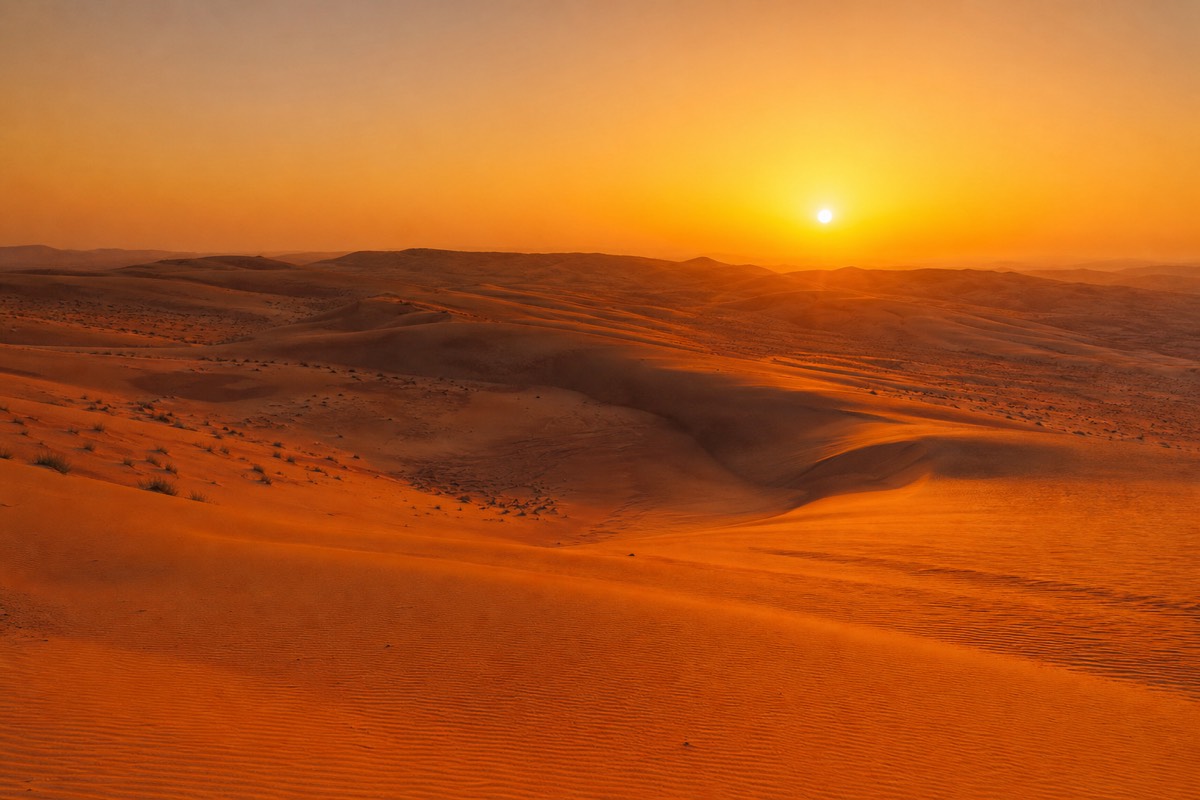
Insects matter far beyond the yuck factor. They pollinate the desert plants, recycle every scrap of organic matter, and form the base of the food chain that feeds the reptiles, birds and foxes higher up. The Royal Geographical Society's study of the Sharqiya Sands treats this thin, busy web as a model of how a hot desert holds itself together.
Look closely and the engineering is remarkable. Darkling beetles angle their bodies to catch dawn moisture; ants harvest seeds and store them against the dry months; some spiders build silk-lined burrows that trap cool air below the surface. None of it is showy, yet this quiet churn of small lives is what makes the larger animals possible at all. A single acacia in flower can hum with pollinators, a reminder that the desert's real abundance is measured in millimetres.
No entomology walk was verified among the checked provider listings. An ordinary safari should not be sold as a guided insect study.
Which birds can you spot, and when?
Birds reward the early riser most. Larks and wheatears forage the scrub, sandgrouse commute to hidden water at dawn and dusk, and a lone eagle or falcon sometimes hangs high over the ridgelines. Bring small binoculars and the birdlife becomes one of the more reliable wildlife pleasures of a desert stay.
The best birding happens in the soft light at either end of the day, when the air is cool and the desert is on the move. Sandgrouse are the classic sight, flying in fast, tight groups toward water. Ground larks blend so well into the sand that you often hear them before you see them, and small migrants pass through in the cooler months.
Raptors are the drama. A short-toed eagle or a falcon riding the thermals draws every eye upward, and the empty sky makes them easy to track. A pair of binoculars and ten quiet minutes at dawn will usually out-perform an entire day of driving for anyone who cares about birds.
A little planning sharpens the odds. The cooler months bring passage migrants on top of the residents, so autumn and winter mornings tend to be busiest. Sit still near any water or green scrub, keep your silhouette low, and let the birds come to you rather than chasing them across soft sand. Compact binoculars, a hat and a flask of coffee are all the kit you need, and a long lens is a bonus rather than a requirement for the larks and wheatears that work the ground close to camp.
| Bird | Where to look | Best time |
|---|---|---|
| Sandgrouse | Flight lines to water | Dawn and dusk |
| Desert larks | Open sand and scrub | Morning |
| Wheatears | Rocky edges, camp fringes | Dawn, dusk |
| Eagles and falcons | High over ridgelines | Warm daytime thermals |
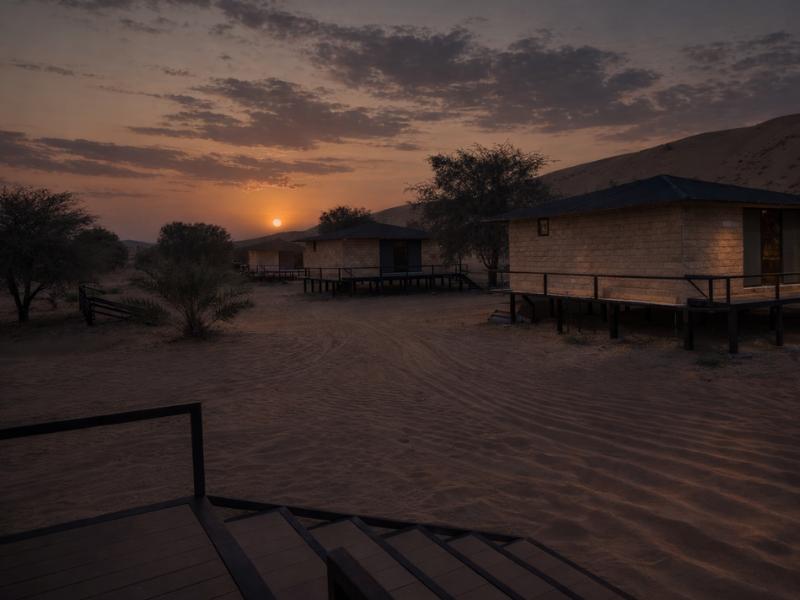
Plan for waking in the desert rather than driving out at dawn: check your date before arranging the rest of your trip. This option includes a standard camp room and sunrise itinerary, leaving the birdwatching self-directed.
Check Dates For The One-Night Camp Stay2 days, 1 night · Muscat pickup and return
Lunch and camel ride cost extra. Confirm your room and any mobility or child-seat requirements before booking.
How do desert plants and animals survive out here?
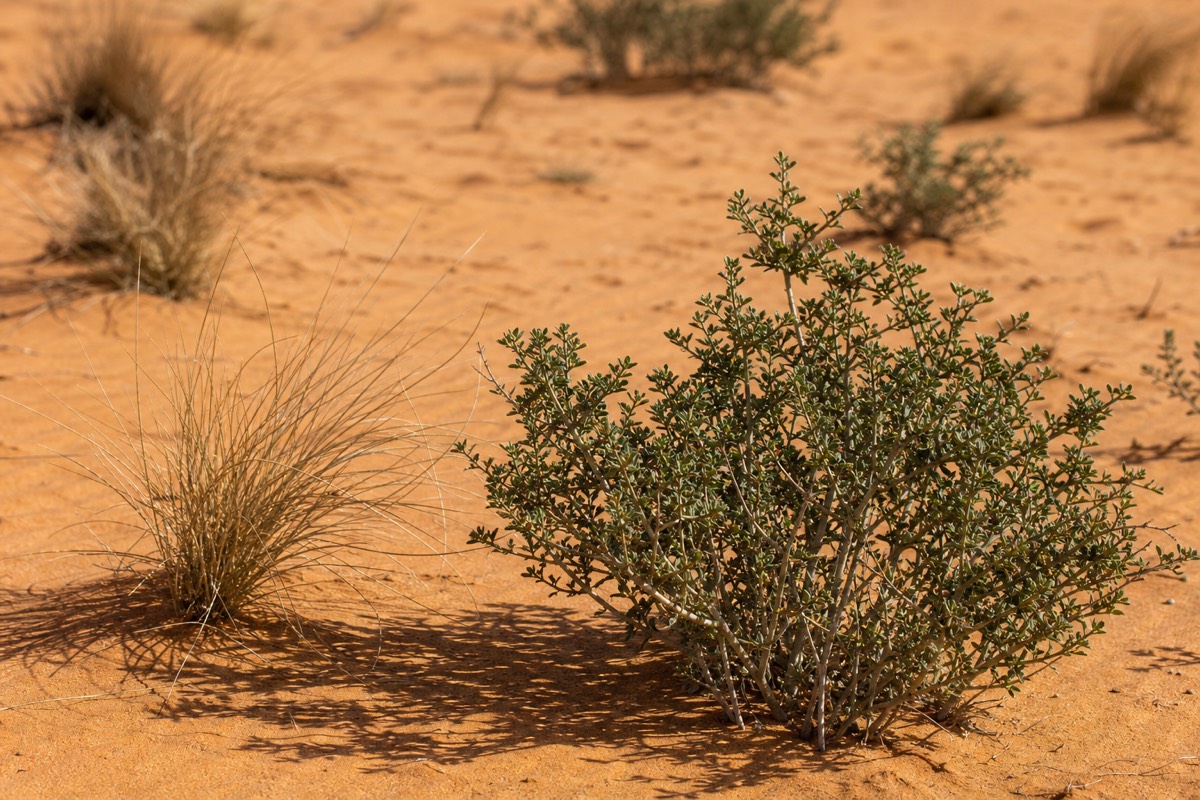
Life here runs on hidden water and hard adaptation. The same 1986 survey catalogued roughly 150 native plant species, from the deep-rooted ghaf tree to tough desert grasses that tap buried moisture. Animals stretch every drop by feeding at night, sheltering in burrows through the heat, and drawing water from the food they eat.
The ghaf tree, Prosopis cineraria, is the quiet hero of these desert plants. Its roots reach far below the surface, its shade cools the ground beneath it, and its seed pods feed grazing animals through the dry months. Around it, wiry grasses anchor the dune faces and give insects and reptiles somewhere to hide from both sun and predators.
Underground water, gathered slowly over centuries, is what keeps this odd, thin web going. Strip away the shade and the moisture and almost nothing would hold. That fragility is worth respecting on any visit.
The ghaf carries cultural weight far beyond its shade. Across Arabia it has fed livestock, propped up roofs and marked meeting places for generations, which is why it turns up in poetry and folklore as a symbol of endurance. Around its base, the desert grasses do the unglamorous work: their roots knit the loose sand into something that holds a slope, and their seed heads feed birds and insects through the lean season. Stand a moment beside a mature ghaf and you are in the busiest patch of shade for miles.
| Survival trick | How it works | Who uses it |
|---|---|---|
| Go nocturnal | Feed and move in the cool night | Foxes, sand cat, gazelle |
| Deep roots | Reach buried groundwater | Ghaf tree, grasses |
| Burrow up | Shelter underground by day | Reptiles, small mammals |
| Water from food | Draw moisture from prey and plants | Foxes, reptiles, insects |
Curious about spending more time in the desert landscape? Discover a camp-and-two-wadi itinerary from Muscat.
Dates and booking provided by GetYourGuide. If the calendar cannot load, use the booking link below.
Discover The Camp-And-Two-Wadi Trip2 to 3 days, depending on option · Muscat pickup and return
Confirm the selected option’s camp, meals and extras. Wadi Shab involves hiking and swimming; do not assume accessible trails.
When and how can you actually spot wildlife?
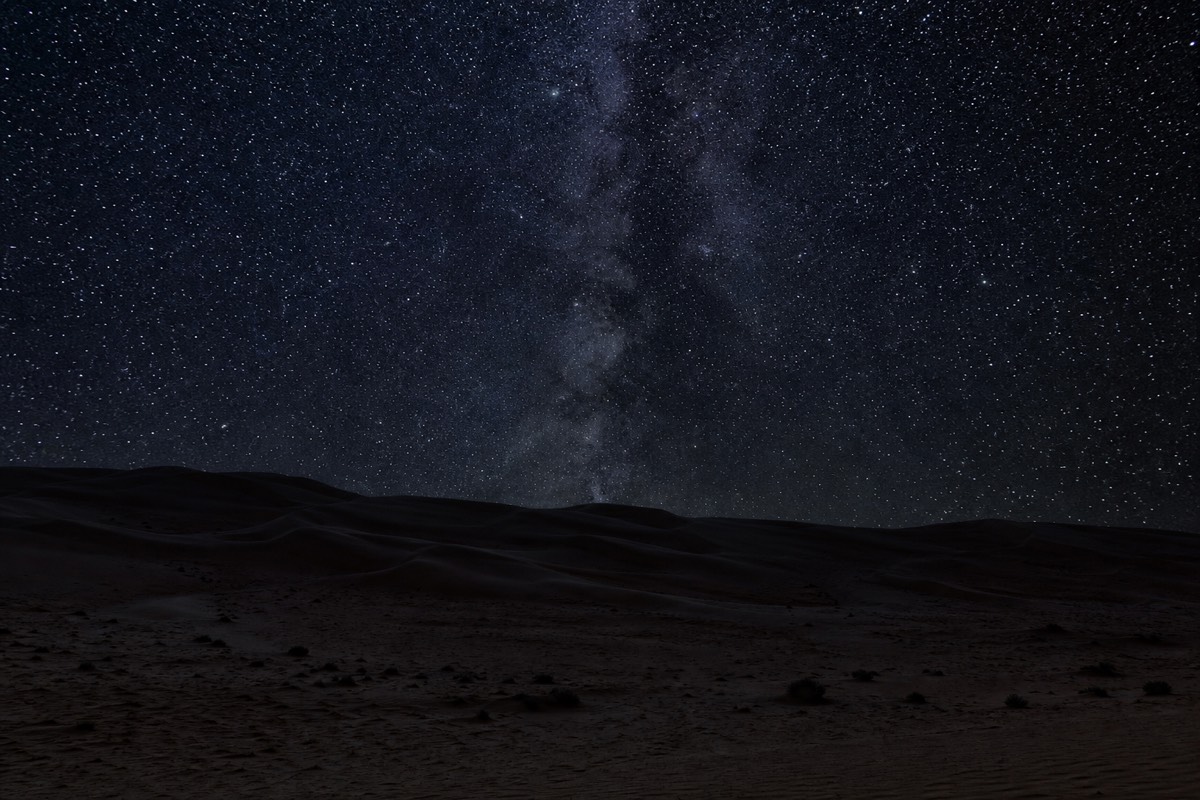
Stay overnight and go quiet at the edges of the day. Dawn and dusk near a desert camp, away from engine noise, give the best chance of tracks, birds and the odd fox. A patient hour on foot beats hours of driving, and a clear night turns the same trip into unforgettable stargazing over the dunes.
The camps and drivers Wahiba Sands Tours works with know where the animal trails cross the dunes and when the light is right, which shortens the guesswork enormously. An overnight stay is the single biggest upgrade for wildlife: you catch both the dusk and the dawn windows instead of arriving in the dead, empty heat of midday.
For comfort and better odds, aim for the coolest months, when animals move earlier and stay out longer. Keep noise low, let a guide read the tracks, and enjoy the slower moments. Between sightings, a gentle camel ride or a night under the Milky Way makes the wait its own reward, and a little thought about what to pack for dawn shade and binoculars pays off more than any promise of guaranteed sightings.
Watch wildlife the way you would want to be watched. Keep your distance, never chase or corner an animal for a photograph, and resist feeding foxes however tame they seem, since a fed fox becomes a nuisance and often a dead one. Stay on established tracks so you are not crushing the fragile crust where insects and seeds live, and carry every scrap of rubbish out with you. The desert gives up its animals slowly and only to the patient, which is exactly what makes the sightings worth the wait.
To turn an overnight into a genuine wildlife night, plan two quiet windows rather than one. Walk out a short way from camp at last light, then again before the sun clears the dunes, and simply sit and watch. Those two half-hours, with the engines off and voices low, deliver more than any amount of driving between them. Bring a torch with a red mode so you can check tracks without dazzling yourself, and let the desert set the pace.
Plan for keeping both dusk and dawn in your schedule: check your date before arranging the rest of your trip. This option includes one night at Desert Rose Camp with private Muscat transport.
Scheduled departures from Viator. Availability and final price are confirmed on Viator.
2 days, 1 night · Muscat pickup and return
Lunch and camel ride cost extra. Confirm your room and any mobility or child-seat requirements before booking.