How to Get to Wahiba Sands from Muscat
Distances, routes, where the asphalt runs out, and whether to drive yourself or let a guide take the wheel for the soft-sand section.
The route, stop by stop
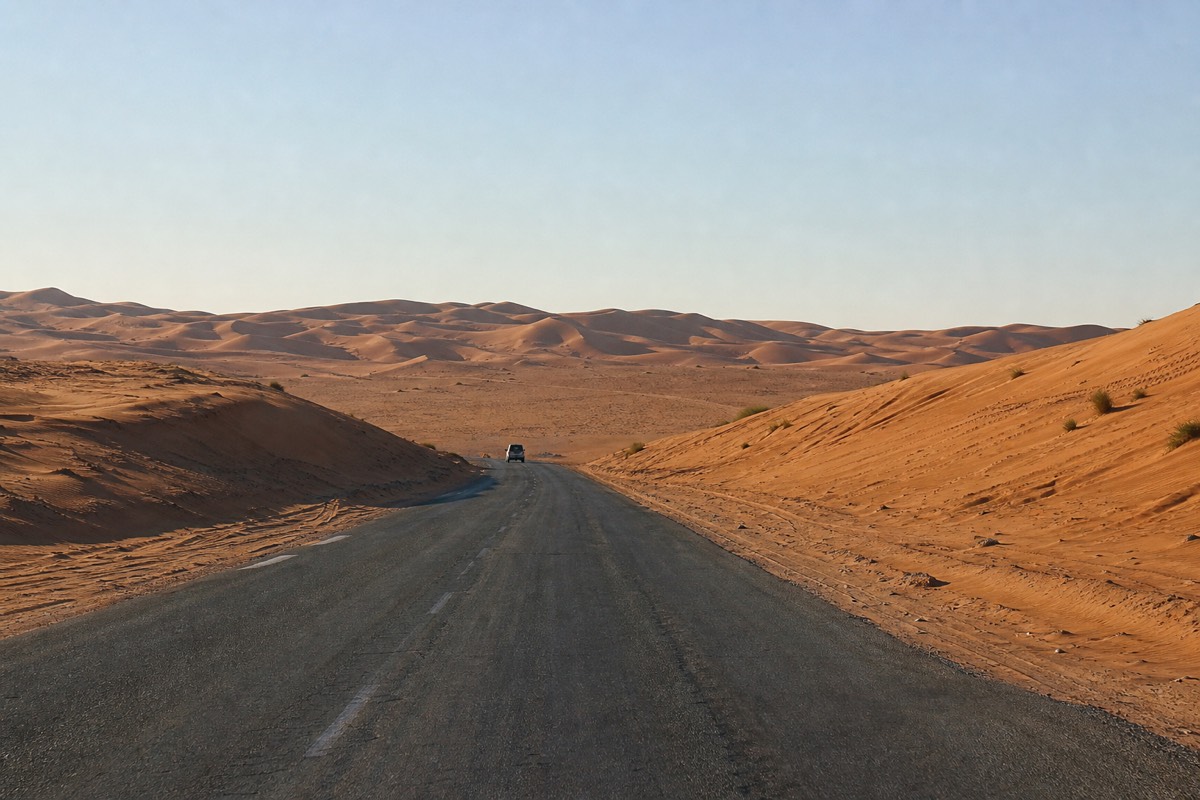
Muscat to a Wahiba Sands camp: about 190 km of paved highway to the gateway, then a short 4x4 leg over the sand.
How far is Wahiba Sands from Muscat?
From Muscat it is roughly 190 kilometres to Al Wasil, the northern gateway to the dunes, a drive of about 2.5 to 3 hours on good tarmac. Bidiyah, the other main gateway, sits a little further along the same highway. The paved run is easy; only the final stretch into the sand demands a 4x4.
Match the departure point, trip length and included activities to the plan above.
At A Glance: Shared day trip combining dune driving and time at Wadi Bani Khalid. Choose the sunset or quad option when booking.
Explore The Muscat Desert DayMeasured door to dune, the distance from Muscat is short enough to do in a morning. Most of the route follows a wide, well-kept highway south-east toward Sur, so you cover ground quickly and the drive rarely feels long. The clock only slows at the very end, when you leave the road and pick your way over soft sand to a camp.
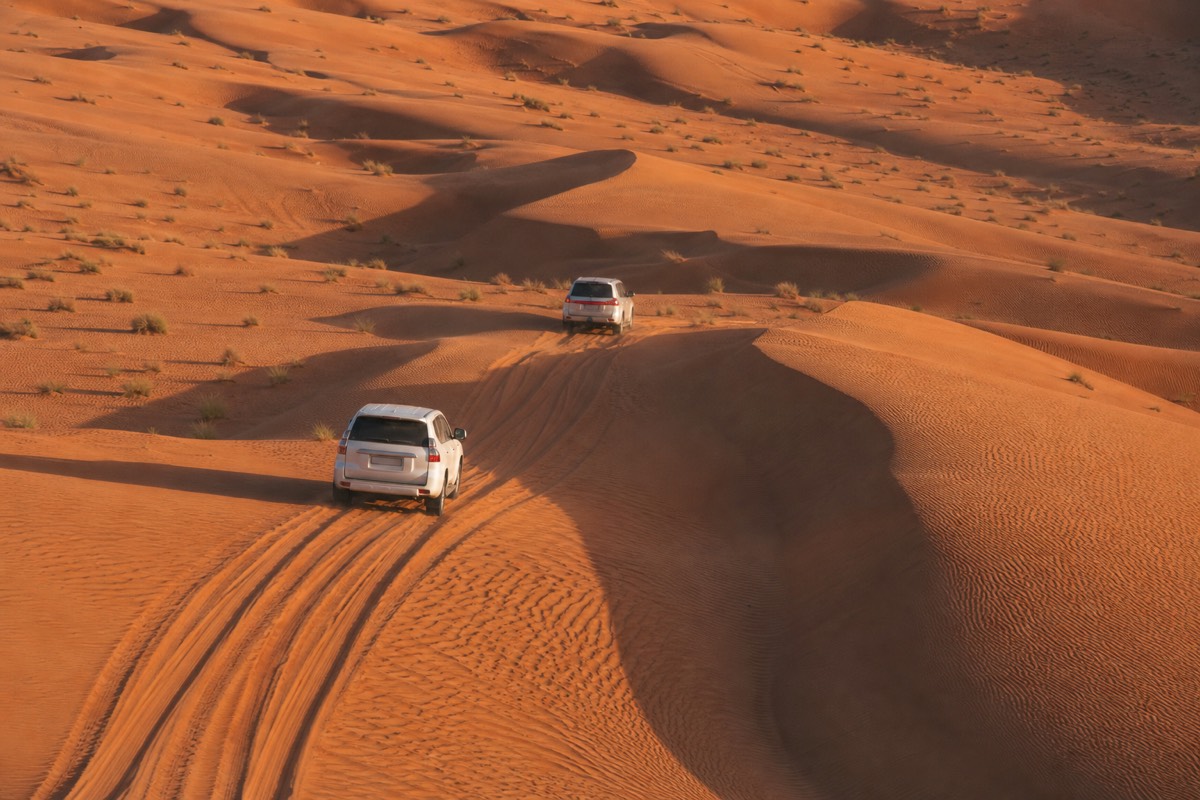
Timing matters more than raw distance. Leaving Muscat mid-morning lands you at the gateway with the afternoon free, which sets up a sunset in the dunes on your first evening. Wadi Bani Khalid, a favourite oasis stop, sits close by and adds only a modest detour if you want to break the drive with a swim.
For perspective, this is one of Oman's easier headline drives. The road to the Sharqiya Sands is shorter and simpler than the long haul south to Salalah, and gentler than the mountain switchbacks up to Jebel Akhdar. Rental cars handle the highway portion without complaint, and families make the run with young children in tow. What trips people up is underestimating that final off-road stretch, which no amount of highway speed prepares you for. Treat the paved distance and the sand section as two separate journeys with two different skill sets, and the whole trip falls into place.
| From | To | Distance | Drive time |
|---|---|---|---|
| Muscat | Bidiyah / Al Wasil | ~190 km | 2.5 to 3 hrs |
| Muscat | Wadi Bani Khalid | ~235 km | ~2 hrs 40 min |
| Gateway town | Desert camp | ~5 to 15 km | 20 to 40 min (4x4) |
Curious about making the long road leg part of the booking? Discover a nine-hour desert-and-wadi trip with Muscat pickup and return.
Discover The Muscat Desert DayWhich route do you take out of Muscat?
Follow Route 23, the Muscat to Sur highway, south-east until you reach Bidiyah or Al Wasil. Both towns sit right where the dunes begin, and both have fuel, shops and 4x4 outfits. Turn off the highway at your chosen gateway, then it is soft sand the rest of the way to camp.
The route is simple enough that you barely need directions once you are on the highway. From Muscat you head toward Sur, and the road stays fast and modern almost the entire way. Signage is clear, fuel stops are frequent, and there is no mountain pass or tricky junction to trip you up. Al Wasil comes first; Bidiyah is a short hop beyond it.
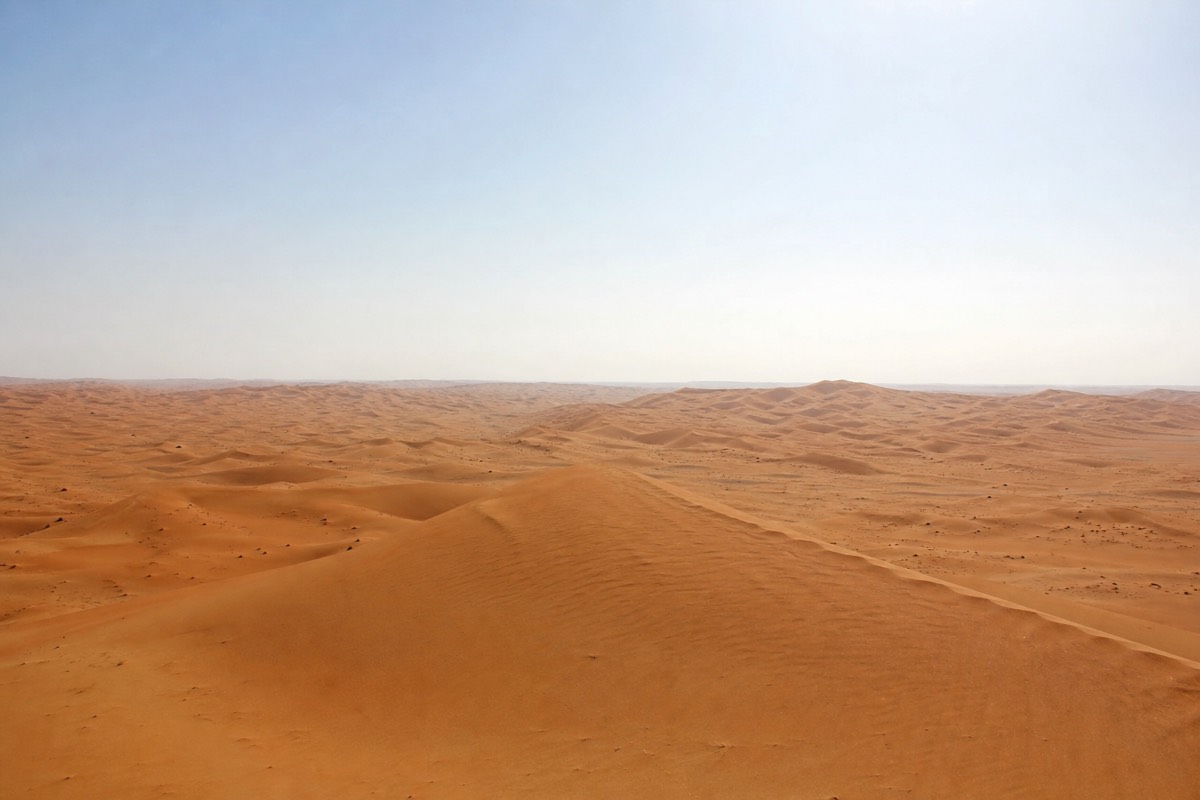
Which gateway you use usually depends on your camp, since each one gives arriving guests a meeting point and directions. Both towns work as your last stop for supplies. Fill the tank, buy water, and if you are self-driving, this is where you drop your tyre pressure before the sand. The overnight operators Wahiba Sands Tours works with meet guests in these towns and drive the final leg themselves.
A worthwhile detour sits just beyond the dunes at Al Mudayrib, an old walled settlement of mud-brick towers and shaded date gardens that hints at how these places looked before the highway arrived. Several full-day tours fold it in alongside the sands and the wadi. If you have an hour and any interest in the region's past, it breaks up the return leg and puts the desert in a human context. Otherwise the route needs little thought: stay on the main highway, watch for your gateway town's signs, and save your attention for where the tarmac ends.
| Leg | Road | Notes |
|---|---|---|
| Muscat to turn-off | Route 23 (to Sur) | Fast dual highway, clear signs |
| Turn-off to gateway town | Local paved road | Fuel, shops, 4x4 outfits |
| Gateway to camp | Off-road sand | 4x4 only, lower tyre pressure |
Plan for following a complete route from the capital: check your date before arranging the rest of your trip. This option includes Wadi Bani Khalid, a desert night and Ibra with private Muscat transport.
Scheduled departures from Viator. Availability and final price are confirmed on Viator.
2 days, 1 night · Muscat pickup and return
Lunch and camel ride cost extra. Confirm your room and any mobility or child-seat requirements before booking.
Where does the tarmac end?
The paved road ends at the edge of the dunes, just past Al Wasil or Bidiyah. From there it is soft sand, so drivers stop to air down their tyres to roughly half the road pressure for grip. If you booked a camp, its 4x4 usually meets you at the tarmac and takes over from that point.
This transition is the single most important thing to understand about the drive. Right up to the gateway towns you are on smooth asphalt in any car. Step off it, and the surface turns to fine, shifting sand that will bog down a 2WD within metres. The change is abrupt, and plenty of first-timers have learned it the hard way.
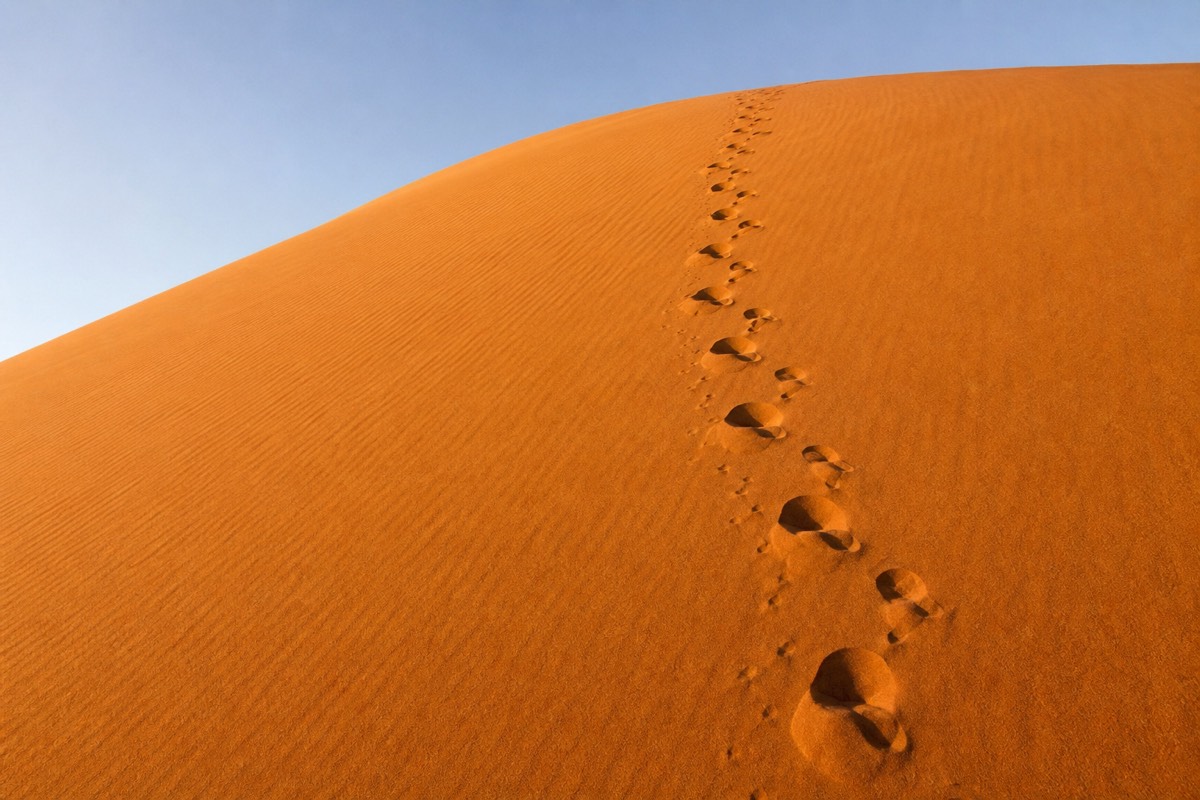
Reducing tyre pressure spreads the wheel's footprint so it floats over the sand rather than digging in. Experienced drivers do this at the edge and reinflate at a gateway station on the way out. If that sounds like hassle, it is exactly why so many people hand the last leg to a camp transfer or a guided tour and simply enjoy the ride.
How far you drop the pressure depends on the sand, but many drivers take road tyres from around 30 psi down into the mid-teens for the softest sections, then reinflate at a station in the gateway town on the way out. Momentum matters more than power out there: a steady speed keeps the wheels floating, while braking hard or stopping on a soft slope is exactly how a vehicle sinks to its axles. None of this is difficult once you have done it a few times. It is simply not something you want to be learning for the first time, alone, as the light fades.
Self-drivers should carry a little kit for the sand. A folding recovery board, a pump or compressor to reinflate tyres, and a tow strap turn a bogged afternoon into a ten-minute delay. Tell your camp roughly when to expect you, so someone knows to look if you never turn up. Airing down and back up adds maybe twenty minutes to each end of the off-road leg, a small price against the alternative of digging a wheel out by hand in the heat.
| Stage | Surface | What to do |
|---|---|---|
| Reach gateway town | Paved | Fuel up, buy water |
| Edge of the dunes | Sand begins | Air down tyres, engage 4x4 |
| Into the sand | Soft dunes | Keep momentum, follow a lead vehicle |
| Leaving next day | Back to tarmac | Reinflate tyres at the station |
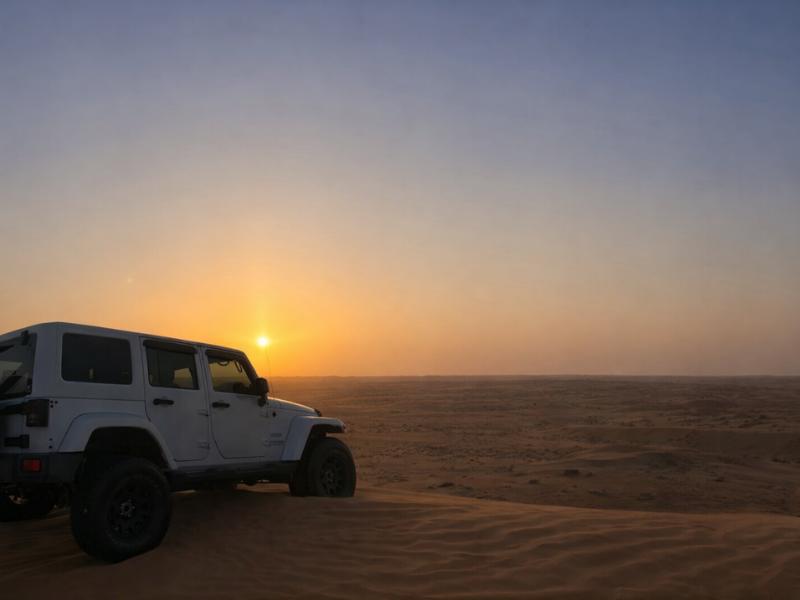
Curious about handing over at the desert edge? Discover a Bidiyah-start sunset trip without paying for a Muscat departure.
Discover The Bidiyah Sunset Trip4 hours · Bidiyah meeting point, return to start
Camel riding costs extra. No overnight accommodation. Not recommended during pregnancy. Agree the meeting point before arranging transport.
Should you self-drive or take a guided transfer?
Self-drive suits confident 4x4 drivers who are comfortable airing down tyres and reading soft sand. Everyone else is better off with a guided transfer or an overnight package that collects you in Muscat. A guided trip puts the soft-sand driving in the operator’s hands; it does not eliminate the risk of getting stuck.
The self-drive question really turns on experience. If you need a 4x4 and know how to use one on dunes, self-drive gives you freedom and a lower per-person cost. If you have never driven soft sand, going without a tour is a gamble: recovery from a bogged vehicle deep in the dunes is slow, hot and expensive, and phone signal out there is thin.
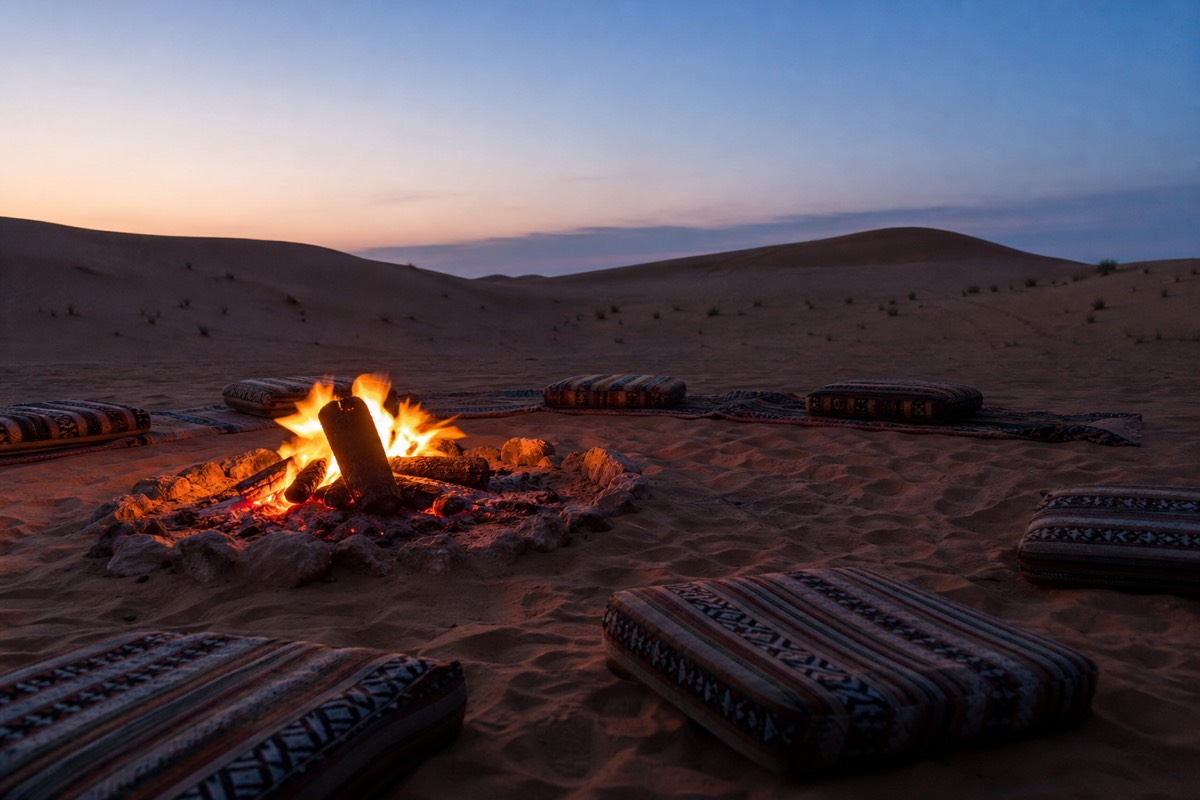
A guided transfer trades a little independence for a lot of calm. Someone who drives this ground daily knows which lines hold and which collapse, and an overnight package folds the whole Muscat-to-camp run into one booking. For a first desert trip, most people find that peace of mind is worth far more than the saving from self-driving.
One detail catches self-drivers out: many rental agreements in Oman exclude off-road use, so taking a standard hire car onto the dunes can quietly void its insurance. If you plan to drive the sand yourself, hire a proper 4x4 on terms that allow it, and check exactly what recovery cover you hold. Set that against a guided run, where the vehicle, the insurance and the driver's daily knowledge of which lines hold all arrive as a single booking. For a couple or a solo traveller, the sums often favour joining a group; for a family that wants to set its own pace, a private trip earns its cost.
| Option | Best for | Watch out for |
|---|---|---|
| Self-drive 4x4 | Experienced dune drivers | Getting stuck, tyre pressure, recovery cost |
| Guided day tour | Day-trippers, first-timers | Long day, less flexibility |
| Overnight package | Anyone wanting a night in camp | Book ahead in cool season |
Plan for sharing the vehicle instead of hiring a 4x4: check your date before arranging the rest of your trip. This option includes a shared Muscat day with the dune driver included.
Scheduled departures from Viator. Availability and final price are confirmed on Viator.
9 hours · Muscat pickup and return
Ages 5+. Child seats and life jackets excluded. Camel rides cost extra; quad only in the quad option. Lunch not provided during Ramadan. Not recommended during pregnancy or for cardiovascular conditions.
Can you stop at Wadi Bani Khalid on the way?
Yes, and it is one of the best add-ons to the drive. Wadi Bani Khalid sits about 45 to 55 minutes from the gateway towns, its emerald pools set in a palm-lined gorge. A short walk from the car park reaches the water, and many full-day and overnight tours build the oasis into the same trip.
The wadi makes a natural counterpoint to the dunes: cool, green and wet against all that dry gold. From the car park it is only a five-minute stroll to the first pools, so you do not need to be a hiker to enjoy it. Bring modest swimwear, since this is a local family spot, and something for your feet on the rocks.
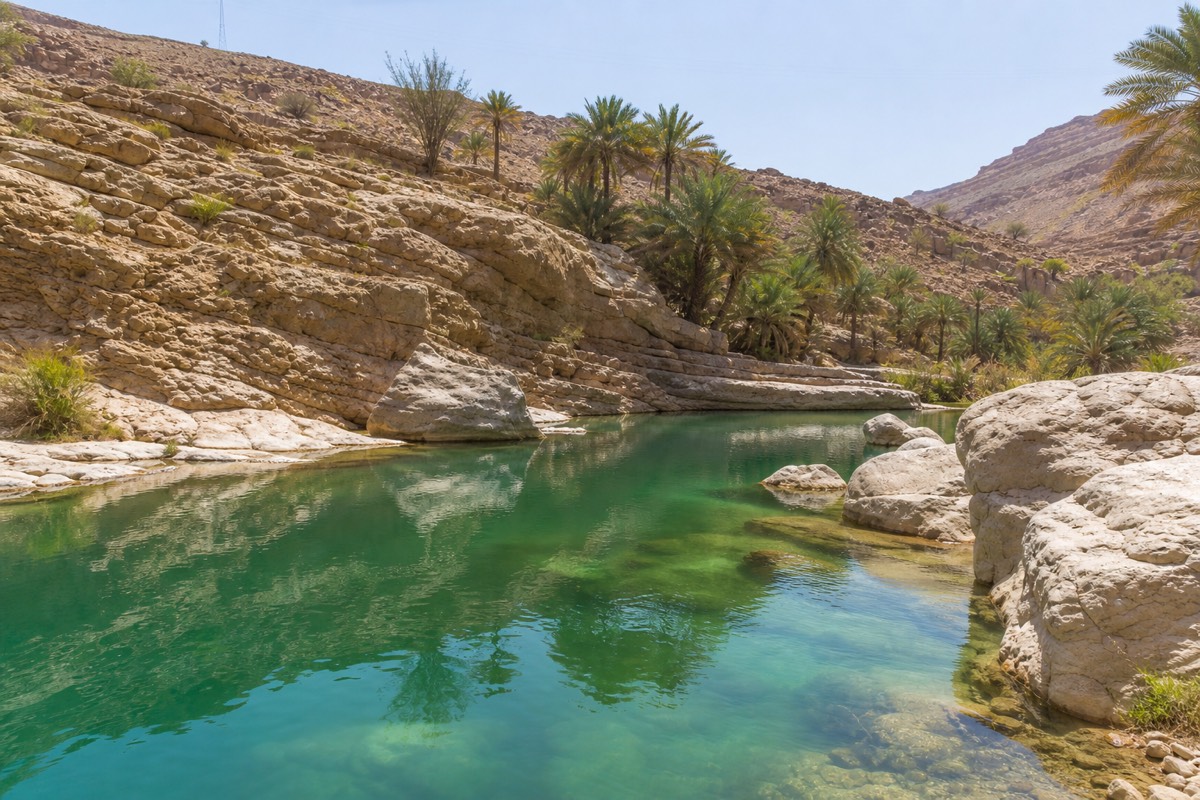
Fitting it in is easy on a day trip and pleasant on an overnight. A common pattern is oasis first, dunes second, so you swim in the heat of the day and reach camp for sunset. Pairing the two is exactly why several tours from Muscat list the sands and Wadi Bani Khalid together.
The pools themselves lie in a rocky gorge fed by water year-round, cool enough to feel like a reward after the heat of the dunes. There is a car park, a short paved path, and basic facilities near the entrance, with the quieter and prettier pools a little further up the valley for anyone willing to walk. Wear something modest in the water, since local families use the spot, and pack a bag for wet clothes on the onward drive. An hour or two here is plenty, and it slots neatly into either a day trip or the first afternoon of an overnight.
| From | To Wadi Bani Khalid | Time |
|---|---|---|
| Bidiyah | ~46 km | ~55 min |
| Al Wasil | Similar distance | ~45 min |
| Car park to pools | Short walk | ~5 min |
Curious about adding the oasis to the journey? Discover a Muscat desert-and-wadi route with a separately selected quad option.
Dates and booking provided by GetYourGuide. If the calendar cannot load, use the booking link below.
Discover The Wadi-And-Dunes Day9 hours · Muscat hotel pickup and return
Quad only if selected; lunch excluded during Ramadan. Not suitable during pregnancy or for back, mobility or heart problems. Confirm child restrictions.
When should you leave Muscat?
Leave Muscat mid-morning for an overnight, aiming to reach the gateway by early afternoon so you have time to settle in before sunset. For a day trip, an early start is better, since the drive each way plus activities makes for a long day. Avoid arriving at the dunes after dark on your first visit.
The right departure time depends on whether you stay overnight or return the same day. An overnight is forgiving: leave around 9 or 10am, take a relaxed pace, and you still arrive with the afternoon in hand. The reward is watching the light change over the ridges instead of chasing it.
A day trip is tighter. With three hours of driving in each direction, plus dune time and perhaps the wadi, you want to be on the road early and back on tarmac before nightfall. Deciding between a day trip vs overnight often comes down to this: the day trip is doable but rushed, while a single night turns the same drive into a proper break.
Sunset shifts through the year, falling as early as around 5:30pm in midwinter and later toward the shoulder months, so check the day's timing and count backward from it. Getting out of Muscat is smoother outside the morning rush, and the highway itself rarely clogs once you are clear of the city. The goal is to be off the tarmac and onto the sand with daylight in hand, both for the views on the way in and because picking out a camp across unlit dunes after dark is a needless test of everyone's patience.
| Trip type | Leave Muscat | Back in Muscat |
|---|---|---|
| Overnight | Mid-morning | Following afternoon |
| Day trip | Early morning | Late evening |
| Two nights | Any morning | Two days later |
Plan for planning the nights around your drive: check your date before arranging the rest of your trip. This option includes a two-day, one-night itinerary returning to Muscat.
Check Dates For The One-Night Camp StayWhat does the journey cost?
Compare the total for your actual dates and party. The verified room-based overnight includes private Muscat transport, a standard Desert Rose Camp room, dinner and breakfast. Lunch and camel riding are extra. A private vehicle does not mean an exclusive or luxury camp.
If you self-drive your own 4x4, the drive itself is inexpensive because Omani fuel prices are low. Hiring a suitable vehicle changes the maths, and any saving over a group tour shrinks once you factor in the risk of a recovery. For a single traveller or a couple, a shared departure is often the cheaper and simpler route.
Guided prices bundle the parts that are awkward to arrange yourself: the soft-sand transfer, the camp, meals and at least one activity. Group full-day tours are the budget end, private overnights the premium. Treat any figure as a guide only, since prices shift with season, group size and availability, and confirm the current rate before booking.
The gap between group and private pricing is mostly about who shares the vehicle. On a group departure the fixed cost of the car and driver splits across everyone aboard, which is why the per-person figure falls so far; a private trip buys the whole vehicle and its flexibility for your party alone. Omani fuel is among the cheapest in the region, so a self-drive's running cost stays low, yet that advantage shrinks once you add 4x4 hire and weigh the real chance of paying for a recovery. Price the options on what each includes, not just the number on the listing.
For a rough sense of budgeting, a couple sharing fuel on a self-drive spends very little on the journey itself, while the same couple on a private overnight pays for exclusivity, comfort and someone else handling the hard driving. Groups sit in between, splitting a capable vehicle and an experienced driver several ways. Whichever you choose, build in a little cash for tips and any roadside snacks, and you will not be caught short.
| Way in | Rough cost | Covers |
|---|---|---|
| Self-drive (own 4x4) | Fuel, mostly | Just the drive |
| Group full-day tour | Quote for your dates and party | Transport, dunes, guide |
| Private guided overnight | Quote for your dates and party | Camp, meals, transfers, activities |
Curious about comparing a shared fare with car hire? Discover a desert-and-wadi day whose camel and quad extras can be priced separately.
Discover The Muscat Desert DayIs the drive safe, and what should you know?
The paved highway from Muscat is modern and safe; the risk is in the sand. Carry plenty of water, keep the tank topped up, and never head deep into the dunes alone in a single vehicle. Watch for wandering camels near the road at dusk, and time your arrival for daylight on a first visit.
On the highway, ordinary caution is enough: keep to the limits, take breaks, and be alert to livestock near the roadside, especially at dawn and dusk when camels drift onto the tarmac. Fuel is plentiful along the route, so there is no reason to run low. Oman is a settled, low-crime country, which makes the road trip itself relaxed.
Off the tarmac is where judgement counts. If you need a 4x4 and choose to self-drive, go with a companion vehicle, carry a recovery board and a way to reinflate tyres, and tell someone your plan since signal drops fast. For visa and entry details, check an official source before you travel; Oman's tourism board maintains helpful pages, and the background on the Wahiba Sands is worth a read for context on the terrain.
Keep a few basics within easy reach: several litres of water per person, a phone charged and topped up with an offline map, and your camp's location saved before you lose signal. Oman's general emergency number is 9999 if something goes wrong on the road. The most common roadside hazard here is livestock, since camels and goats roam freely and are genuinely hard to see against dark tarmac at night, so ease off the accelerator through villages and in the hour around dusk. Handled with that ordinary care, the journey is one of the calmer road trips in the region.
Before you commit to dates, confirm current entry rules and any regional advisories through official channels. Oman's tourism board keeps useful pages, including its A'Sharqiyah Sands overview, and local operators can flag road or weather closures near the sands. Most of the year the route is open and uneventful, so this is a light-touch check rather than a chore. Doing it the day before still saves you from the rare washed-out wadi crossing or a fuel-station closure on a quiet stretch.
| Topic | What to know |
|---|---|
| Highway | Modern, fast, well signed |
| Camels | Can wander onto the road at dusk |
| Fuel | Cheap and frequent along the route |
| Off-road | Never solo; carry water and recovery kit |
| Timing | Aim to arrive in daylight |
A booking is not a road-safety guarantee. Confirm current conditions, your pickup address and any traveler restrictions before committing to a departure.