How Many Days Do You Need in Wahiba Sands?
One night, one day, or two? How to size a desert stop to the rest of your Oman trip.
What each length actually gets you
How a day trip, one night and two nights compare on what you actually experience.
What is the short answer?
One night is the sweet spot. A single overnight in a desert camp gives you sunset, dinner under the stars, sleep in a tent, and sunrise over the dunes, which is the full arc most people come for. A day trip works when time is tight; two days suits anyone who wants a slower pace or a second oasis.
Count nights as well as days, then match the departure point to your Oman route.
At A Glance: One night captures sunset and sunrise. A day trip suits a Muscat return that evening; a local Bidiyah sunset trip suits travelers already near the dunes.
Explore The One-Night Camp StayWahiba is close enough to the capital that you can taste it in a day or settle into it across two. The drive from Muscat is around 200 kilometres, roughly two and a half to three hours each way, which shapes the whole calculation. Spend too little time and the sand feels like a photo stop; give it a night and it becomes the part of Oman you talk about at home. The right number of days depends less on the desert and more on how the rest of your trip is packed.
There is no single correct answer, only a good fit for your itinerary. A common pattern looks like this: a day trip for travellers on a fixed schedule, one overnight for the classic experience, and two days for anyone who wants the desert to slow down rather than tick a box on a list. The sections below walk through each, with real timings and prices.
It helps to be honest about what drives your own answer. If your Oman trip is a tight loop of headline sights, the desert competes with everything else for hours, and a day trip keeps it in proportion. If you came partly for the desert itself, skimping on it is the one regret people mention most. So before counting days, decide how much the sand matters to your version of the trip, then let that steer the length rather than the other way round.
Time of year quietly shapes the answer as well. In the comfortable winter months you can pack more into a single day without wilting, which makes a day trip more viable. In the shoulder heat of October or April, an overnight that shifts activity to the cool ends of the day is not just nicer but noticeably safer, another reason the calendar deserves a place in the decision.
Discover what one night adds: this private Muscat itinerary pairs Wadi Bani Khalid with sunset, a Desert Rose Camp room and sunrise.
Discover The One-Night Camp StayIs a single day trip enough?
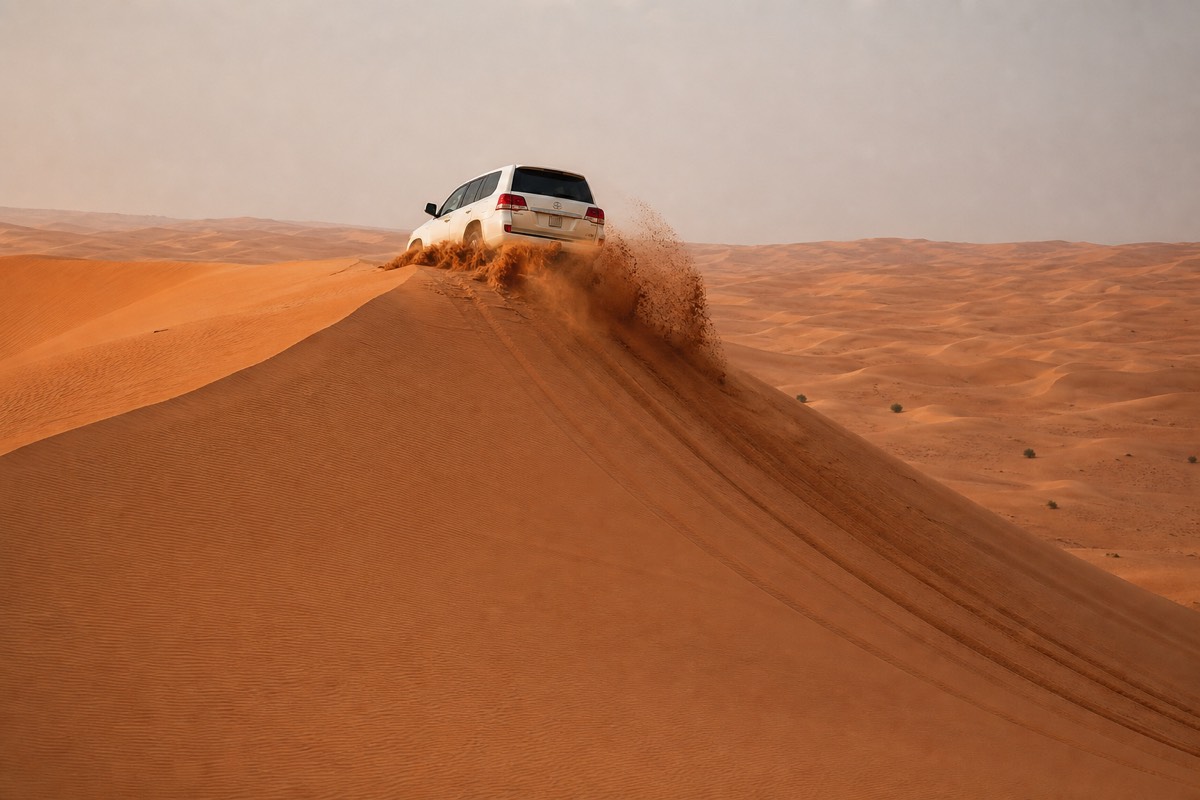
A day trip is enough to say you saw the dunes. A full-day loop from Muscat covers the drive, dune bashing, a camel ride, and often a swim at Wadi Bani Khalid, then returns you to the city by night. What you miss is the quiet: no stars, no sunrise, and only a few rushed hours on the sand.
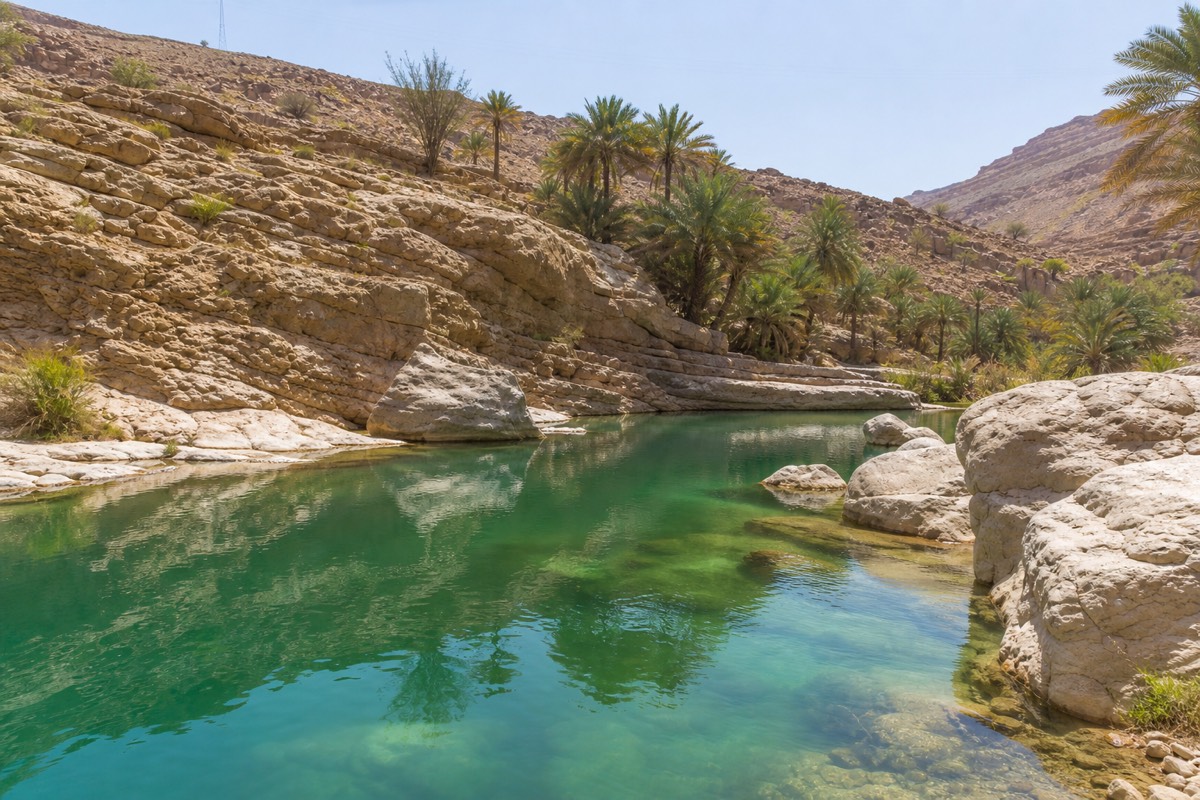
The maths is tight but workable. The drive alone eats roughly five to six hours round trip, which leaves the middle of the day for the desert and the wadi. That is why the busy full-day group tours pair the sands with Wadi Bani Khalid, so you get water and dunes in one push. It is a strong option for travellers on a single free day, or anyone who does not want to camp. The pace is brisk, but you come home the same night having stood on a hundred-metre dune and ridden a camel across it.
The honest downside of a day trip is not the sights you get, it is the pace. You arrive as the light is at its harshest, you rush the dunes, and you leave before the desert becomes its evening self. For some travellers that is a fair trade for keeping the rest of the itinerary intact. For others it plants the thought that they should have stayed, which is worth knowing before you choose the shorter option.
Here is how a realistic day-trip clock tends to run, leaving Muscat early to beat the heat and the traffic.
| Time | What happens |
|---|---|
| 7:00 am | Leave Muscat, drive south through Ibra |
| 10:00 am | Reach Wadi Bani Khalid, swim in the pools |
| 12:30 pm | Lunch, then transfer to the sands gateway |
| 2:00 pm | Deflate tyres, dune bashing across the ridges |
| 4:00 pm | Camel ride and photos in warm light |
| 5:00 pm | Start the drive back to Muscat |
| 8:00 pm | Arrive in the city |
For many one-week visitors juggling coast, capital and mountains, that turns out to be exactly the right amount of desert. Check the live prices on the listing to see how a full day compares before you commit.
One practical caveat for day-trippers: build in slack for the drive. The road is good but long, and an unplanned stop, a slow lunch, or heavier traffic near Muscat can eat the margin that lets you reach the dunes in decent light. Leaving early is the single best insurance against arriving hot, rushed, and short on the hours that make the trip worthwhile.
Only one day free in Muscat? Check the desert-and-wadi departure before planning separate transport; the sunset option is a distinct choice when booking.
Scheduled departures from Viator. Availability and final price are confirmed on Viator.
9 hours · Muscat pickup and return
Ages 5+. Child seats and life jackets excluded. Camel rides cost extra; quad only in the quad option. Lunch not provided during Ramadan. Not recommended during pregnancy or for cardiovascular conditions.
Why one overnight is the sweet spot
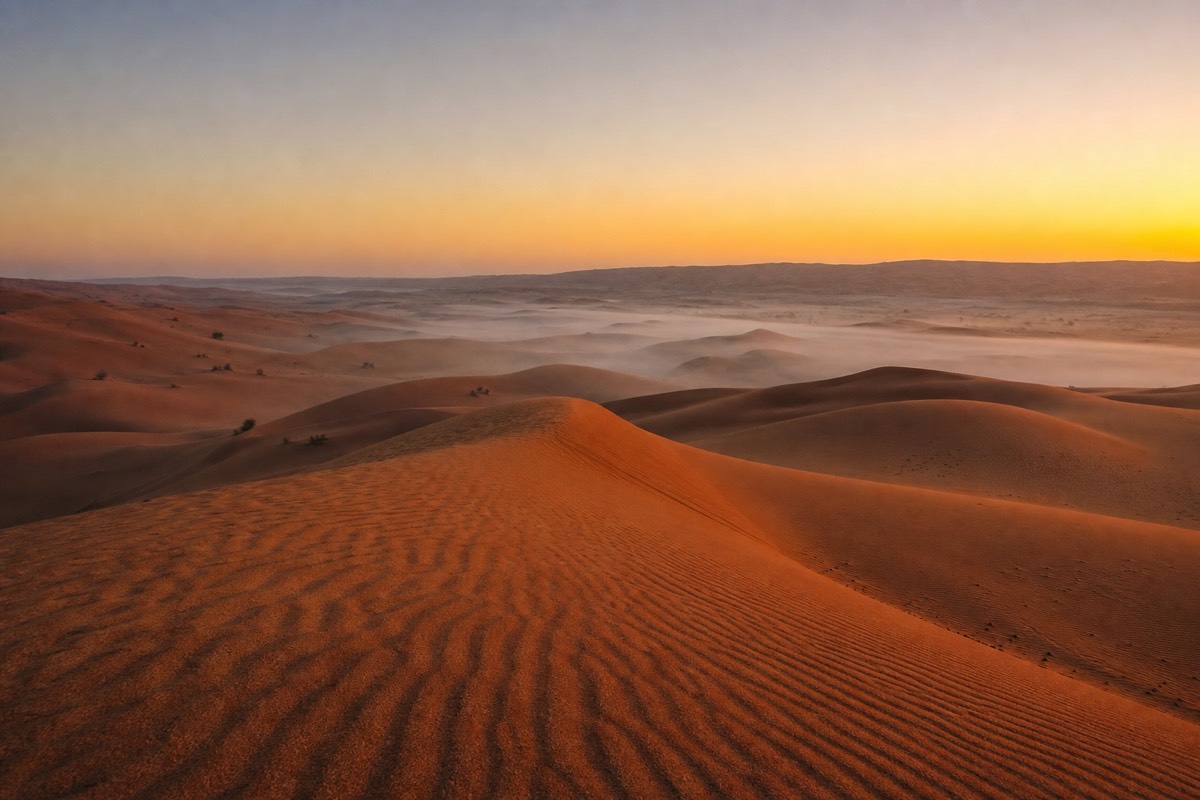
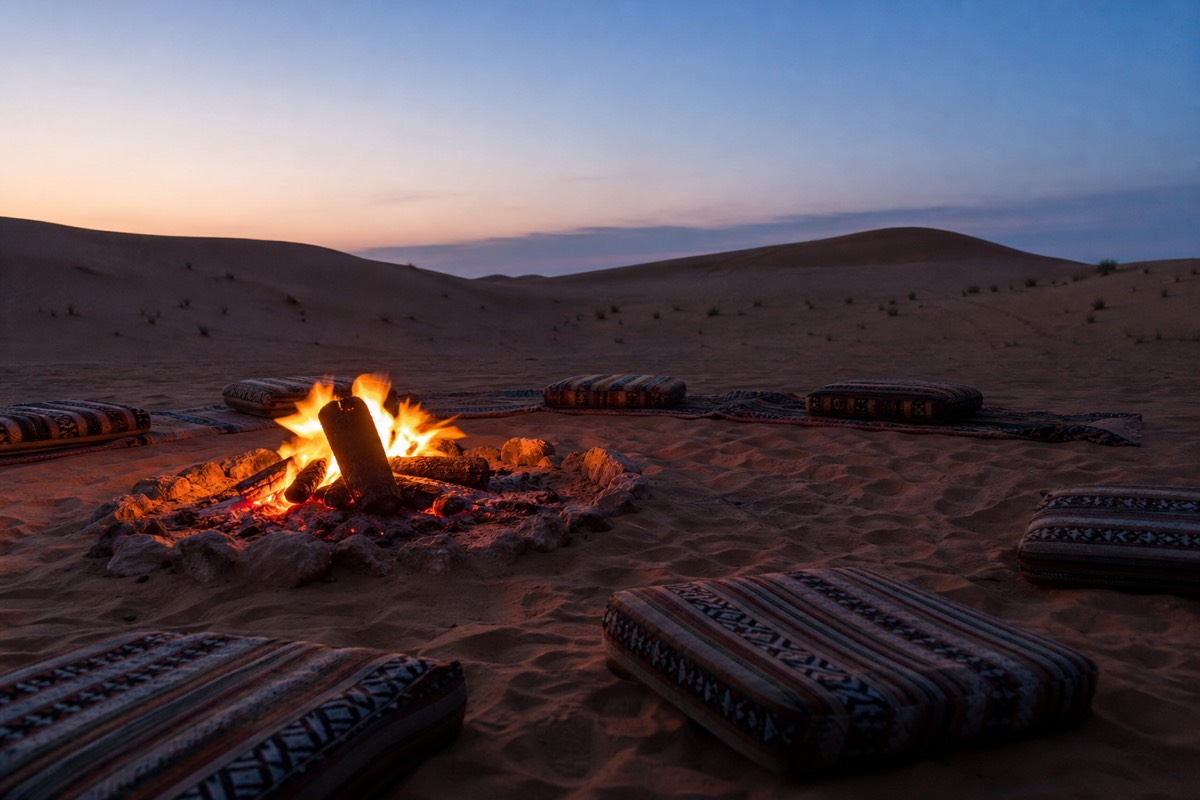
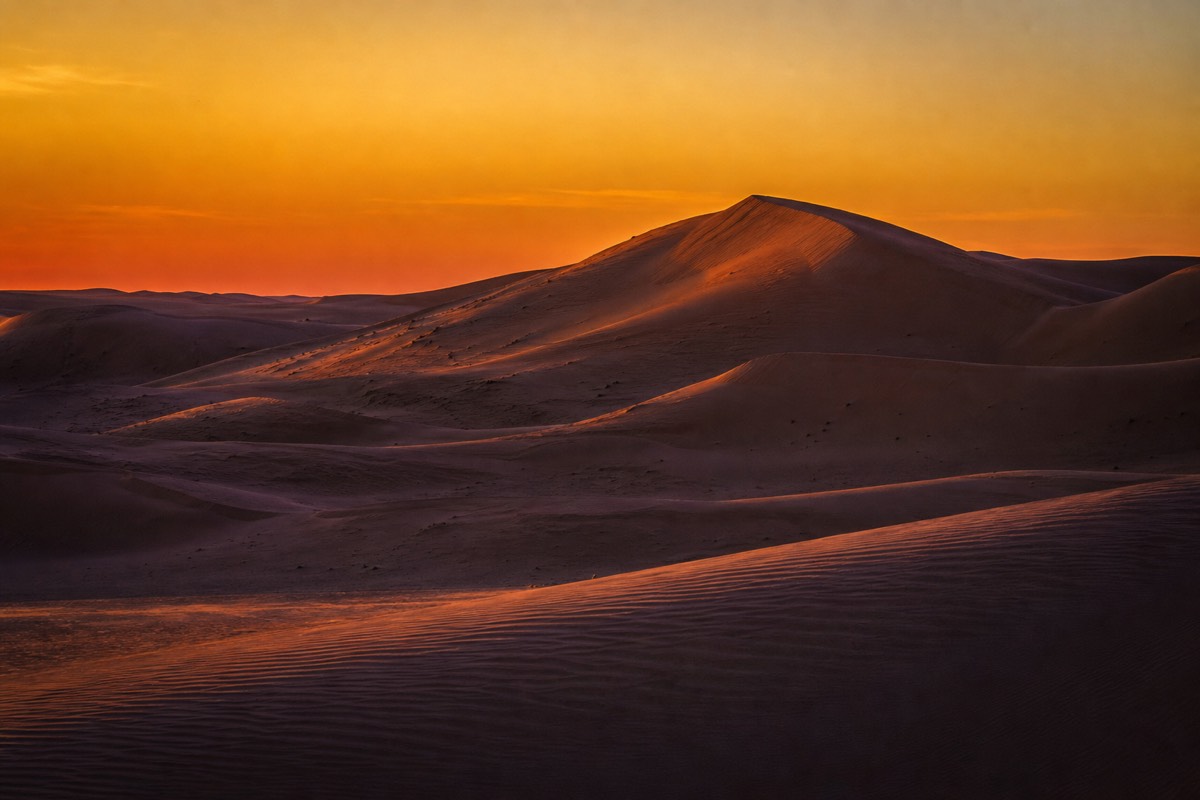
Because the desert changes character after the day-trippers leave. Late-afternoon light turns the dunes copper, the temperature drops, and once the camp settles the sky fills with stars. Waking for sunrise over an empty ridge is the image people carry home. One night captures all of it without a long commitment.
Sunset over the sand is only the opening act. The real reward comes later, when stargazing takes over a sky with almost no light pollution and the Milky Way stands out clearly. Then comes dawn: cool air, low golden light, and dunes marked only by your own footprints. The overnight camps Wahiba Sands Tours works with handle transfers, meals and bedding, so a first-timer carries very little and still gets the whole day-to-night-to-dawn sequence.
There is also a practical comfort argument. Splitting the journey means you are never stuck in a car for six hours in a single day, and you reach the sand with energy left for the dunes rather than arriving frazzled. Add a proper dinner, a real night's sleep under canvas, and an unhurried breakfast, and the overnight starts to feel less like an add-on and more like the trip's centre of gravity.
An overnight also spreads the driving over two calmer halves instead of one long haul, which most people find far more pleasant. This is roughly how the schedule flows once you commit to a night in a desert camp.
| Time | What happens |
|---|---|
| 2:00 pm | Arrive at the gateway, transfer into the sands |
| 4:00 pm | Dune bashing and sandboarding |
| 5:30 pm | Camel ride into the sunset |
| 7:30 pm | Dinner at the Bedouin camp |
| 9:00 pm | Stargazing away from the camp lights |
| 6:00 am | Sunrise climb on a nearby dune |
| 9:00 am | Breakfast, then the drive back |
If you are weighing a day trip vs overnight, this is the argument for staying: the best hours here happen when most visitors have already gone.
Comfort at night depends a lot on the camp you pick, so it is worth a moment's thought. A simple site with shared facilities is fine for one night and keeps the price down. A mid-range or premium camp adds a private bathroom, a better bed and a quieter patch of sand, which some travellers value highly after a long day of driving and dunes. Neither is wrong; they just suit different budgets and expectations.
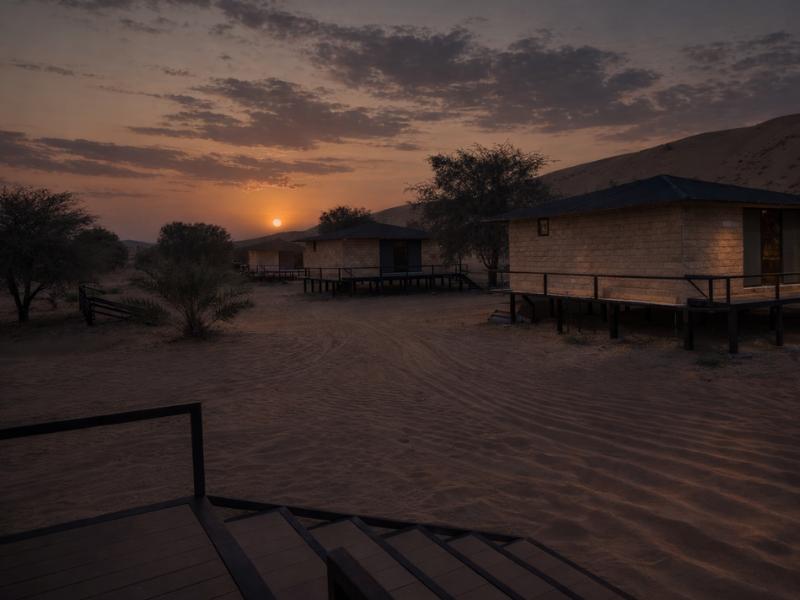
What changes when you stay until dawn? Explore the camp-room itinerary with a dune sunset, dinner and breakfast already arranged.
Discover The One-Night Camp Stay2 days, 1 night · Muscat pickup and return
Lunch and camel ride cost extra. Confirm your room and any mobility or child-seat requirements before booking.
When does two days make sense?
Two days suits slower travellers and anyone chasing more than dunes. A second day lets you reach Wadi Bani Khalid at a relaxed pace, add a second oasis, ride deeper into the sand, or simply linger over a Bedouin breakfast instead of racing back to Muscat. Private multi-day trips build the itinerary around your pace.
The extra day buys unhurried time. Instead of choosing between the emerald pools and a proper dune session, you do both. You can share dates and cardamom coffee with a Bedouin host without watching the clock, take a longer camel ride, and enjoy the evening without rushing back to Muscat. Families and photographers, especially, tend to feel a single night ends too soon.
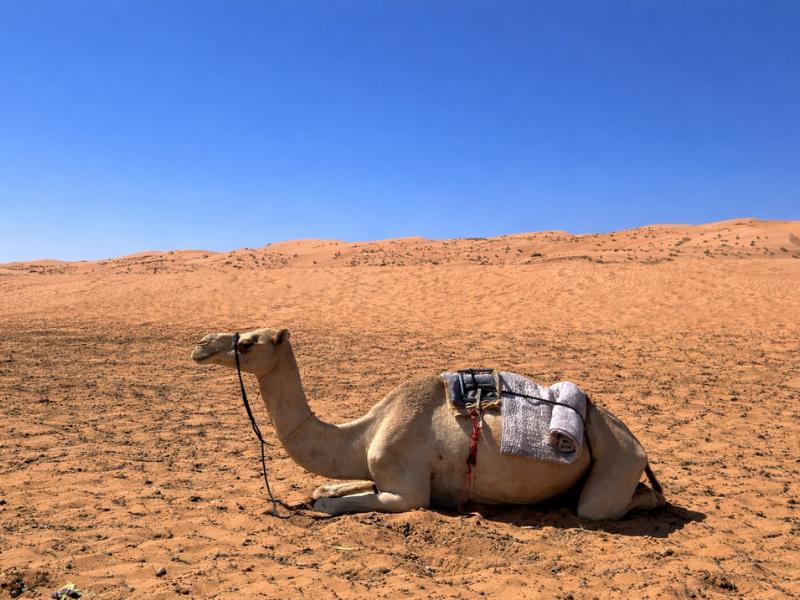
Two days is also the format that suits particular travellers almost regardless of pace. Serious photographers want more than one shot at golden light. Anyone building a slower, deeper Oman trip appreciates a full morning in the sand without a drive hanging over it. And groups mixing energy levels can split a relaxed second day, some heading back into the dunes while others linger over coffee. If that sounds like your party, distinguish two days with one night from a longer two-night stay.
The flip side is honest too: a second night is the first place the value curve flattens. You are no longer unlocking a whole new experience, only more of a good one at a gentler pace. For travellers with a packed Oman route, that time often pays off better spent on the coast or in the mountains. Two nights is a luxury for desert lovers, not a necessity for everyone.
Two-day private trips also open up routes a rushed visit cannot reach, linking the sands with villages like Mudayrib or a second wadi. If the question is how many days will feel complete rather than rushed, two is the generous answer, and check the actual itinerary: two days generally means one night, not two.
Have two or three days to spare? Choose your camp-and-two-wadi option before booking the surrounding hotel nights.
Dates and booking provided by GetYourGuide. If the calendar cannot load, use the booking link below.
Check Dates For The Camp-And-Two-Wadi Trip2 to 3 days, depending on option · Muscat pickup and return
Confirm the selected option’s camp, meals and extras. Wadi Shab involves hiking and swimming; do not assume accessible trails.
One day, two days, or three: what each gets you
Think of it as a ladder. One day buys the dunes and an oasis. One night adds sunset, stars and sunrise, the emotional core of the place. A second night adds depth: a slower pace, a second oasis or village, and time to simply be in the desert rather than tour it. Most travellers stop at one night.
Each rung up the ladder costs more time and money, and each adds something real rather than just repeating the day before. The point of diminishing returns arrives fast for hurried travellers and slowly for those who love wild places. Use this matrix to see where you land.
| What you get | Day trip | One night | Two nights |
|---|---|---|---|
| Dune bashing and camel ride | Yes | Yes | Yes |
| Sunset over the dunes | Rushed | Yes | Yes |
| Stargazing and sunrise | No | Yes | Yes |
| Second oasis or village | No | Sometimes | Yes |
| Unhurried pace | No | Partly | Yes |
| Typical from-price band | Quote for your dates and party | Quote for your dates and party | Quote for your dates and party |
The ladder also helps you avoid two common mistakes. The first is under-buying: a rushed day trip when you clearly had the appetite and the hours for a night, then spending the drive home wishing you had stayed. The second is over-buying: a second and third night booked out of enthusiasm that end up feeling repetitive for anyone not deeply in love with deserts. Match the rung to your temperament and your schedule, and you rarely get it wrong. Prices shift with group size and season, so confirm the live prices on the listing.
Want more variety from two days? Discover the Wadi Shab and Wadi Bani Khalid route with a night in normal camping tents.
Discover The Two-Wadi Tent TripWhat if you only have a few hours?
Compare the actual itinerary as well as the price. The local Bidiyah sunset trip includes sandboarding and dinner, with camel riding extra. A Muscat shared day has separate standard, sunset and quad choices. The selected option determines what your quote covers.
The half-day suits two kinds of traveller: those staying nearby in Sharqiya who do not need the long round trip, and those who simply want a taste without a full day committed. You lose the oasis and the slow build of a full itinerary, but you keep the two things most people come for, the dunes and the sunset. Timed for late afternoon, it also sidesteps the worst of the heat, which makes it a smart choice even in the warmer shoulder months.
What a half-day cannot give you is the transition into night, which is the part regulars rate most highly. If your schedule genuinely allows only a few hours, take them and enjoy them. If you can stretch to an overnight instead, almost everyone who does says the extra hours were the ones that mattered. Be honest about which camp you fall into before you book the shorter run.
Logistics decide the half-day as much as preference. Coming all the way from Muscat for only a few hours on the sand rarely makes sense, since the drive would dwarf the visit. But if you are overnighting in Sur, staying elsewhere in Sharqiya, or passing through on a longer loop, a late-afternoon run slots in beautifully and asks very little of your schedule.
Already near Bidiyah? Check the four-hour sunset departure before setting your evening plans: sandboarding and Omani dinner are included.
Scheduled departures from Viator. Availability and final price are confirmed on Viator.
4 hours · Bidiyah meeting point, return to start
Camel riding costs extra. No overnight accommodation. Not recommended during pregnancy. Agree the meeting point before arranging transport.
What will the desert cost for each length?
Compare the total for your actual dates and party. The verified room-based overnight includes private Muscat transport, a standard Desert Rose Camp room, dinner and breakfast. Lunch and camel riding are extra. A private vehicle does not mean an exclusive or luxury camp.
These are starting points, not fixed fares, so treat them as a guide and confirm the live prices on the listing. The pattern they show is consistent: the jump in cost from a day trip to an overnight buys the sunset, the stars and the sunrise, while the jump from one night to two mostly buys pace and a second oasis rather than a wholly new experience. Where your money goes furthest is usually that first overnight.
| Length | Example experience | Typical from-price | Guest rating |
|---|---|---|---|
| Half day | Sunset 4x4 dune bashing | Quote for your dates and party | ~5.0 |
| Full day | Sands and Wadi Bani Khalid | Quote for your dates and party | ~4.8 |
| One night | Overnight camp from Muscat | Quote for your dates and party | ~4.9 |
| Two days, one night | Private desert overnight | Quote for your dates and party | ~5.0 |
Cost rarely decides the length on its own. Most people are really trading hours against experiences, and the tables here are meant to make that trade visible rather than to push you up the ladder. Spend where the desert gives you the most back, which for the great majority of visitors is a single unhurried night.
If cost is genuinely the deciding factor, a shared group departure is the lever that moves it most. Splitting a vehicle and guide across a fuller group drops the per-person price sharply compared with a private trip, without changing the dunes, the camel ride or the sunset you actually experience. Private trips buy flexibility and privacy; group departures buy the same scenery for less.
What does the overnight quote buy beyond a bed? Explore a private vehicle, English-speaking guide, standard camp room, dinner and breakfast.
Discover The One-Night Camp StayHow does it fit the rest of an Oman trip?
Slot the desert between Muscat and the coast or the mountains. Most itineraries give Oman a week to ten days, and one night in the sands fits neatly on the way to Sur, the Ras al Jinz turtles, or Nizwa. The best time to visit is November to March, when days are warm and nights turn cool.
Geography does you a favour here. Wahiba sits on the natural loop out of Muscat toward the Sharqiya coast, so an overnight rarely costs you a dedicated extra day, it simply becomes a stop along the route. Season matters more than duration for comfort: the coolest months make both day trips and camping pleasant, while high summer pushes everything into the early morning.
Direction of travel matters more than most people expect. Because the sands lie on the road toward Sur and the Sharqiya coast, an overnight slots in cleanly if you are heading that way anyway, adding almost no detour. If your loop runs west toward Nizwa and the mountains instead, the desert becomes more of a dedicated out-and-back, which is another quiet argument for making it an overnight rather than a long day's round trip.
A simple week that includes the desert without contorting the rest of the trip might run like this.
| Day | Where |
|---|---|
| 1 to 2 | Muscat: souq, coast, Grand Mosque |
| 3 | Drive to the sands, overnight desert camp |
| 4 | Sunrise, then Wadi Bani Khalid and on to Sur |
| 5 | Ras al Jinz turtles and the coast road |
| 6 to 7 | Nizwa fort, mountains, back to Muscat |
Plan the desert first, then thread the coast, the forts and the wadis around it, and a short stay ends up worth far more than its hours. One scheduling tip regardless of length: build the visit around the light, not the clock. Arriving mid-afternoon gives you time to settle before sunset, and leaving after a slow breakfast means you catch the dunes at their softest twice.
Set your desert dates before arranging the rest of your Oman loop. This two-day camp itinerary returns to Muscat, so plan onward travel separately.
Check Dates For The One-Night Camp Stay